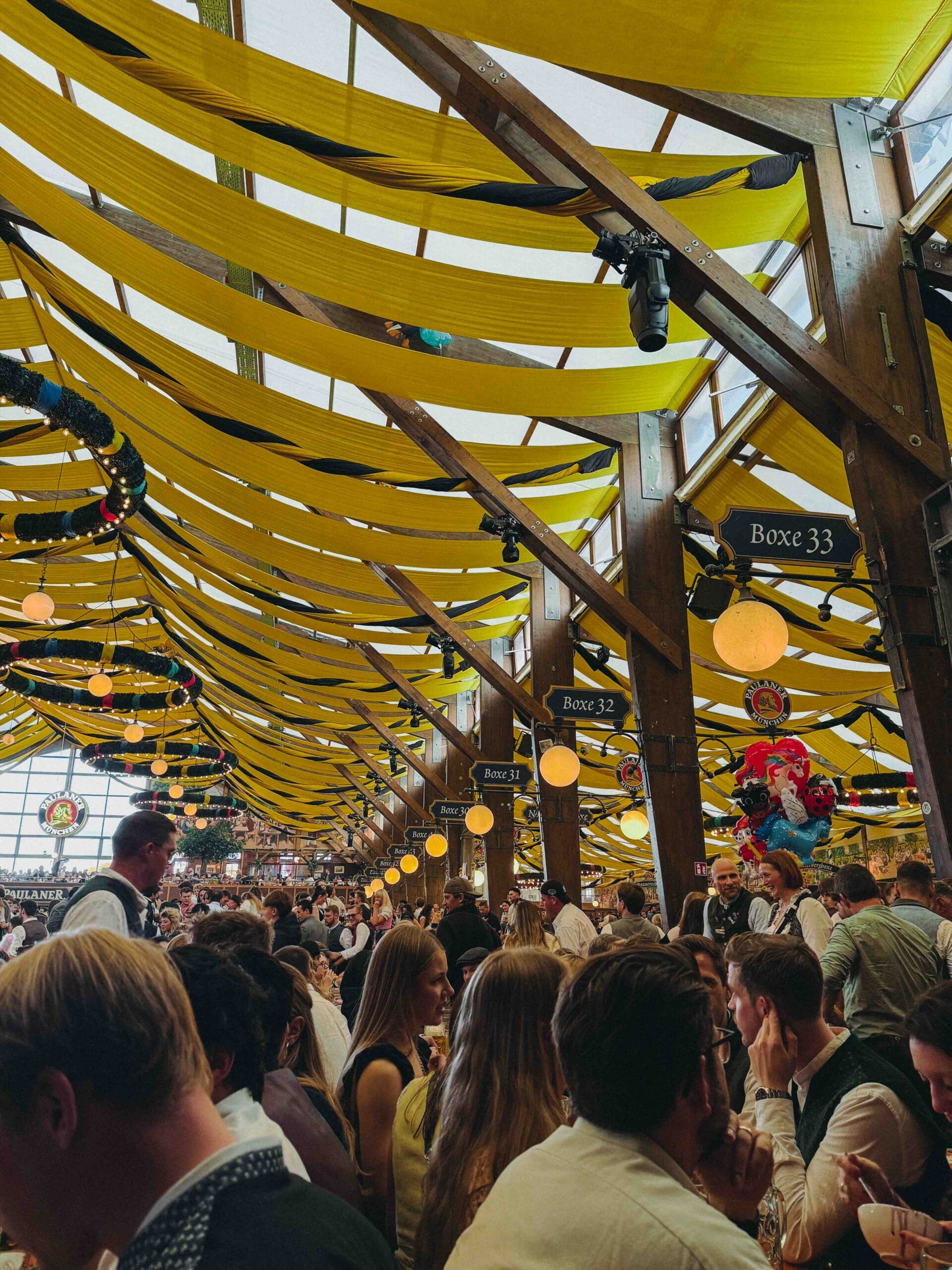
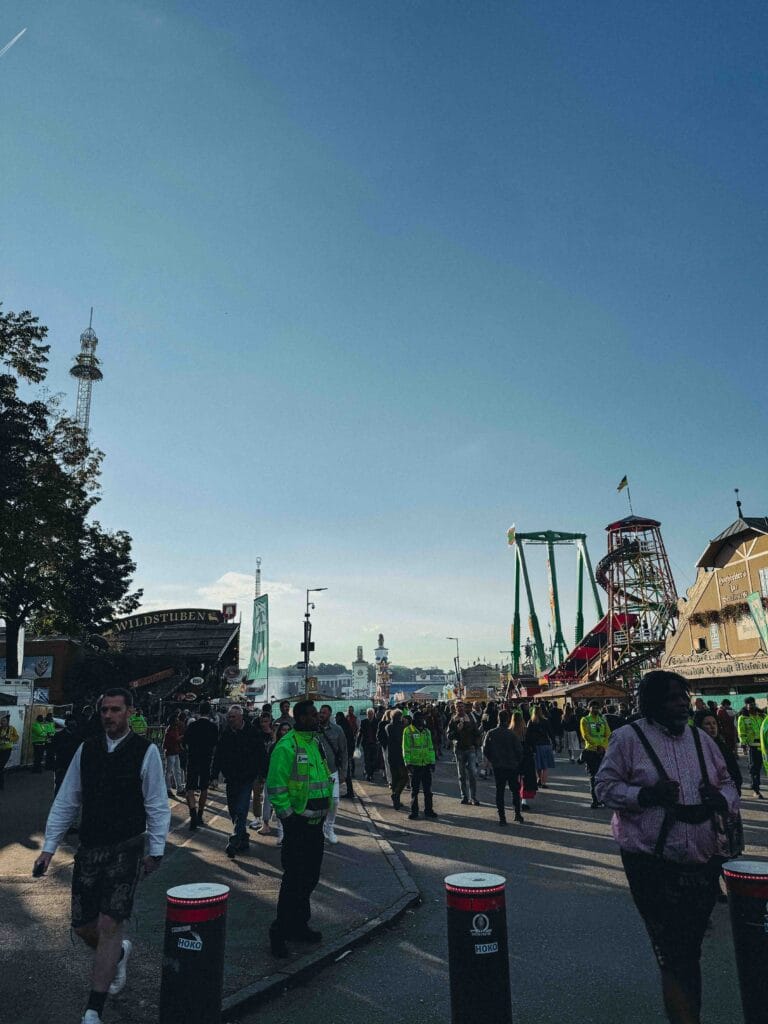
We arrived in Munich as a quick day trip from Salzburg during our Central Europe loop, and nothing quite prepared us for the scale of it. Oktoberfest isn’t just a beer festival, it’s a full-blown funfair with giant Ferris wheels, roller coasters, and log flumes standing shoulder to shoulder with beer tents that each hold thousands of people. Thousands of visitors in dirndls and lederhosen fill the grounds, oompah bands play from morning until night, and the entire city seems to shift into festival mode for weeks.
🗺️ See our 12-Day Prague, Munich, Salzburg, Vienna & Budapest Itinerary here!
We didn’t manage to snag a table inside a tent (more on that below), and we also got caught out at the entrance by a security policy we hadn’t researched beforehand. Even so, standing beside a table, beer in hand, surrounded by music and thousands of strangers celebrating together, ranked among the best experiences of our entire Central Europe trip. This guide compiles everything we wish we’d known before showing up as complete first-timers, plus the practical planning details you’ll need to sort out in advance.
Overview
- Location: Theresienwiese fairground, Munich, Germany
- When: Mid-September to the first weekend of October each year (2026 dates: September 19 – October 4, the 191st Oktoberfest)
- Entry Cost: Free to enter the grounds; you pay for beer, food, and rides
- Best For: First-time visitors, beer hall culture, groups and couples, bucket-list travel
- Advance Planning Needed: Yes, for accommodation and tent tables, book months ahead
Table of Contents
When Is Oktoberfest 2026? Dates and Opening Hours
Oktoberfest runs annually on the Theresienwiese fairground in Munich, typically starting in mid to late September and running for about 16 to 18 days through the first Sunday in October. It’s one of the world’s largest folk festivals, drawing several million visitors each year.
For 2026, the festival runs from September 19 to October 4, marking the 191st Oktoberfest. Dates shift slightly year to year depending on where the calendar falls, so always confirm the exact dates for the year you’re planning around before booking flights or hotels.
Good to know: The first two weekends and the final weekend are the busiest and most expensive for accommodation. If your schedule is flexible, a weekday visit in the middle of the run gives you a calmer, more manageable first experience.
How to Get to Oktoberfest in Munich
Munich Airport is well connected internationally, and the S-Bahn train runs directly from the airport into the city center in around 45 minutes. If you’re combining Oktoberfest with a wider Central Europe trip, Munich also links easily by train to Salzburg (around 1.5 to 2 hours), making it a realistic day trip if you’re short on time, though we’d recommend staying overnight if your schedule allows it.
🚂 See our detailed How to Get from Salzburg to Munich Guide
Once you’re in Munich, the festival grounds are a short walk or U-Bahn/S-Bahn ride from Marienplatz. Trains run more frequently and later into the night during the festival, but they also get extremely crowded, especially heading home in the evening. Budget extra time for the platforms.
Where to Stay in Munich During Oktoberfest
Accommodation in Munich books up and prices climb sharply during the festival window, sometimes months in advance. If you’re planning a first-time trip, aim to lock in your hotel as early as you can, ideally as soon as festival dates are confirmed for the year.
Staying near a U-Bahn or S-Bahn line matters more than staying close to the fairground itself. The grounds are loud and busy well into the evening, so a stop or two away often means a quieter night’s sleep without adding much travel time.
Do You Need Tickets for Oktoberfest?
Entry to the Theresienwiese grounds and the beer tents themselves is free. You don’t need a ticket to walk in. The catch is seating: tables inside the tents, especially on weekends and evenings, are usually reserved months ahead by groups, and standing space fills up fast once a tent hits capacity.
For a first visit, arriving early in the day (before 3 to 4 PM on weekdays) gives you the best chance of finding a spot without a reservation. If a table reservation matters to your plans, most tents open reservation requests through their individual websites starting earlier in the year, and it’s worth doing this well ahead of your trip rather than expecting to walk in and find a seat during peak hours.
Oktoberfest Beer Tents: Which One Should First-Timers Choose?
There are around a dozen large tents on the grounds, each run by a different Munich brewery and each with its own personality. A few worth knowing before you go:
- Hofbräu-Festzelt is famously popular with international visitors and is the only large tent with a standing area directly in front of the band, which makes it a good option if you don’t have a table reservation.
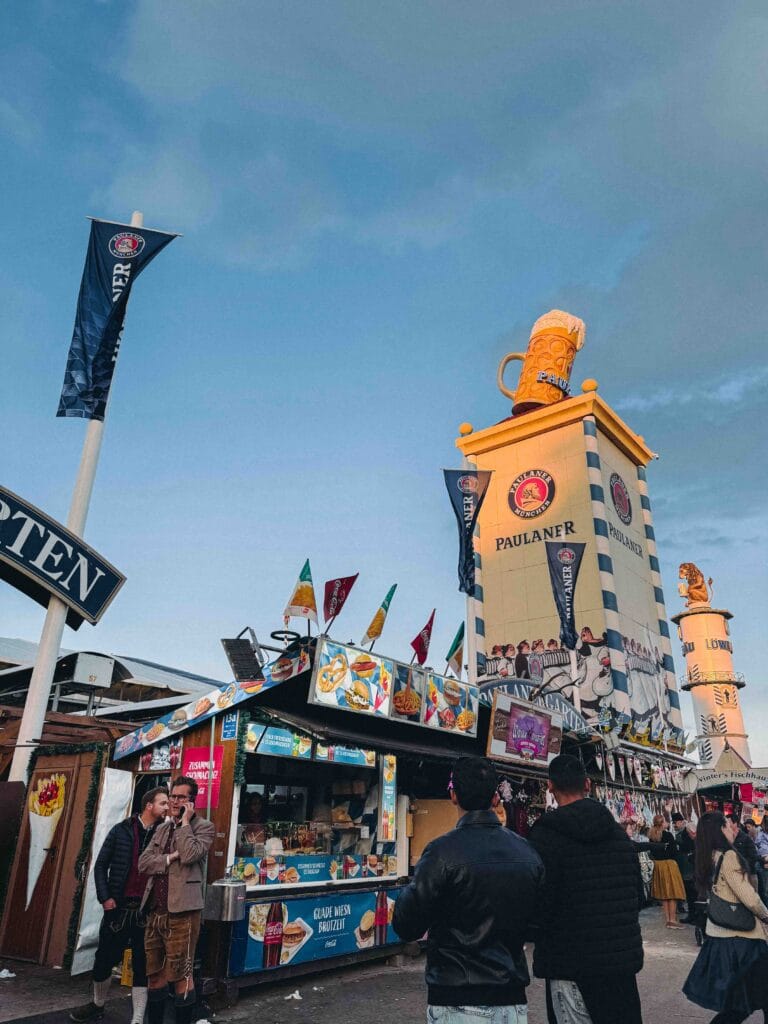
- Paulaner-Festzelt has a lively, festive atmosphere and was where we ended up standing beside a table for the evening, listening to the band and dancing along with everyone around us.
- Augustiner-Festhalle is the only tent still served from traditional wooden barrels rather than steel kegs, a detail beer purists tend to appreciate.
- Schottenhamel-Festhalle hosts the official opening ceremony each year, when the Mayor of Munich taps the first keg to kick off the festival.
None of these are wrong choices. If you’re travelling as a smaller group without a reservation, aim for a tent with standing room and arrive on the earlier side.
Oktoberfest Bag Policy: What Size Bag Can You Bring?
This is the one that caught us completely off guard, and it’s worth planning around before you leave your hotel.
Security at every entrance checks bags for both size and contents. The limit is 3 liters in volume, or no larger than roughly 20 x 15 x 10 cm (about 8 x 6 x 4 in), so a small handbag or mini-backpack is fine, but a regular day bag or backpack is not. Bags that pass inspection get a security tag that changes color daily. Glass bottles are not permitted onto the grounds at all, and items like gas canisters or anything that could be used as a weapon are turned away regardless of bag size.
If you’re carrying anything larger, and we were, the only option is the paid luggage storage at the P1, P5, P8, and P10 entrances, which costs 5 euros. We hadn’t budgeted for this or realized it applied to us until we were standing at security, so build it into your plans if you’re coming straight from a day of sightseeing with a bag, or bringing anything beyond the essentials. Space isn’t guaranteed, so expect a queue if you arrive during a busy window.
Pro Tip: Travel as light as possible. A phone, cash, ID, and a small cross-body bag will get you through security fastest and means you skip the storage fee altogether.
What to Wear to Oktoberfest
Traditional dress is entirely optional but part of the fun, and you’ll be in the minority if you skip it. Dirndls for women and lederhosen for men are sold all over Munich in the weeks leading up to the festival, ranging from inexpensive tourist versions to higher-quality tailored pieces. Comfortable shoes matter more than the outfit itself, you’ll likely be standing and walking for hours.
Layer for the weather. Late September days can still be warm, but evenings cool down quickly, especially if you’re outdoors between tents or in a beer garden area.
What to Eat and Drink at Oktoberfest (2026 Beer Prices)
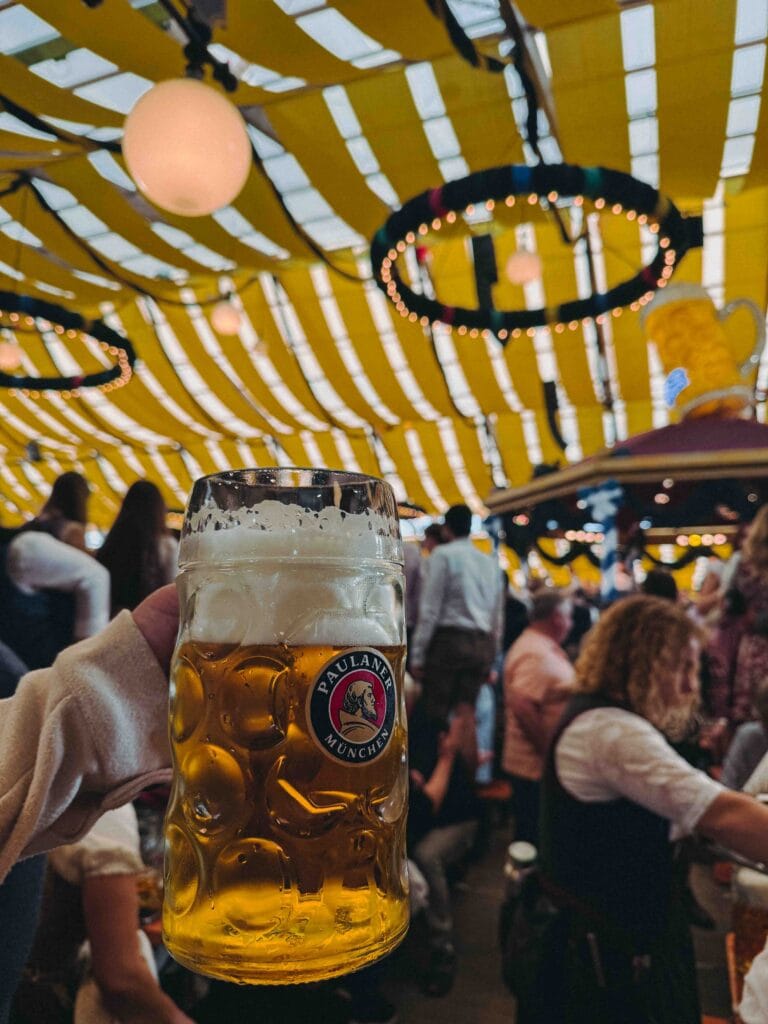
Beer is served exclusively by the liter, called a Maß, and it’s the standard order across every tent. For the 2026 festival, official prices range from €14.80 to €15.90 per Maß depending on the tent, roughly 2.4 percent higher than 2025, with wheat beer at the wine tent priced separately and higher. Prices are set by each tent’s operator rather than the city, so it’s worth checking the current list if you have a favorite tent in mind.
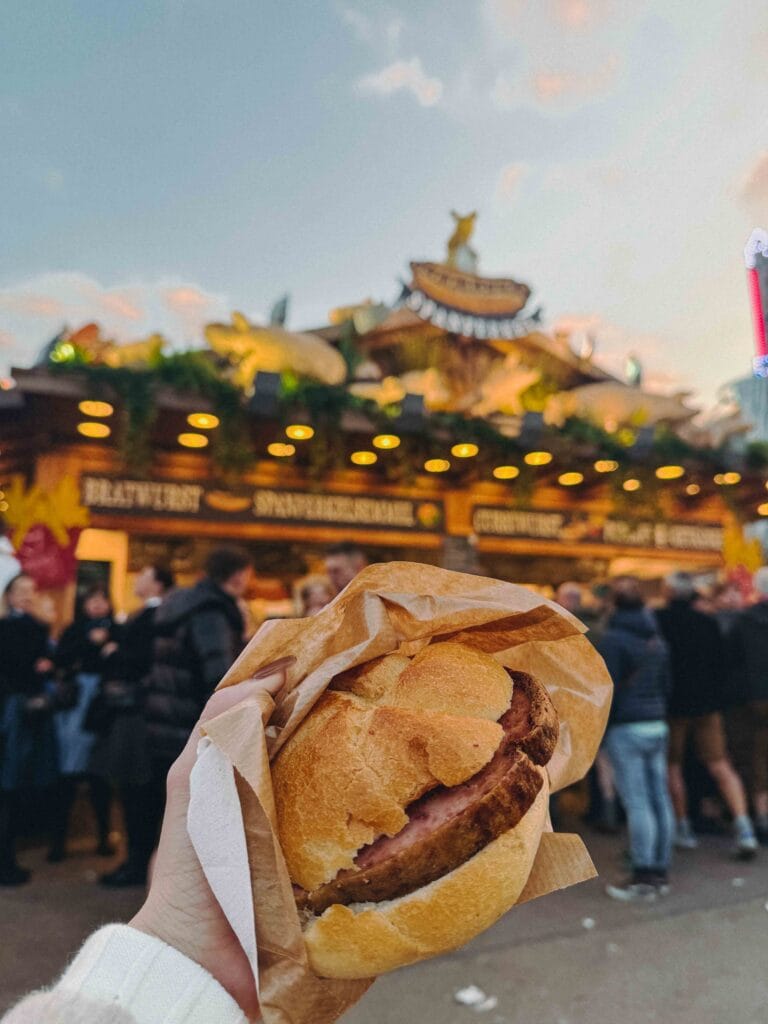
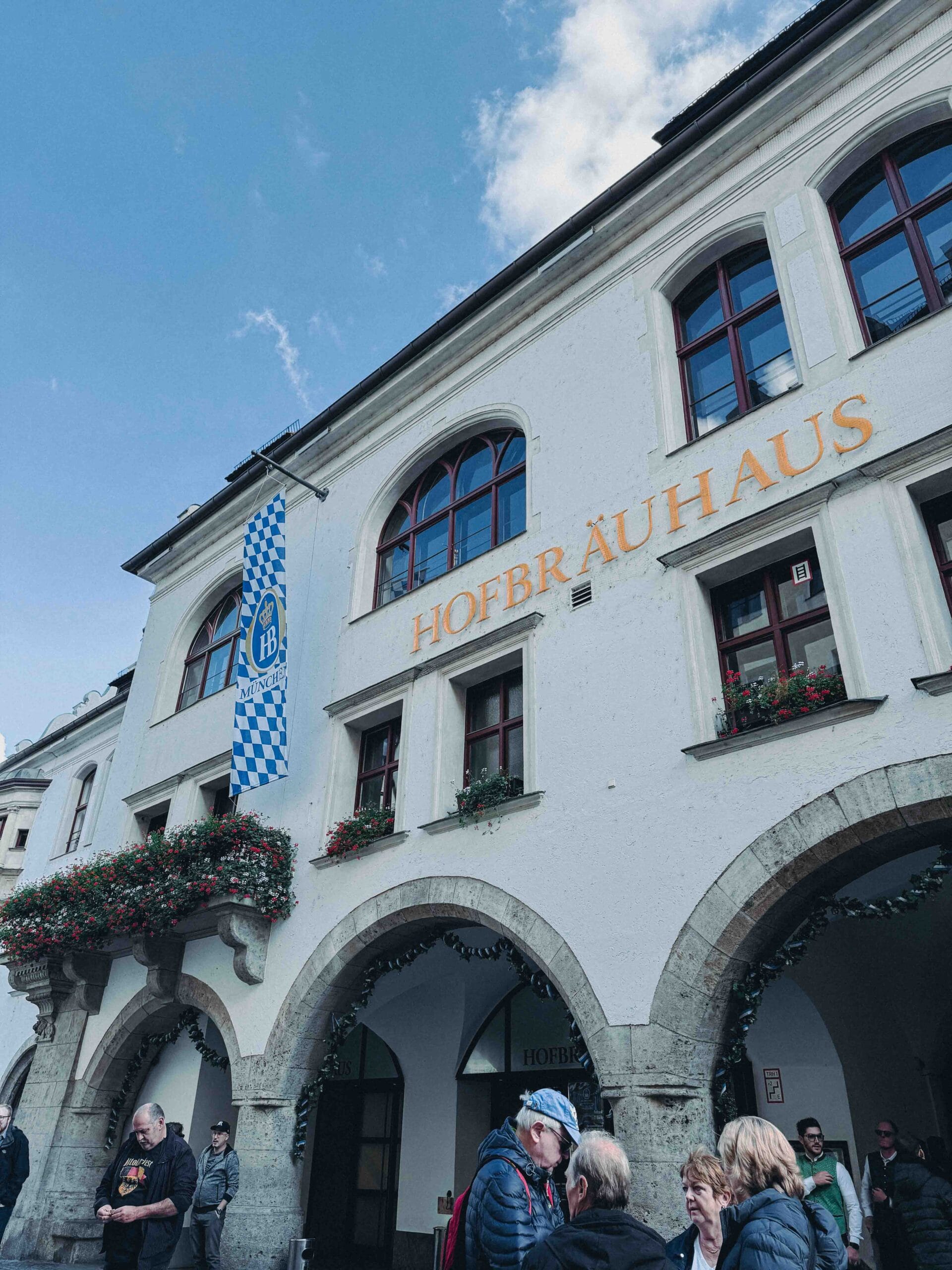
Food follows classic Bavarian tradition: Hendl (roast chicken), Schweinshaxe (pork knuckle), giant pretzels (Brezn), and Weißwurst (a veal and pork sausage traditionally eaten only before noon). If you want a preview of the flavors before the festival, we visited Hofbräuhaus München, the year-round beer hall connected to one of the festival’s tent breweries, for lunch the same day.
Most tents only accept cash, so carry more euros than you think you’ll need.
🍴 See our full Hofbräuhaus review and menu recommendations
Oktoberfest Costs: What to Budget Per Person
| Category | Estimated Cost (Per Person) | Notes |
|---|---|---|
| Beer (2-3 Maß) | €30-48 | 2026 official tent prices, varies by tent |
| Food | €15-25 | Hendl or Schweinshaxe plus a pretzel |
| Luggage storage (if needed) | €5 | Flat fee at P1, P5, P8, P10 entrances |
| Traditional outfit (optional) | €40-150 | Wide range depending on quality |
| Accommodation (per night, festival dates) | €120-250+ | Books up fast, prices surge |
| Transport within Munich | €5-10 | Day ticket recommended |
Figures are rough estimates based on our own visit and official festival pricing, actual costs will vary depending on which tents you visit and how many rounds you order.
Practical Information
| Category | Details |
|---|---|
| Location | Theresienwiese, Munich, Germany |
| 2026 Dates | September 19 – October 4 |
| Entry | Free (tents and rides charge separately) |
| Getting There | S-Bahn/U-Bahn to Theresienwiese or Poccistraße stations |
| Official Info | oktoberfest.de/en |
Pro Tip: If you’re combining Oktoberfest with a wider Central Europe trip, it slots in naturally as a day trip from Salzburg or an overnight stop between Prague and Vienna.
Final Verdict
Oktoberfest earns its reputation. It’s loud, crowded, and occasionally chaotic, but the communal energy of thousands of people singing along to the same songs, clinking liter steins together, and genuinely enjoying themselves is something photos don’t fully capture. For a first visit, the key is arriving early, carrying cash, packing light to avoid the bag check hassle, and treating a missed table reservation as part of the experience rather than a dealbreaker. We’re already planning our return trip, this time with a proper table booked in advance.
Frequently Asked Questions
Do you need tickets for Oktoberfest?
No. Entry to the Theresienwiese grounds and to all of the beer tents at Oktoberfest is free, and there is no admission ticket. What people usually mean by an Oktoberfest ticket is a table reservation, which is booked directly with an individual tent and is not required to attend. The one exception is the historic Oide Wiesn section, which charges €4 entry in 2026.
Can you go to Oktoberfest without a table reservation?
Yes. By law the large tents must hold back around 25 percent of their seating for walk-in visitors, but it fills quickly. Arrive before 3 PM, visit on a weekday rather than a weekend, and choose a tent with a designated standing area, such as the Hofbräu-Festzelt. Note that in most large tents waitstaff only serve guests who are seated at a table, so standing room without a seat can mean no beer service.
What size bag can you bring to Oktoberfest?
Bags must be under 3 litres in volume, or roughly 20 x 15 x 10 cm, which is about the size of a small handbag. Backpacks and normal daypacks are refused at security. Glass bottles are banned entirely. Larger bags must go into paid luggage storage at the P1, P5, P8 or P10 entrances for 5 euros per item.
How much does a beer cost at Oktoberfest 2026?
A one-litre Maß costs between 14.80 euros and 15.90 euros at Oktoberfest 2026, averaging around 15.61 euros, which is roughly 2.4 percent higher than 2025. Each tent operator sets its own price. Wheat beer and wine at the Weinzelt are priced separately and cost more.
When is Oktoberfest 2026?
Oktoberfest 2026 runs from Saturday 19 September to Sunday 4 October, a full 16 days, on the Theresienwiese in Munich. This is the 191st Oktoberfest. The opening keg is tapped at noon on 19 September, and no beer is served anywhere on the grounds before then.
What time does Oktoberfest open and close?
On weekdays the tents open at 10 AM. On weekends, public holidays and 3 October they open at 9 AM. Last beer in the large tents is served at 10:30 PM and the tents close at 11:30 PM. Smaller tents serve until around 11 PM, and the Käfer Wiesn-Schänke and the Weinzelt stay open latest. On opening Saturday the tents open at 9 AM but no beer is poured until the mayor taps the first keg at noon.
Planning your Munich trip? Bookmark this guide and start locking in accommodation as soon as your dates are set, rooms disappear fast.
Found this guide helpful? Share it with anyone planning their first Oktoberfest!

Leave a Reply