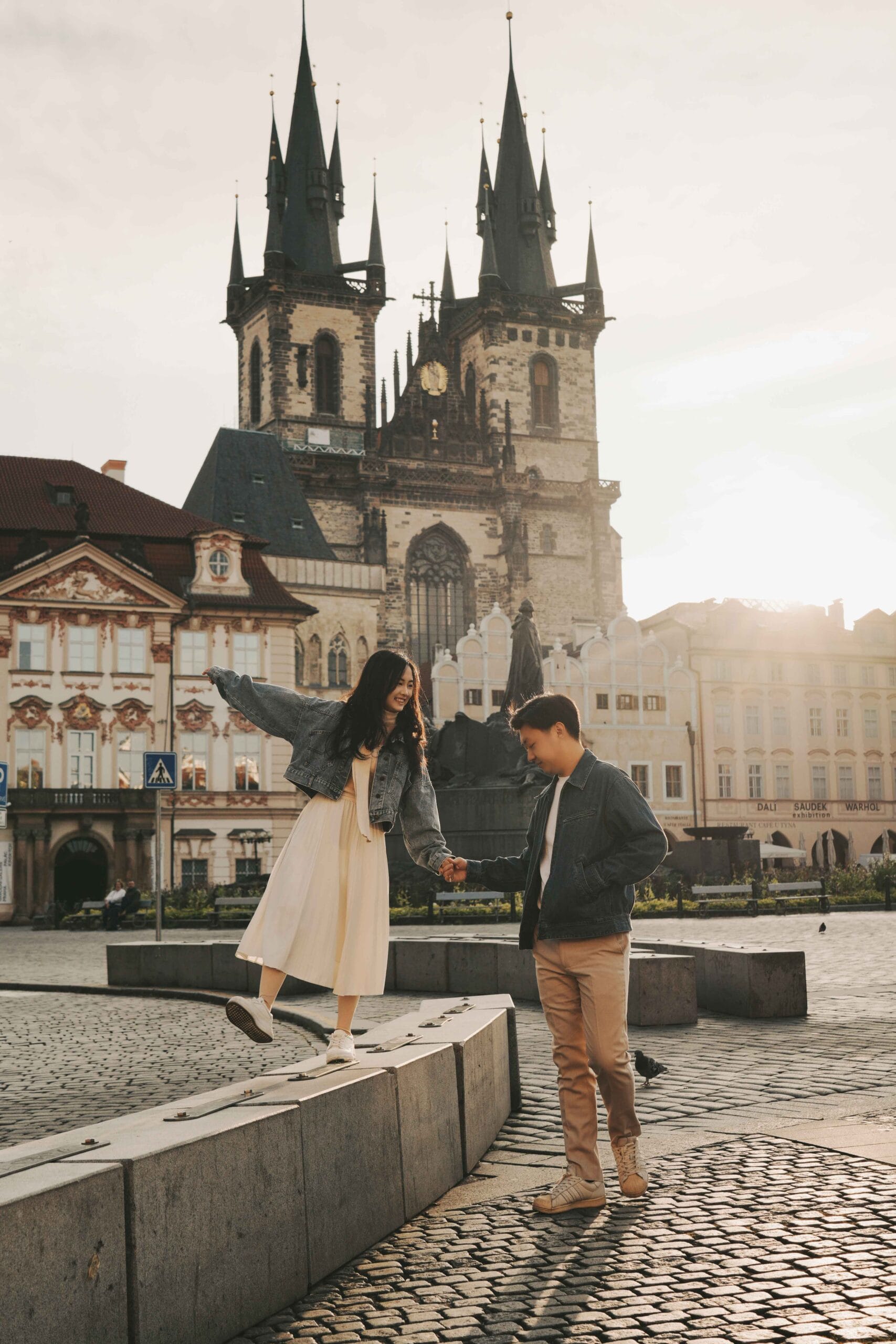
Planning your first Central Europe trip? This comprehensive 12-day Central Europe Itinerary covers the best of Prague, Salzburg, Munich, Hallstatt, Vienna, and Budapest, perfect for first-time visitors who want to experience the region’s most iconic destinations without feeling rushed.
Trip Overview:
- Duration: 12 days, 11 nights
- Countries: Czech Republic, Austria, Germany, Hungary
- Best Time to Visit: April-October (we visited in October)
- Transportation: Mix of trains, buses, and occasional taxis
Table of Contents
Day 1: Prague Arrival – Gothic Architecture & Castle Views
Morning: Landing in Prague
After our grueling 16-hour flight from Singapore, we finally touched down in Prague. The excitement of stepping into this historic city for our first couple’s adventure in years made every hour of that long flight worthwhile.
Getting from Prague Airport to City Center: After a long-haul flight, navigating public transport is the last thing you want to deal with. We highly recommend booking a private transfer or taking a taxi for maximum comfort.
🚂 See our detailed Prague Airport Transfer Guide
Afternoon: Lesser Town Exploration
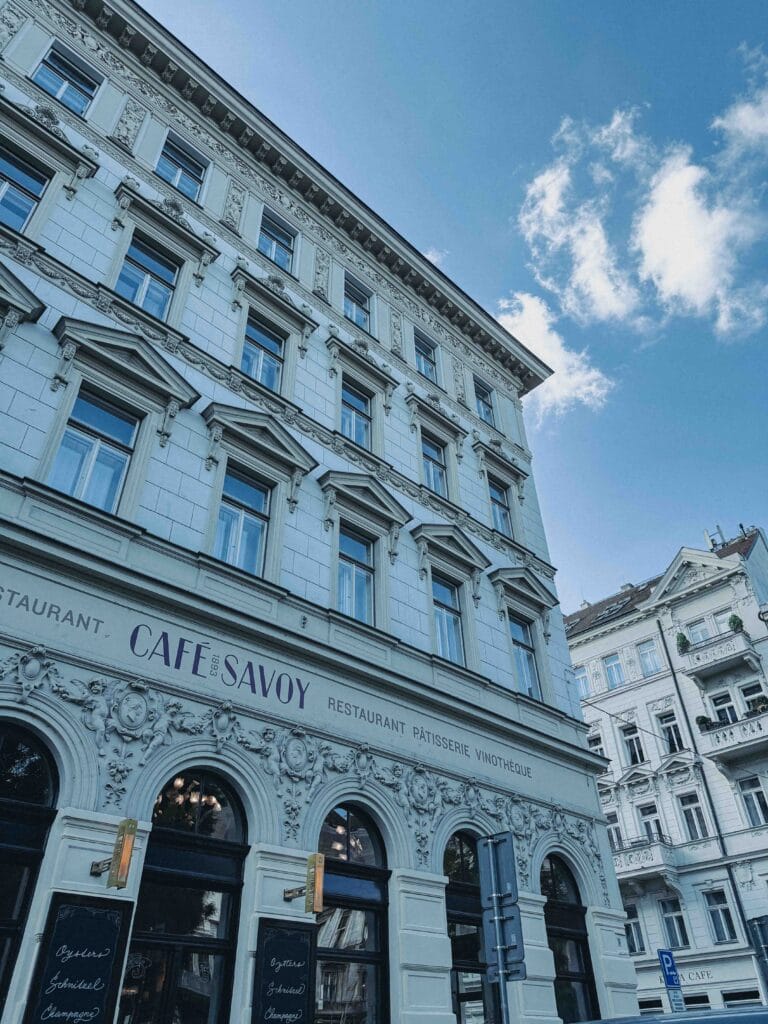
Lunch at Café Savoy
Our first stop was the legendary Café Savoy for much-needed revival fuel. This Art Nouveau café has been a Prague institution since 1893, and stepping inside feels like traveling back in time. The high ceilings, elegant decor, and welcoming warmth immediately revived our jet-lagged spirits.
🍴 See our full Café Savoy review and menu recommendations
St. Nicholas Church
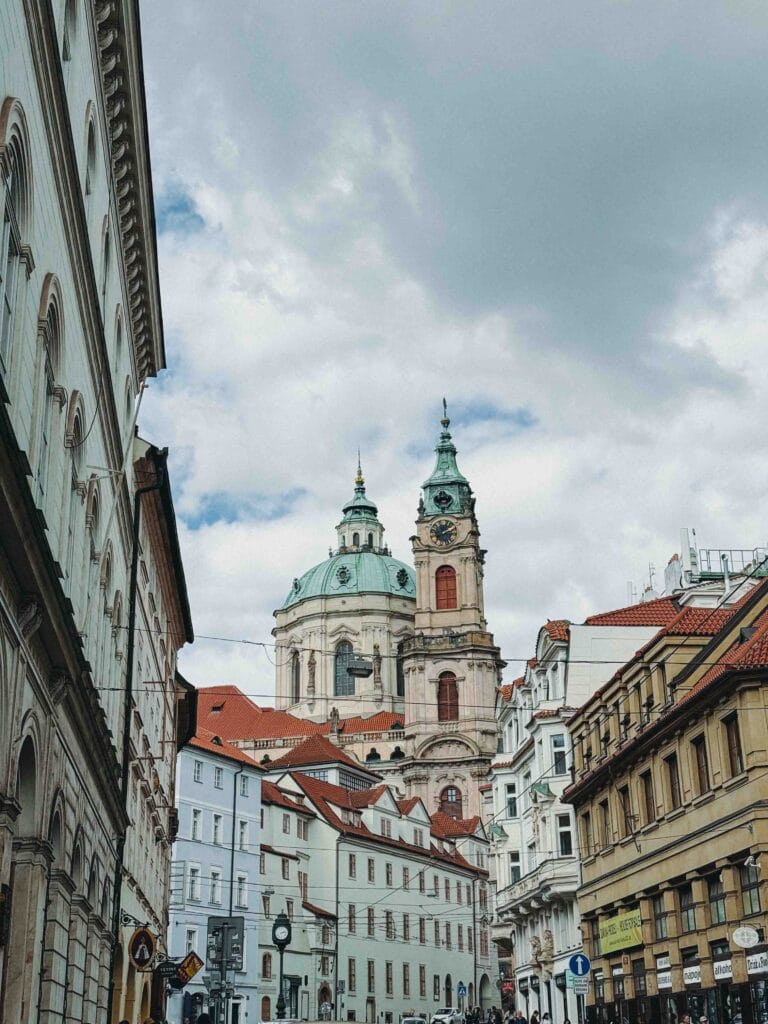
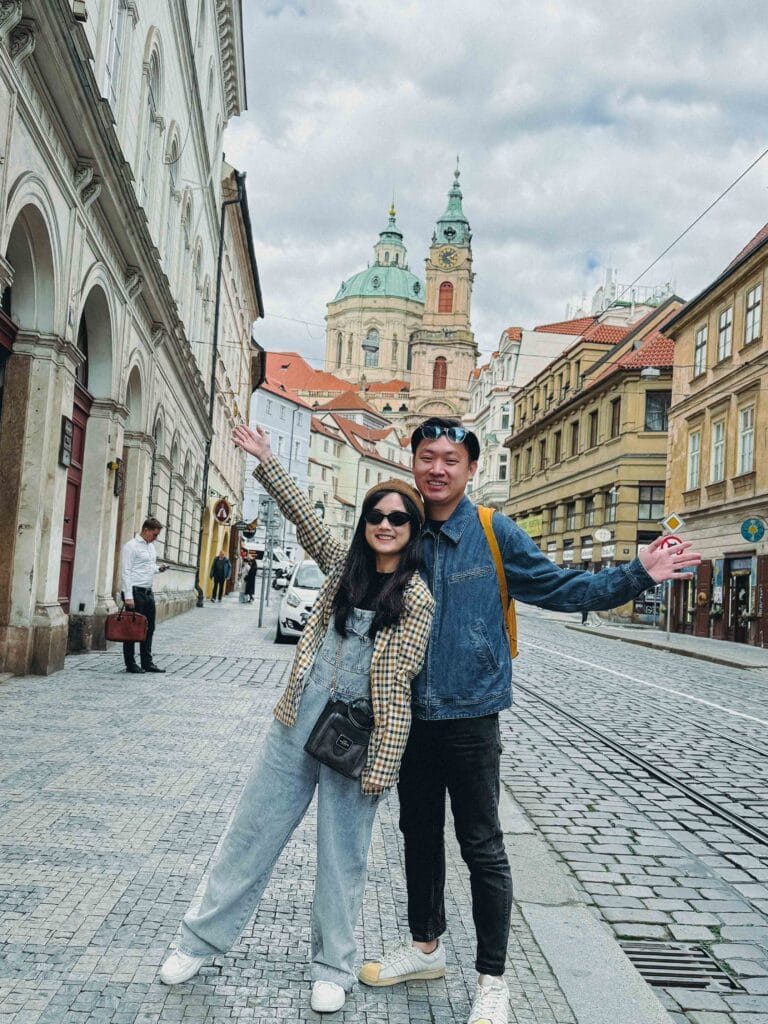
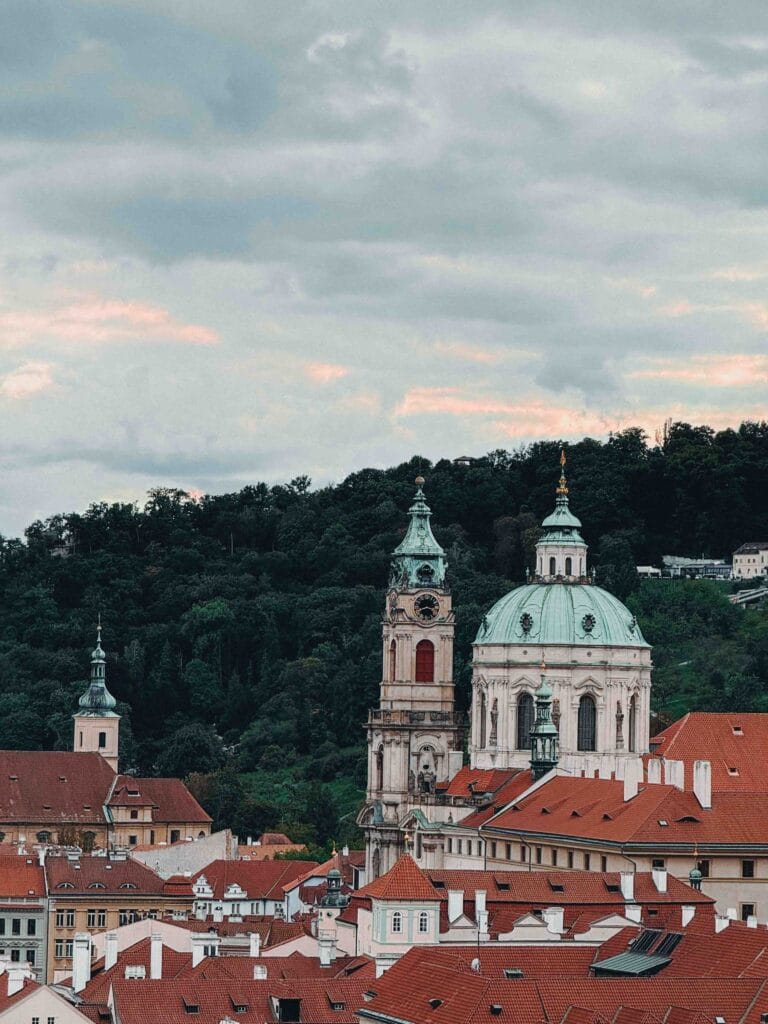
Walking through Lesser Town’s cobblestone streets, we caught our first glimpse of St. Nicholas Church from Újezd Street. The baroque masterpiece with its distinctive green dome and white facade towers majestically over the surrounding buildings, an Instagram-worthy spot that exceeded our expectations.
Waldstein Palace & Gardens
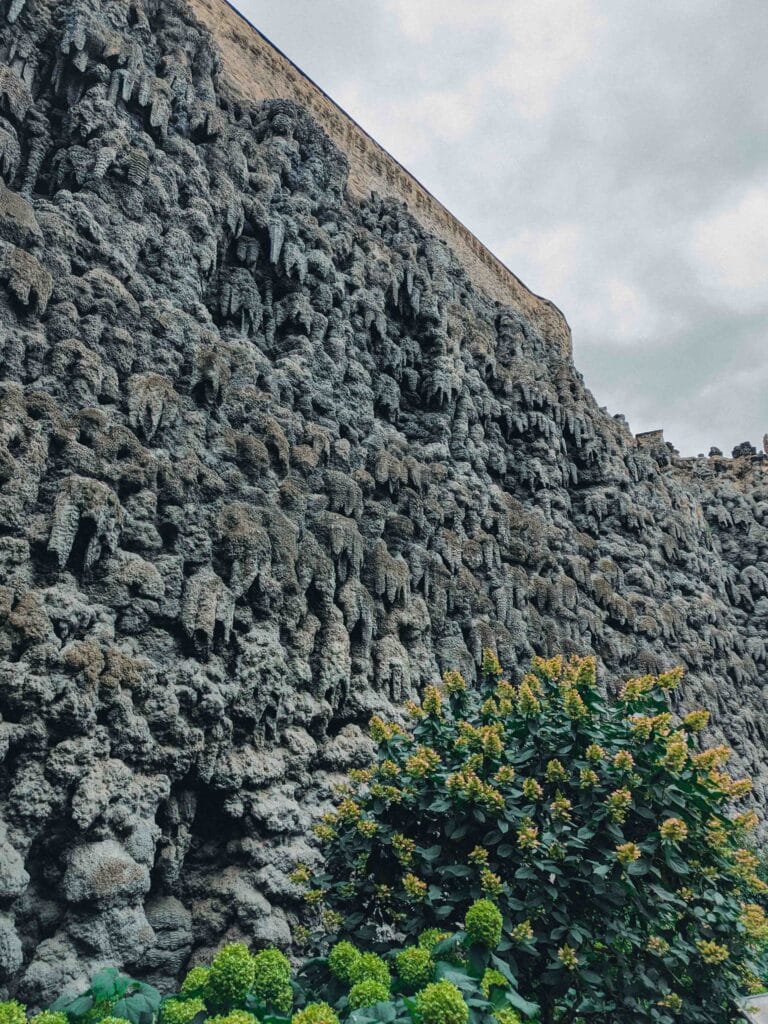
Entry to Waldstein Garden is completely free, making it one of Prague’s best-kept secrets. The grand palace facade impressed us immediately, but the real gem lies within the gardens with baroque statues lining the walkways and the famous Dripstone Wall.
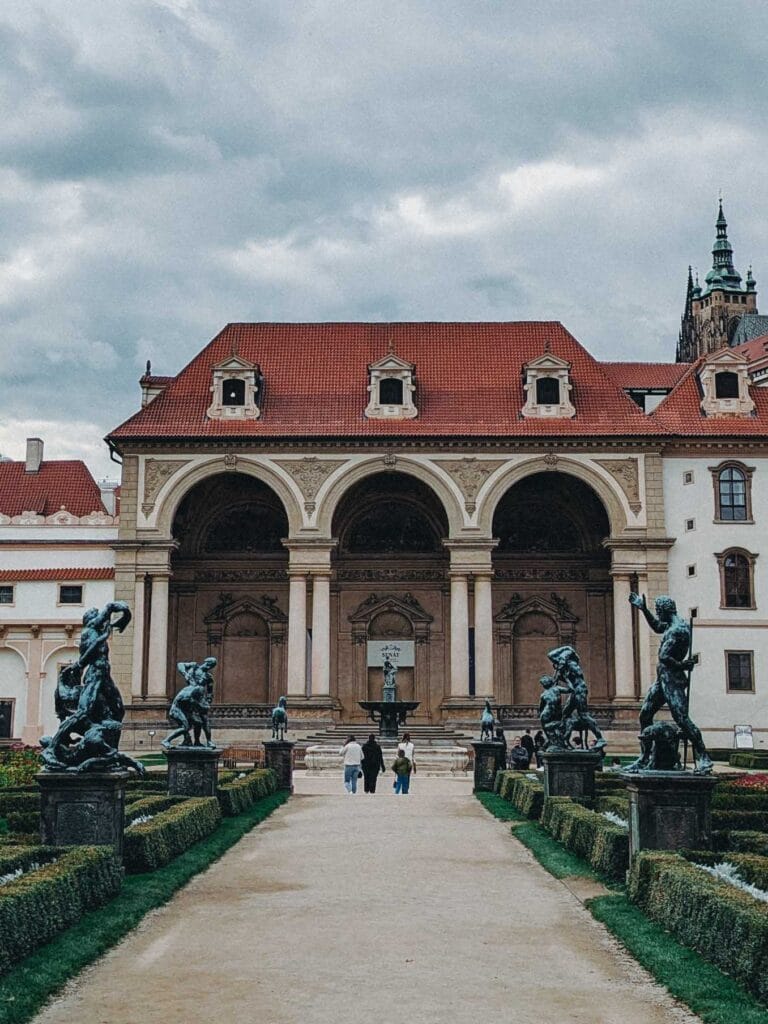
The Dripstone Wall was unexpectedly fascinating. This artificial cave-like structure looks like melting stone, and we spent time spotting faces, snakes, and frogs carved into the textured surface. It’s wonderfully bizarre and quintessentially Prague.
Prague Castle Complex
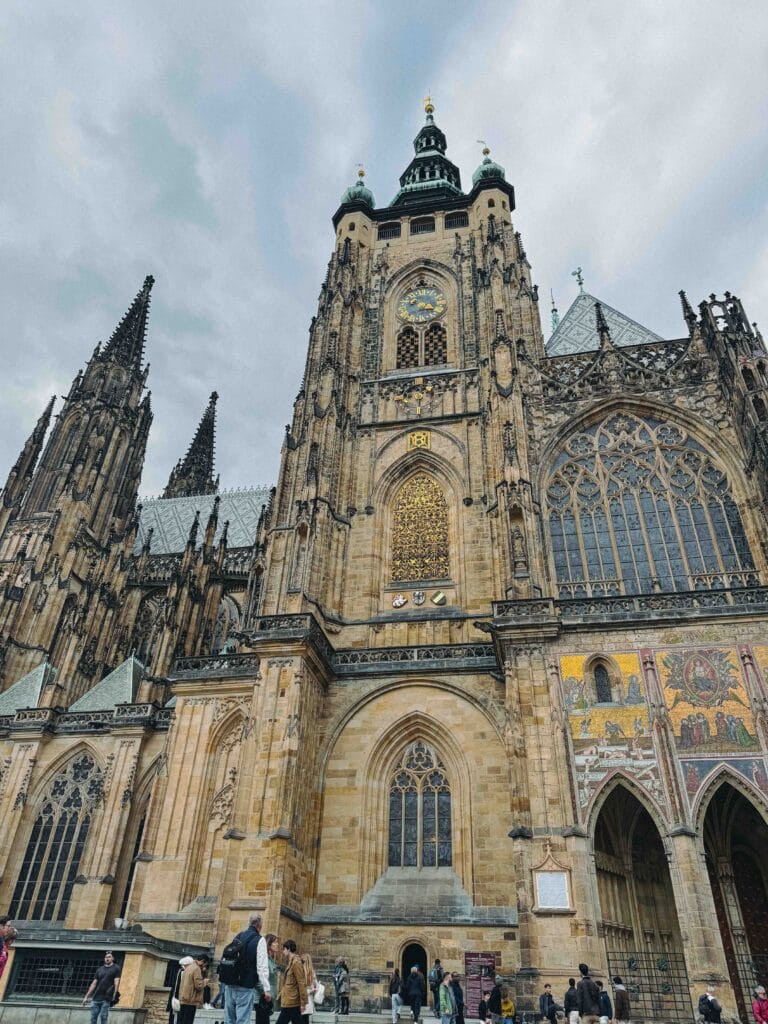
The uphill walk to Prague Castle provides increasingly spectacular views of the city’s terracotta rooftops. While we only explored the castle grounds and exterior (the full interior tour requires 2-3 hours we didn’t have), the experience was still breathtaking.
🎟️ Get your Prague Castle Tickets here!
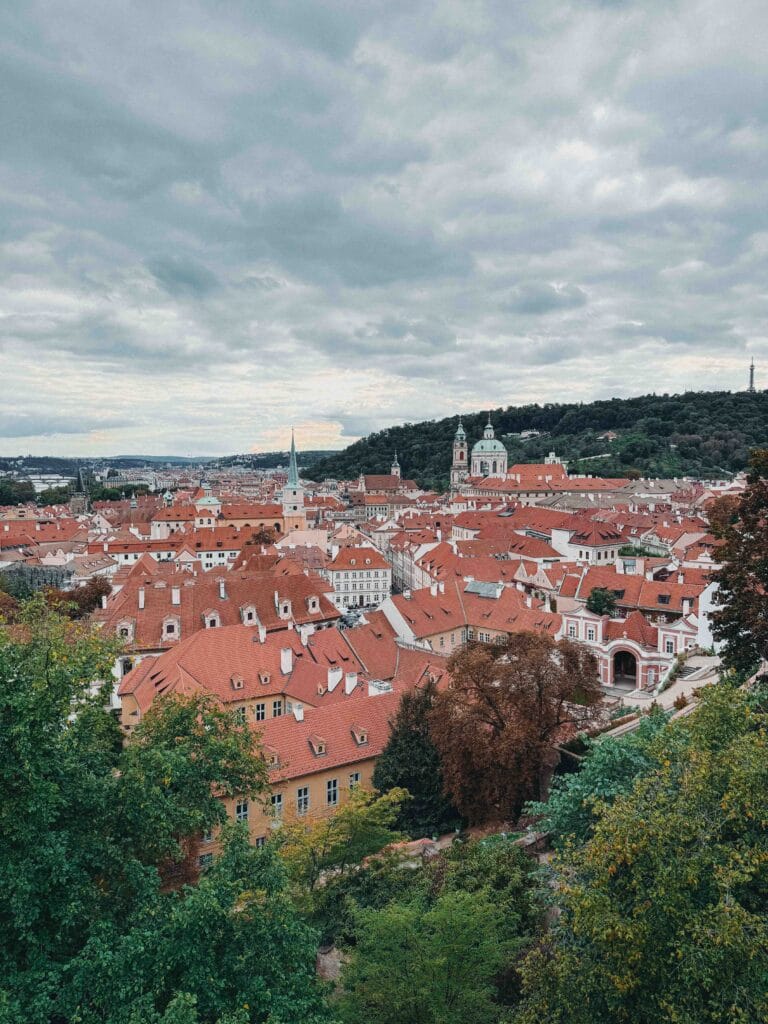
St. Vitus Cathedral dominates the castle complex. This Gothic masterpiece took over 600 years to complete (1344-1929), and the intricate spires, flying buttresses, and detailed stone carvings showcase why. Even viewing just the exterior left us in awe of the architectural evolution spanning centuries.
Evening: Dinner at U Glaubiců
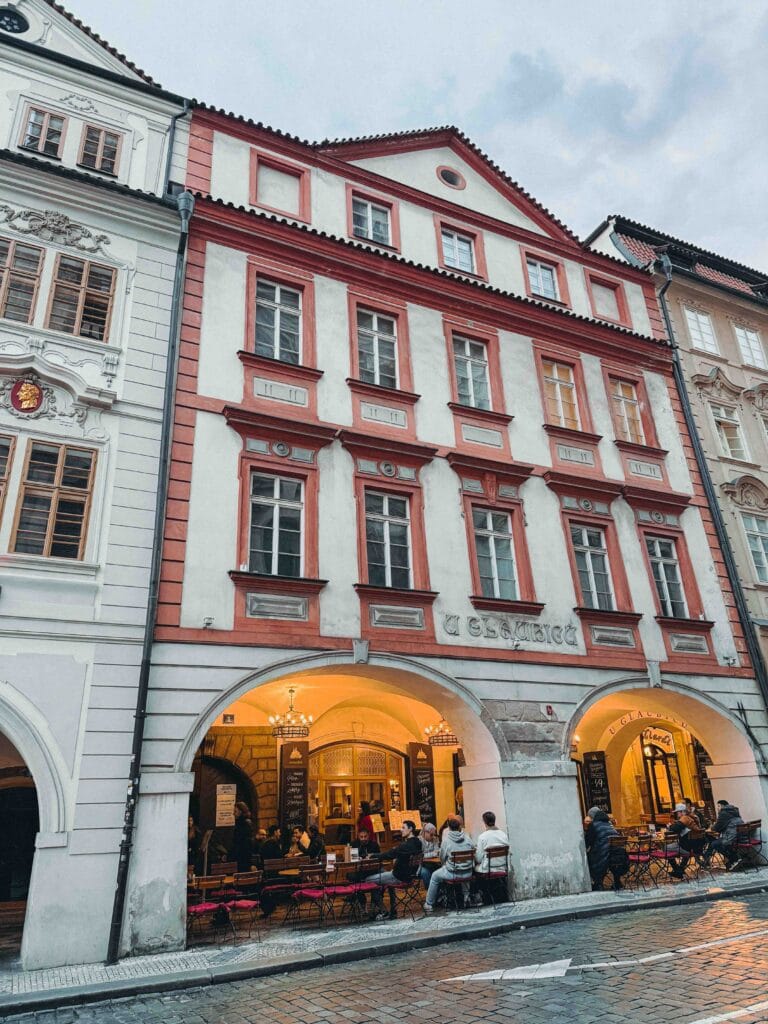
We discovered U Glaubiců almost by accident while taking the less-touristy back path down from the castle. This hidden gem surprised us with its size, we were seated two floors underground in an atmospheric medieval cellar with stone walls, vaulted ceilings, and candlelight creating the perfect ending to our first day.
🍴 See our full U Glaubiců review and menu recommendations
Day 2: Prague Exploration – Sunrise Photography & Old Town Magic
Morning: Golden Hour Photo Session
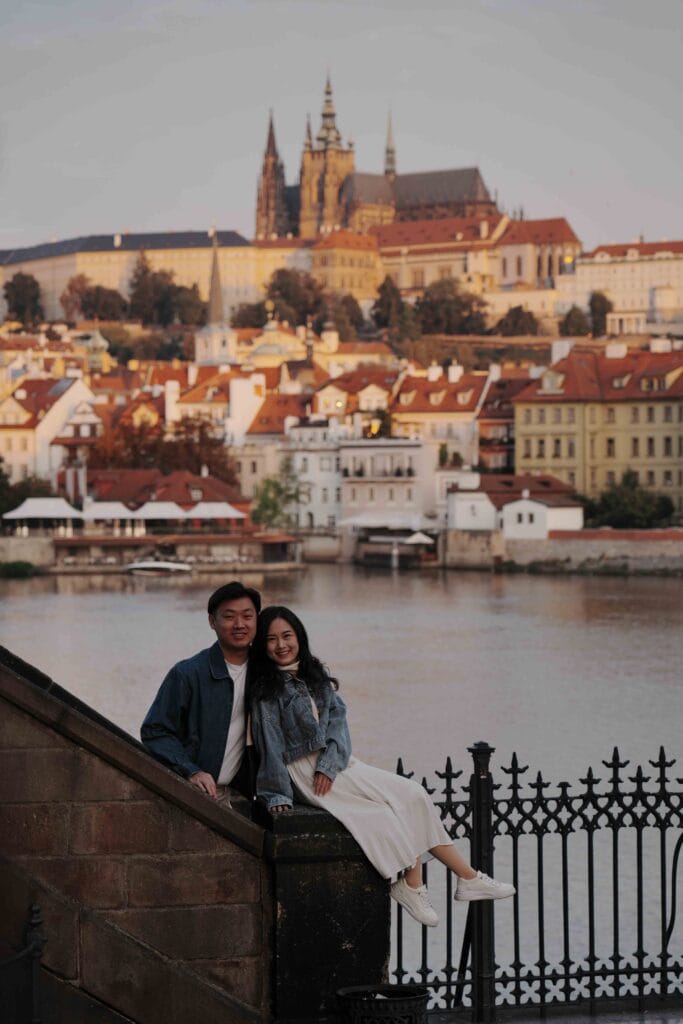
We hired a private photoshoot to make up for our regrets of not having the chance to shoot our wedding photos in Europe. We woke up around 5:30 AM and headed out before dawn, photographing Prague at sunrise had been a dream for years, and the early wake-up was absolutely worth it.
Charles Bridge at Sunrise
Charles Bridge at sunrise might be the most peaceful you’ll ever experience it. Built in 1357, this 516-meter stone bridge is normally packed shoulder-to-shoulder with tourists, artists, and vendors. At sunrise? Just us, the statues, and golden light reflecting off the Vltava River.
Old Town Square
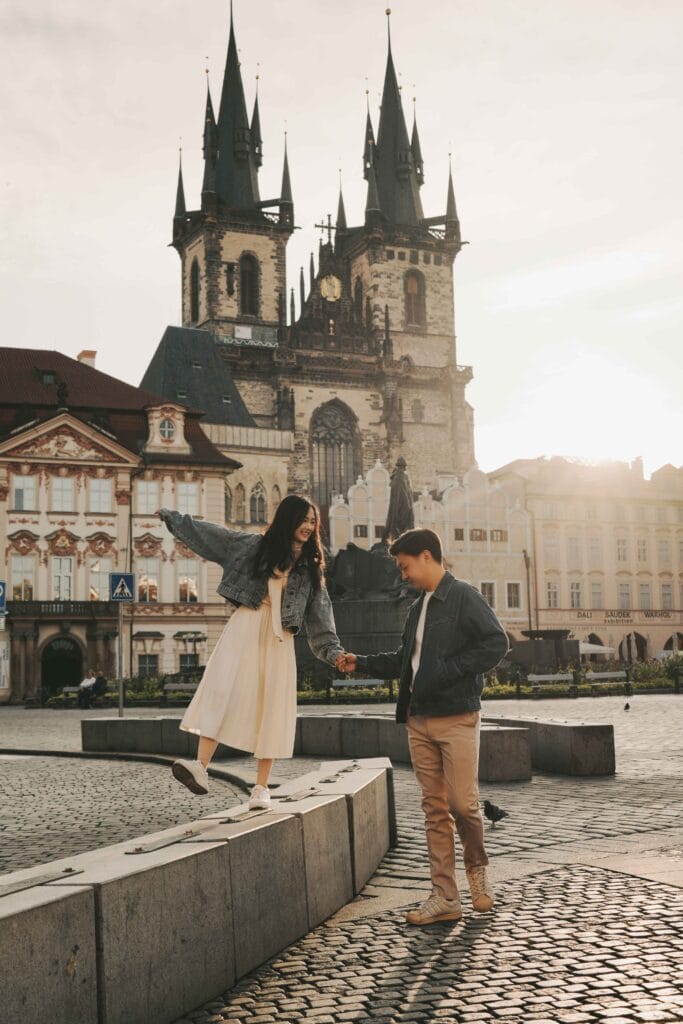
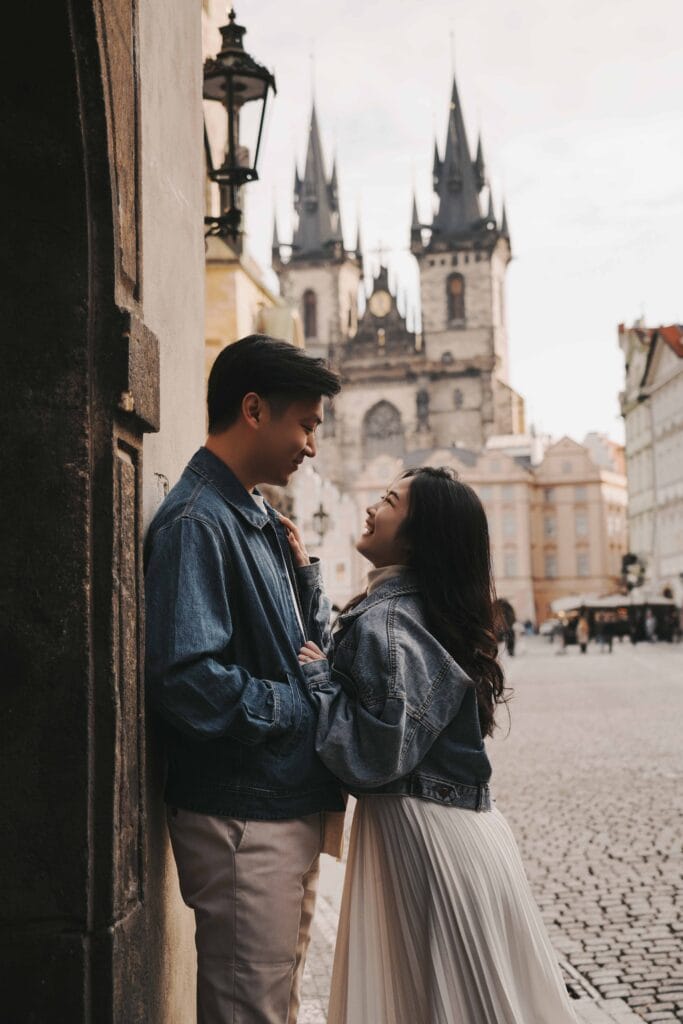
We continued to Old Town Square, where the Astronomical Clock tower stood magnificently without a single person in front of it, a sight nearly impossible during regular hours.
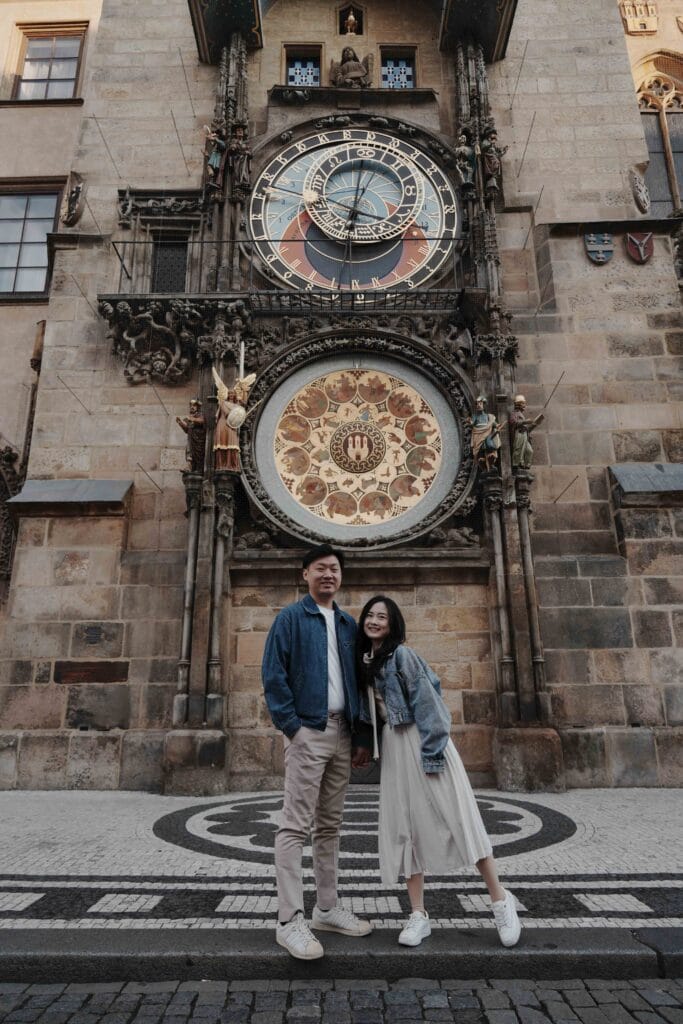
The quiet square also gave us time to admire the twin Gothic spires of the Church of Our Lady before Týn and the Baroque St. Nicholas Church.
Hotel Breakfast
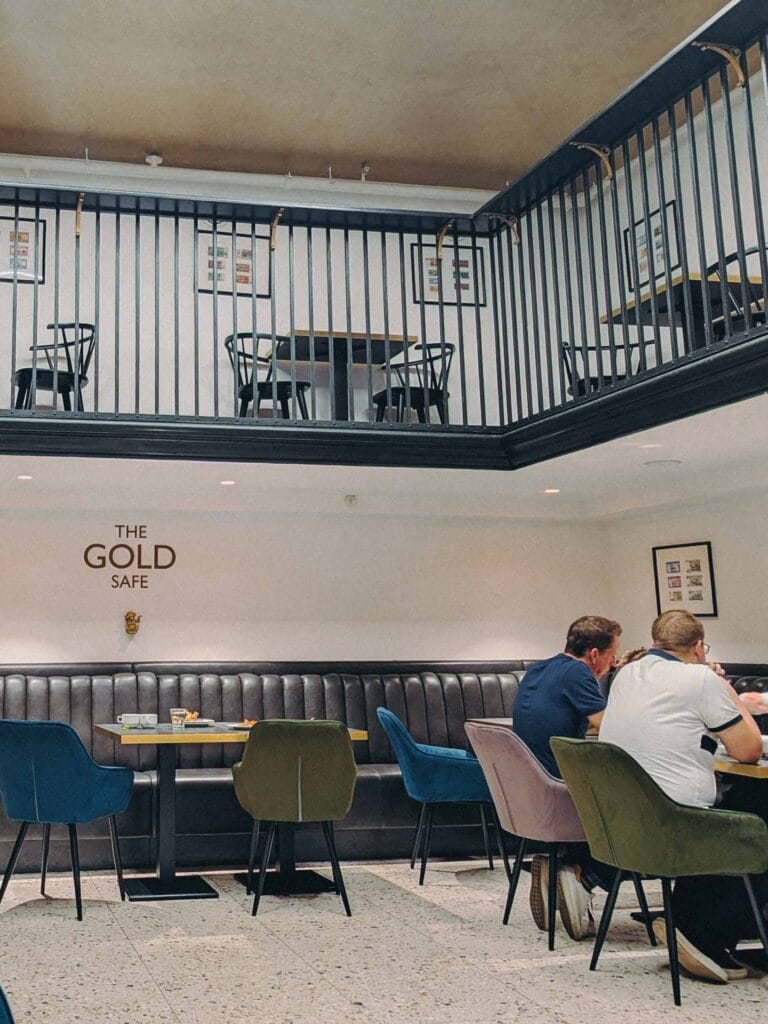
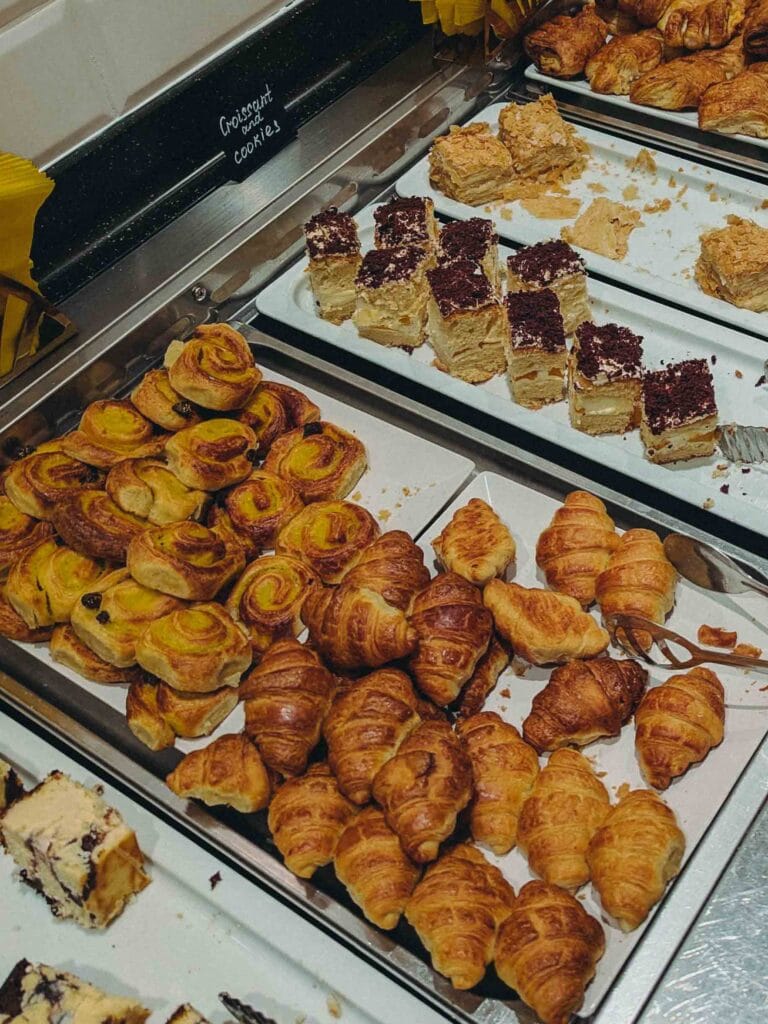
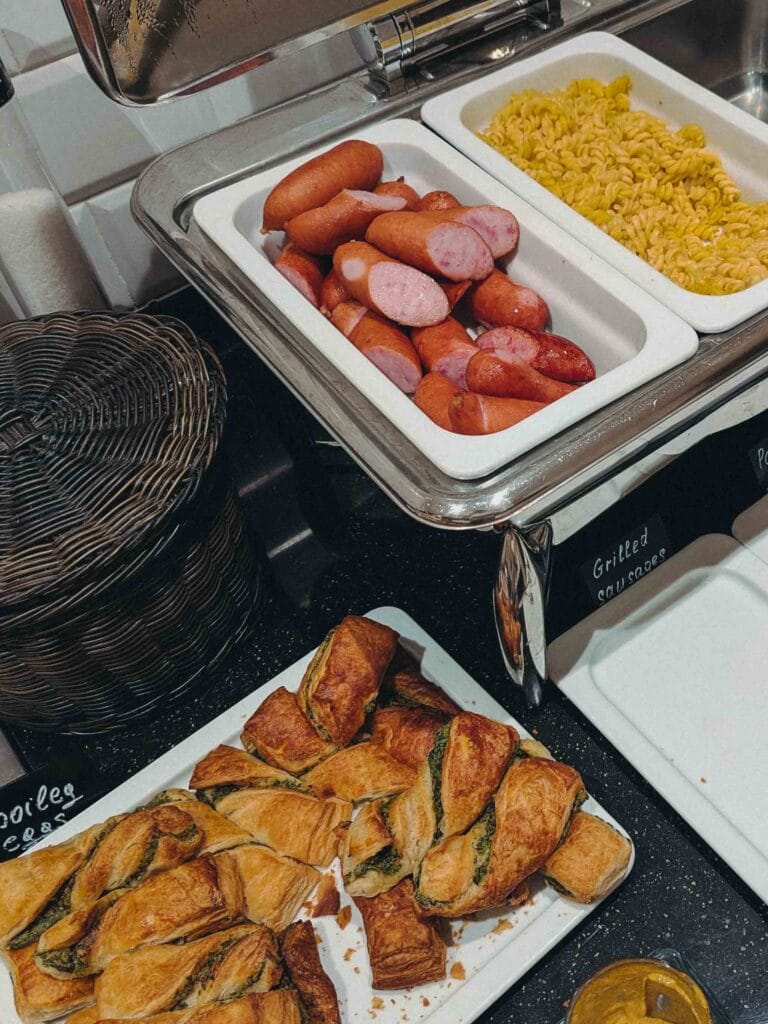
Returning to The Gold Bank, we discovered why it gets such rave reviews, their breakfast spread was easily the best of our entire 12-day trip with fresh pastries, high-quality ingredients, and a lot of choices. After breakfast, we took a short rest before the afternoon’s adventures.
Afternoon: Modern Contrasts & Historic Markets
Dancing House (Fred and Ginger)
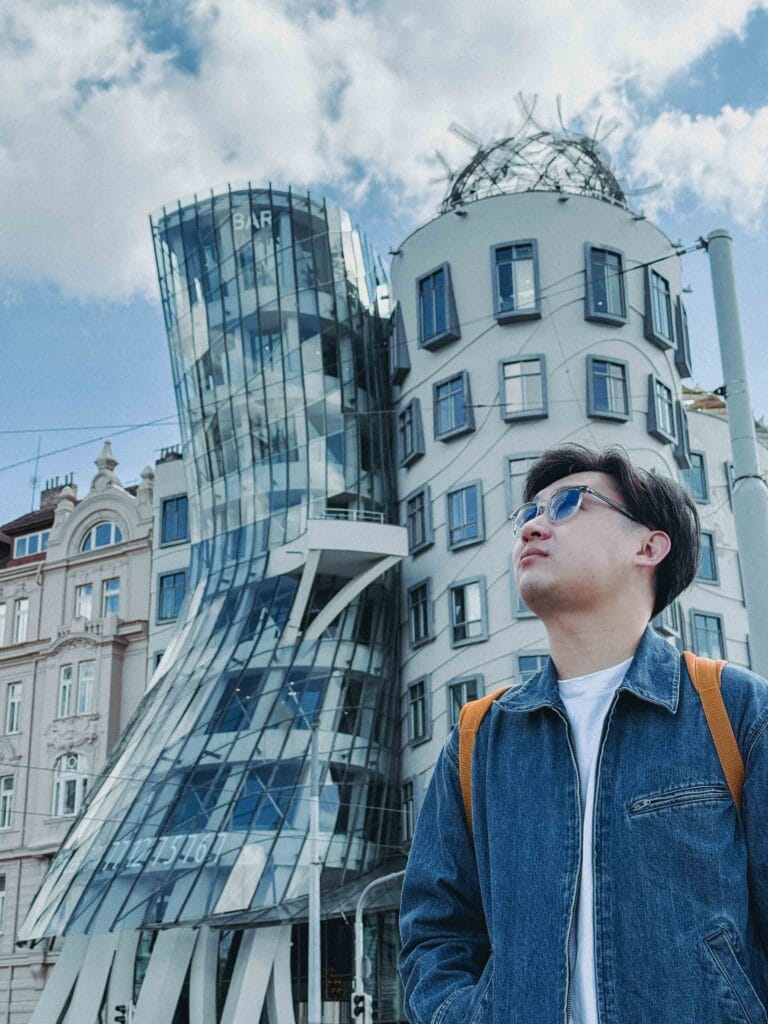
The Dancing House is Prague’s most famous piece of modern architecture. Designed by Vlado Milunić and Frank Gehry and completed in 1996, the deconstructivist building nicknamed “Fred and Ginger” creates a striking contrast against Prague’s Gothic and Baroque surroundings. The curved lines appear to dance, which is exactly the effect the architects intended.
Café Louvre: Einstein’s Favorite
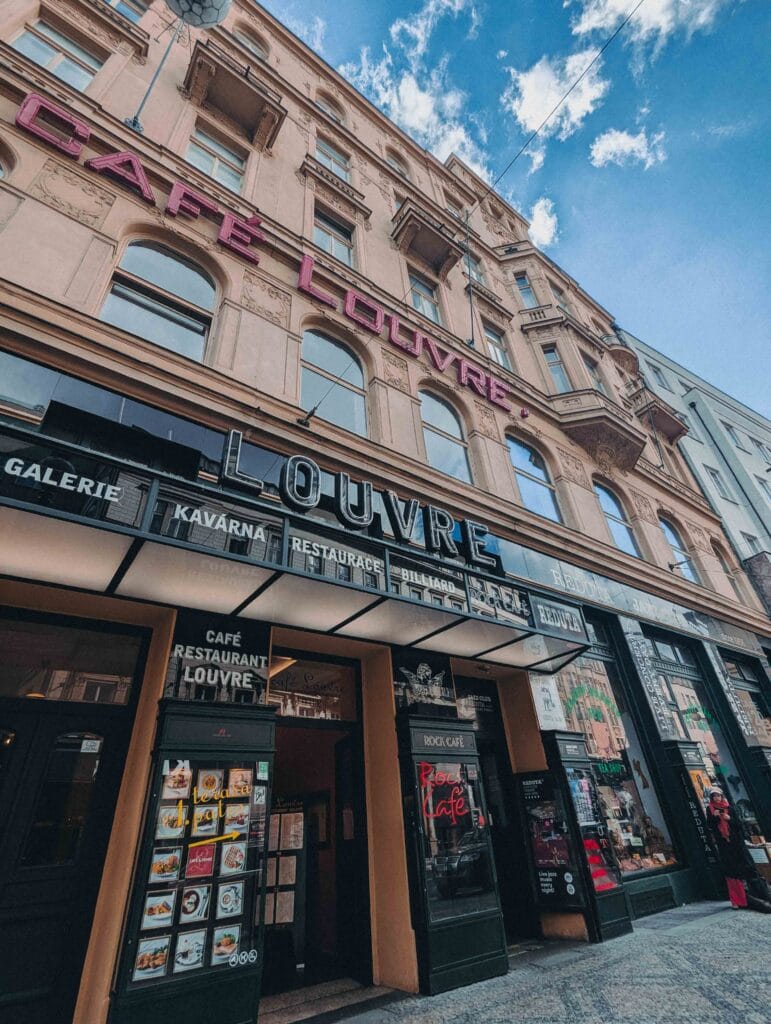
Lunch at Café Louvre felt like dining in a piece of history. This elegant café has been serving customers since 1902, and Albert Einstein was supposedly a regular during his time in Prague (1911-1912). The Art Nouveau interior, high ceilings, and vintage atmosphere make this more than just a meal, it’s an experience.
🍴 See our full Café Louvre review and menu recommendations
Man Hanging Out (Street Art)
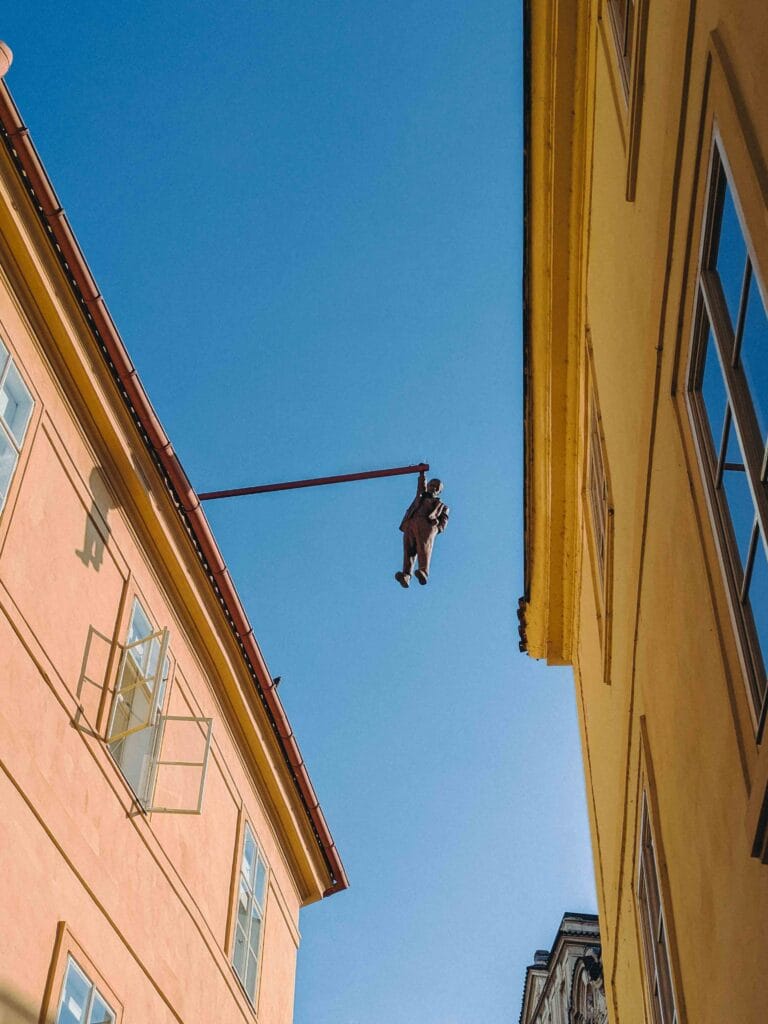
On our walk back to Old Town, we spotted the famous “Man Hanging Out” sculpture by David Černý. This figure of Sigmund Freud dangling from a rooftop beam is easy to miss if you don’t remember to look UP. Located at Husova 21/240, near the Estates Theatre, it’s one of several controversial public artworks by Černý throughout Prague.
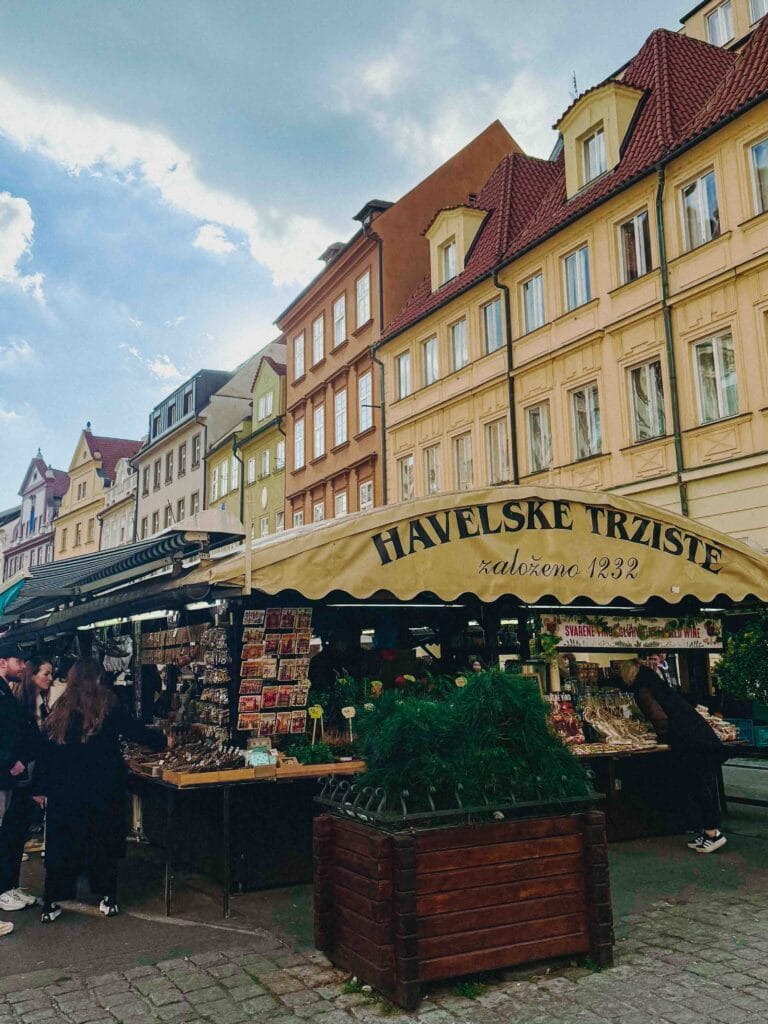
Havelské Tržiště (Havel’s Market)
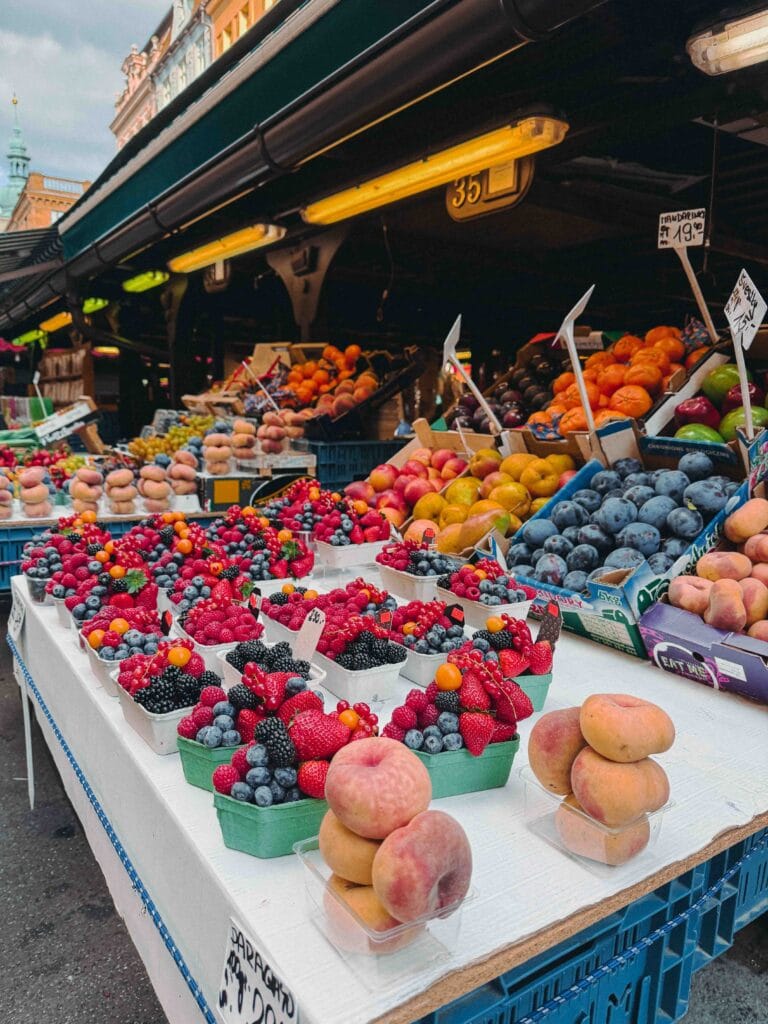
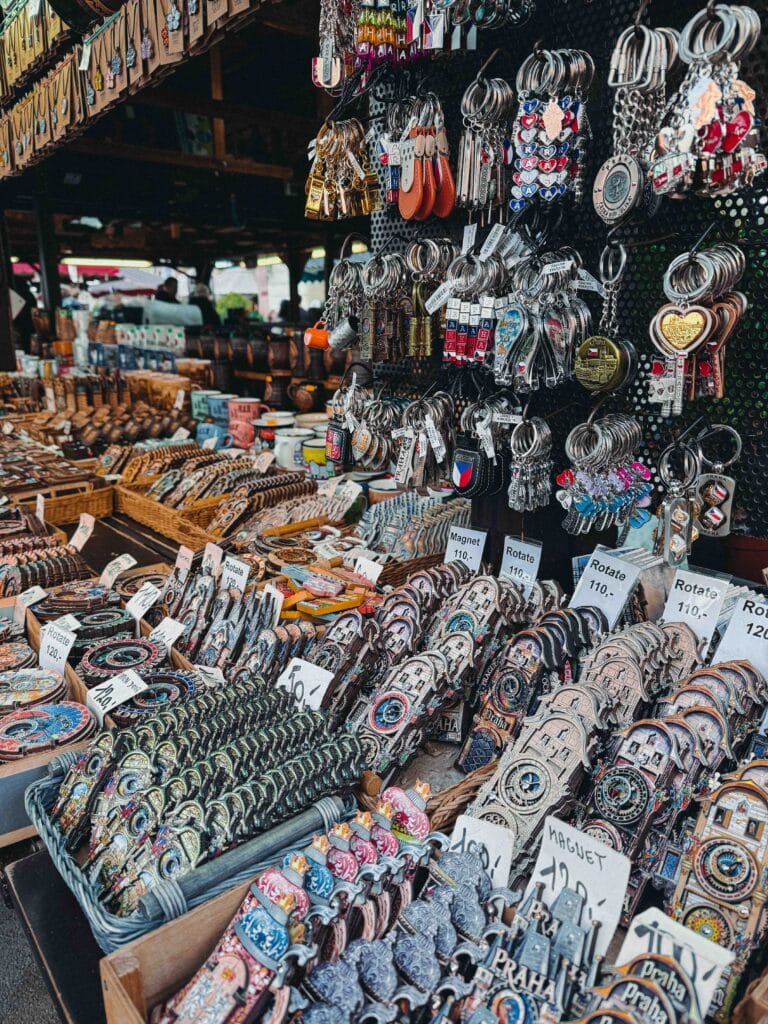
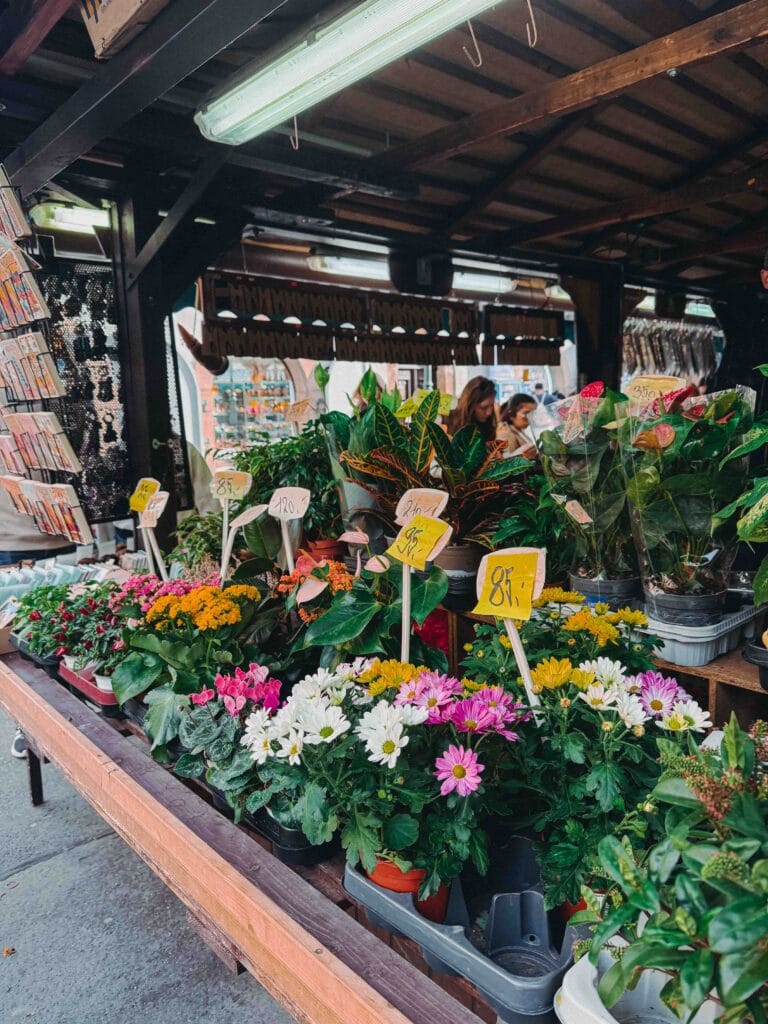
This open-air market has operated since 1232, making it one of the oldest markets in Prague. Today, it’s primarily aimed at tourists, selling Czech souvenirs, fresh fruit, trdelník (chimney cakes), and wooden toys.
Our Verdict: Worth a quick browse for the historical significance, but prices are significantly higher than shops just one street away. We looked but didn’t buy anything here.
Old Town Square – Taking It All In
With proper daylight and no photography pressure, we finally had time to truly appreciate Old Town Square’s grandeur. We were walking around looking at the architecture and watching the Astronomical Clock show.
Evening: Charles Bridge Sunset
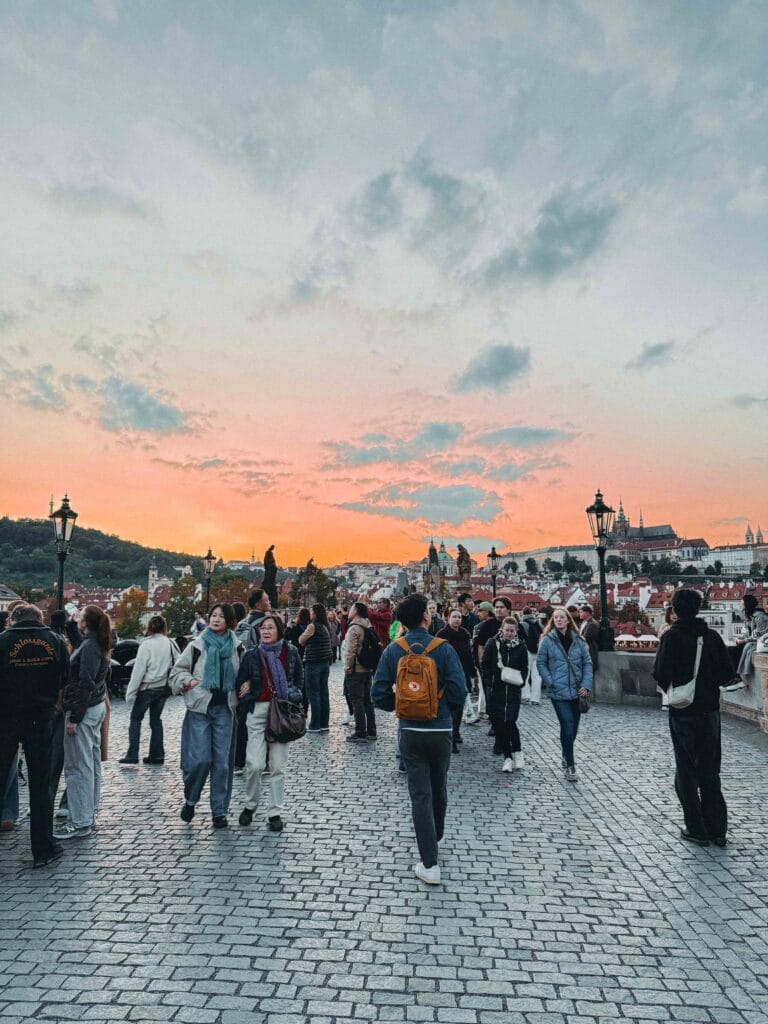
Since we started our day with Charles Bridge at sunrise, ending it at sunset felt like the perfect romantic bookend. The bridge was now packed with people, creating a completely different energy than the peaceful morning, the perfect conclusion to our Prague stay before our early bus to Salzburg tomorrow.
🎟️ Get your Charles Bridge Classic River Cruise here!
Day 3: Salzburg – Mozart, Mountains & Alpine Charm
Morning: Prague to Salzburg
We booked the FlixBus from Prague to Salzburg (approximately 5 hours). This bus journey passes through Czech and German countryside before entering Austria.
Afternoon: Imperial Gardens & Mozart’s Legacy
Mirabell Palace & Gardens
Mirabell Palace was our first stop, and we were not disappointed. Built in 1606, these Baroque gardens are a masterpiece of landscape design with perfect geometry, trees planted in precise parallel rows, and vibrant colorful blooms even in October.
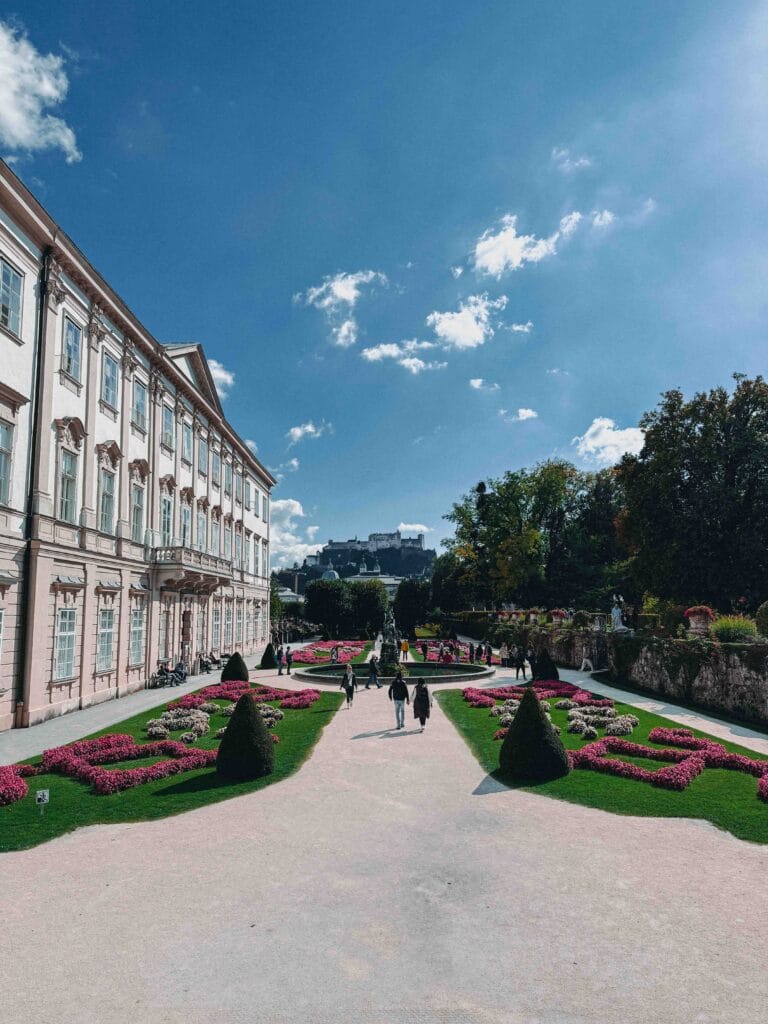
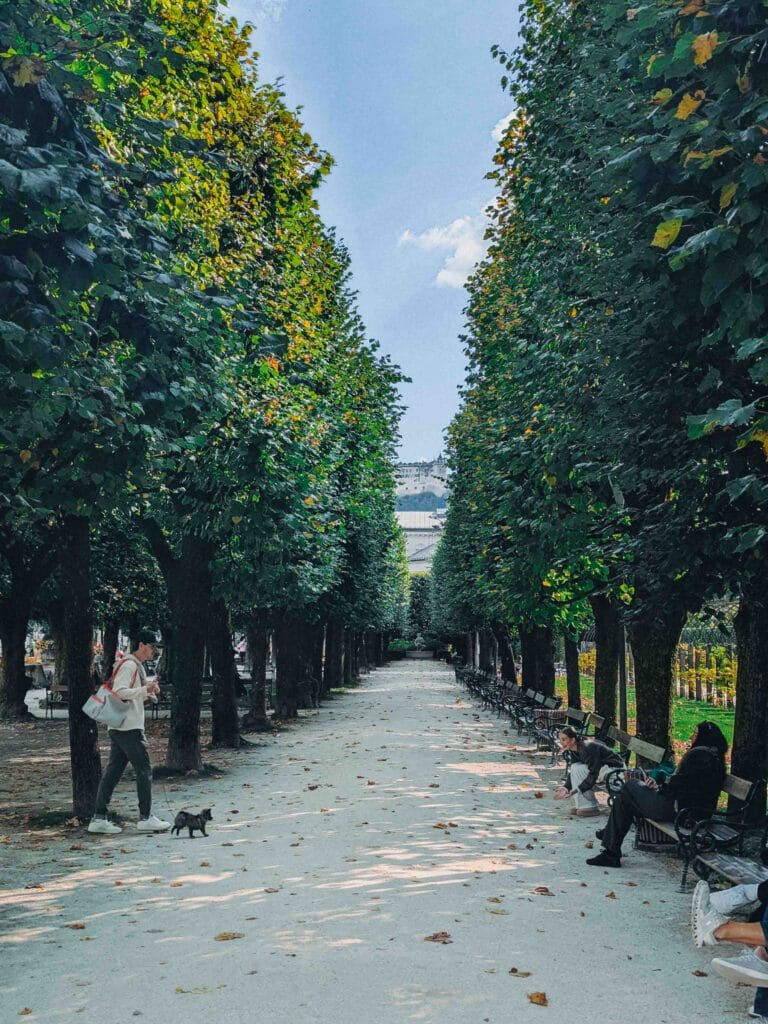
The tree-lined paths immediately reminded me of Nami Island in Korea. I genuinely wished this could be my backyard! The combination of manicured gardens, fountain features, and mountain backdrop creates a stunning setting.
Sound of Music Connection: Recognize the gardens from “Do-Re-Mi”? The steps where the children danced are here!
Mozart’s Residence:
The larger building where Mozart lived from 1773-1780. Mostly reconstructed after WWII damage with fewer authentic artifacts and heavy focus on reconstructed rooms.
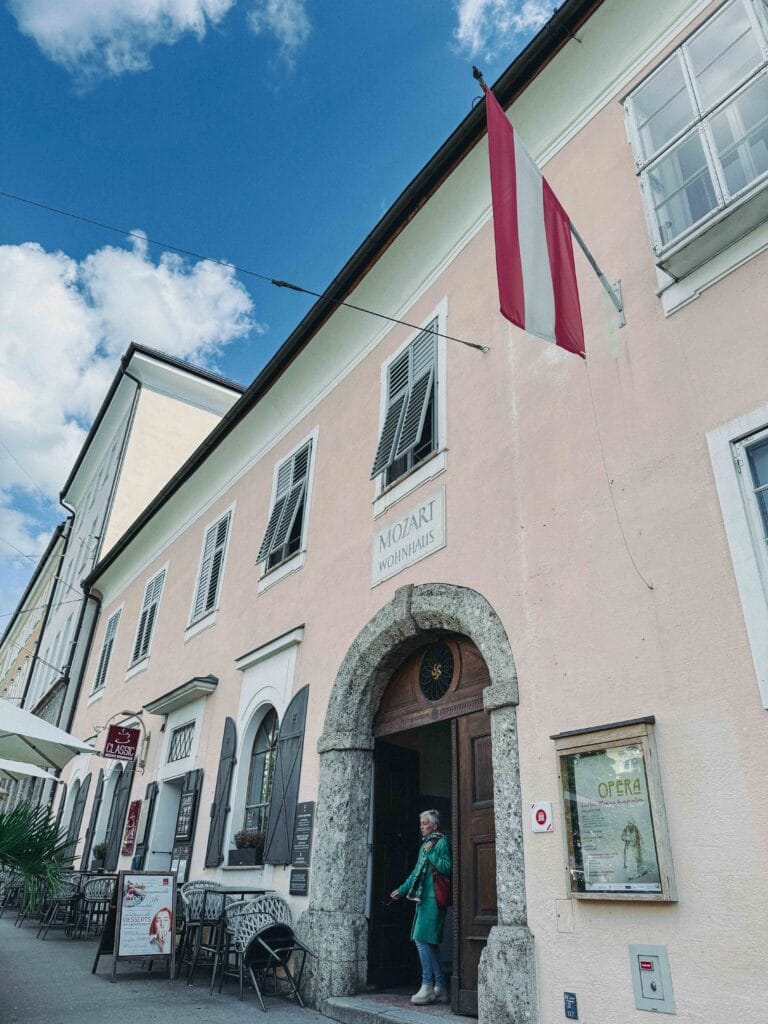
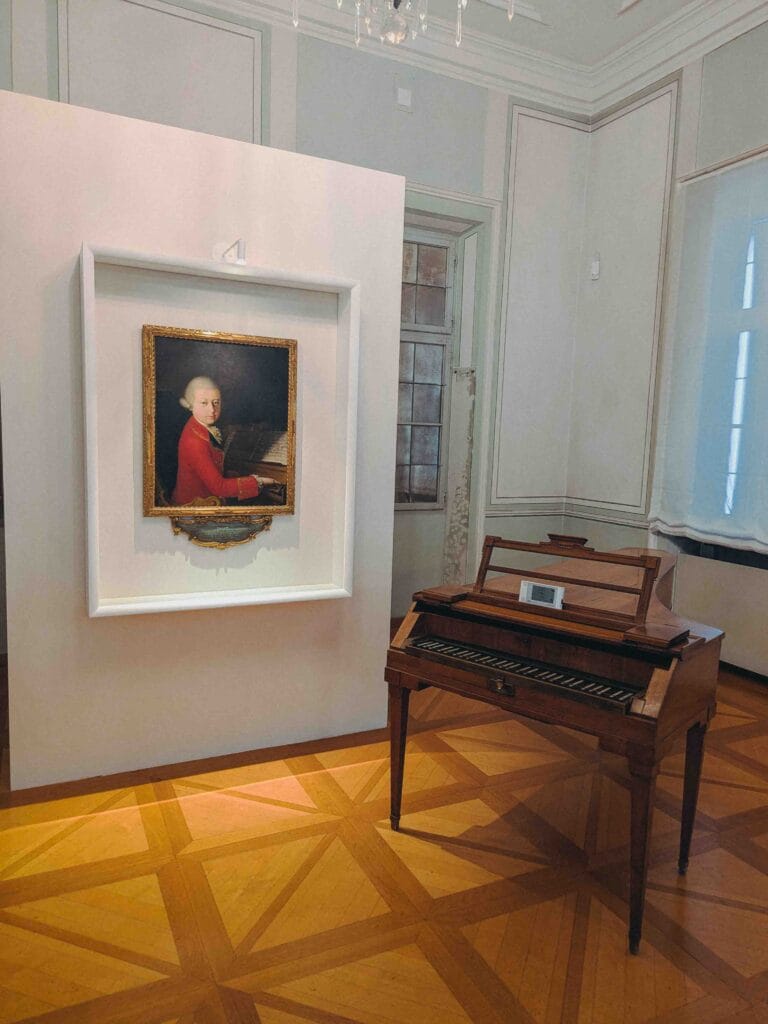
Mozart’s Birthplace:
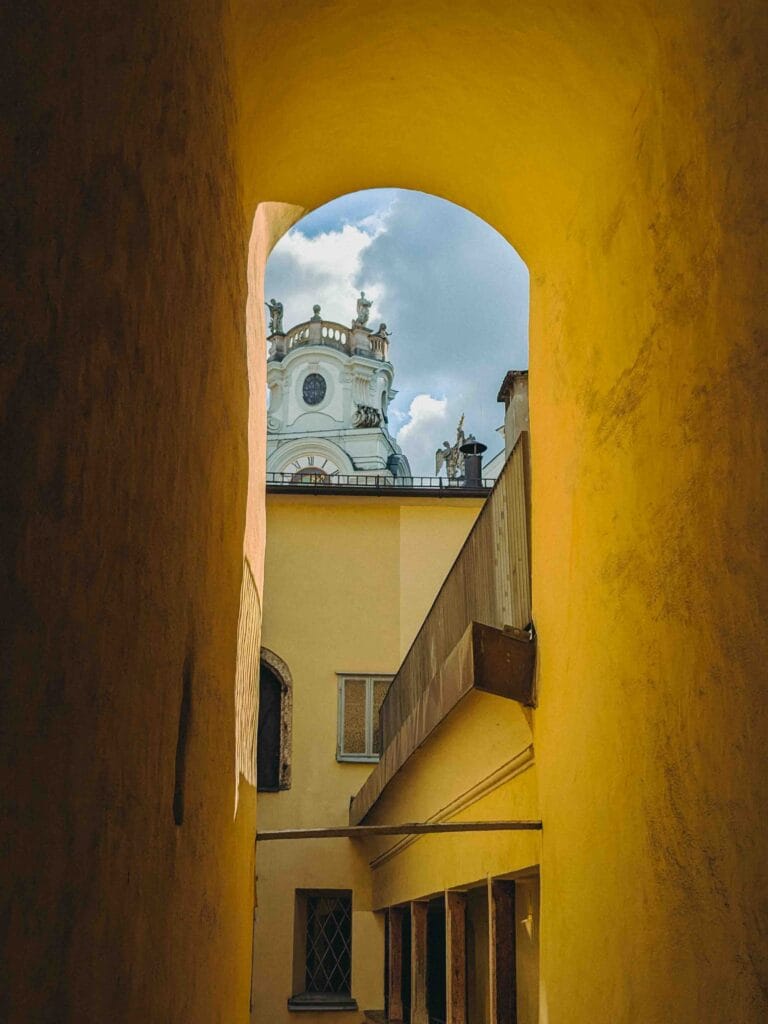
Mozart’s actual birthplace on Getreidegasse, where he was born on January 27, 1756. This original building houses his childhood violin, authentic artifacts, and better exhibits about his early life. The more intimate atmosphere makes it feel more connected to Mozart’s actual history.
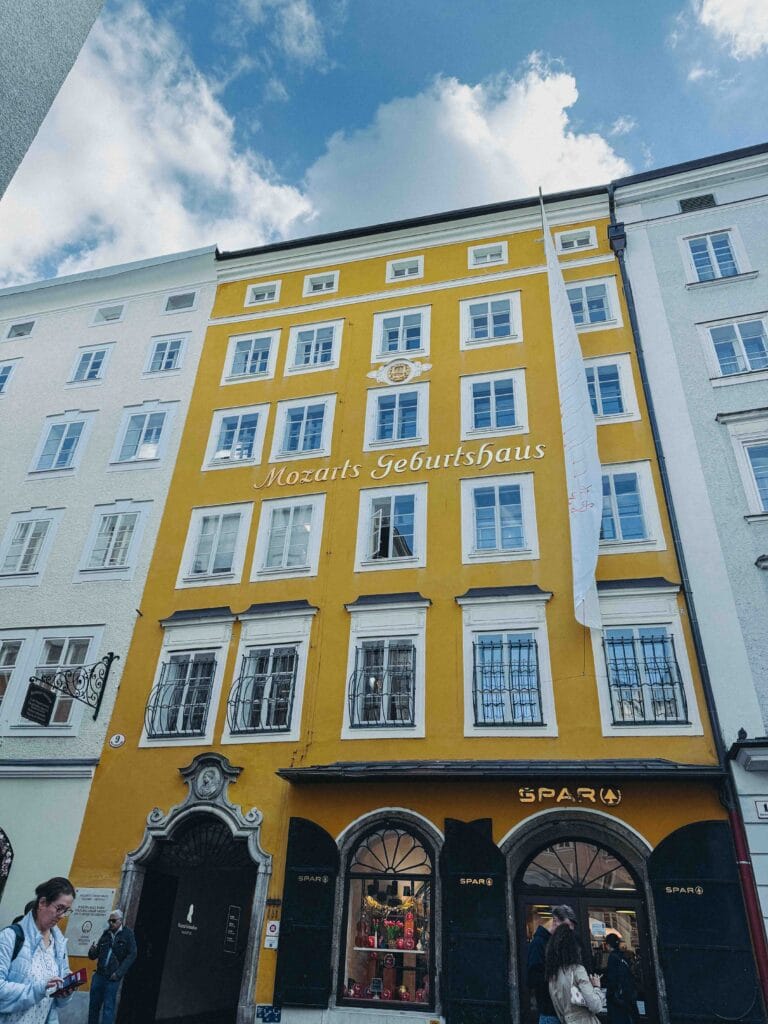
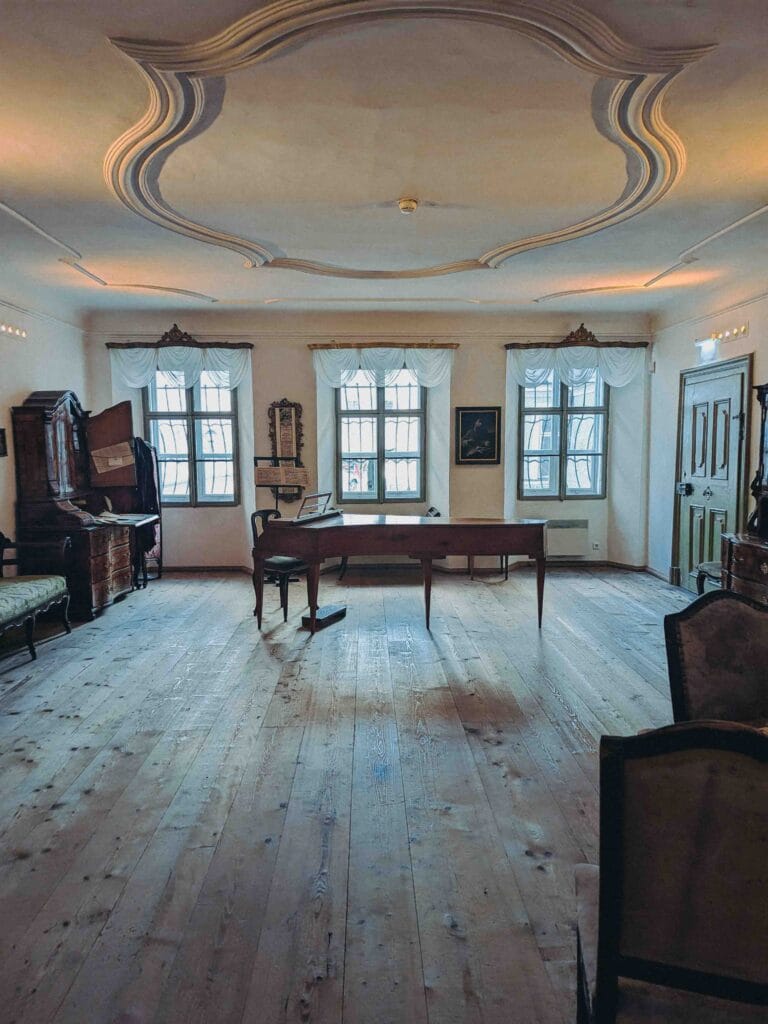
💡 Our Recommendation: If you only have time for one, Mozart’s Birthplace is more authentic and historically significant.
Getreidegasse: Salzburg’s Most Beautiful Street
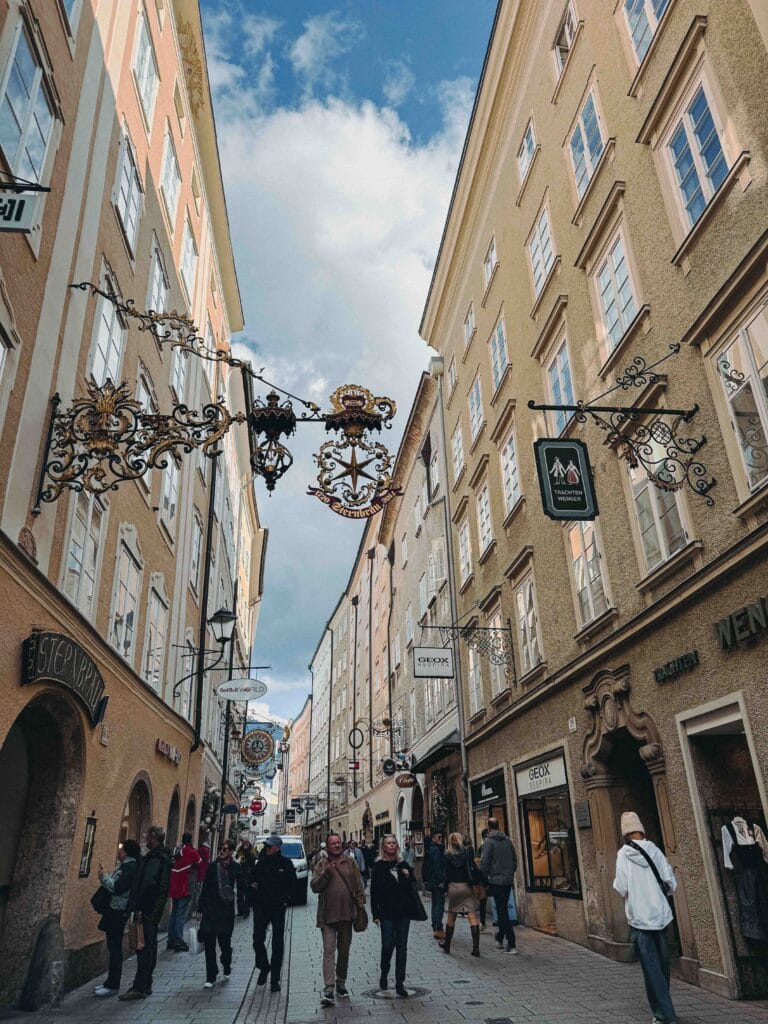
Walking along Getreidegasse felt like stepping into a different era. This narrow medieval shopping street is famous for its beautiful wrought-iron guild signs hanging from every building, ornate iron signs indicate what each shop sells (pretzel for bakery, shoe for cobbler, etc.).
Mozartplatz (Mozart Square)
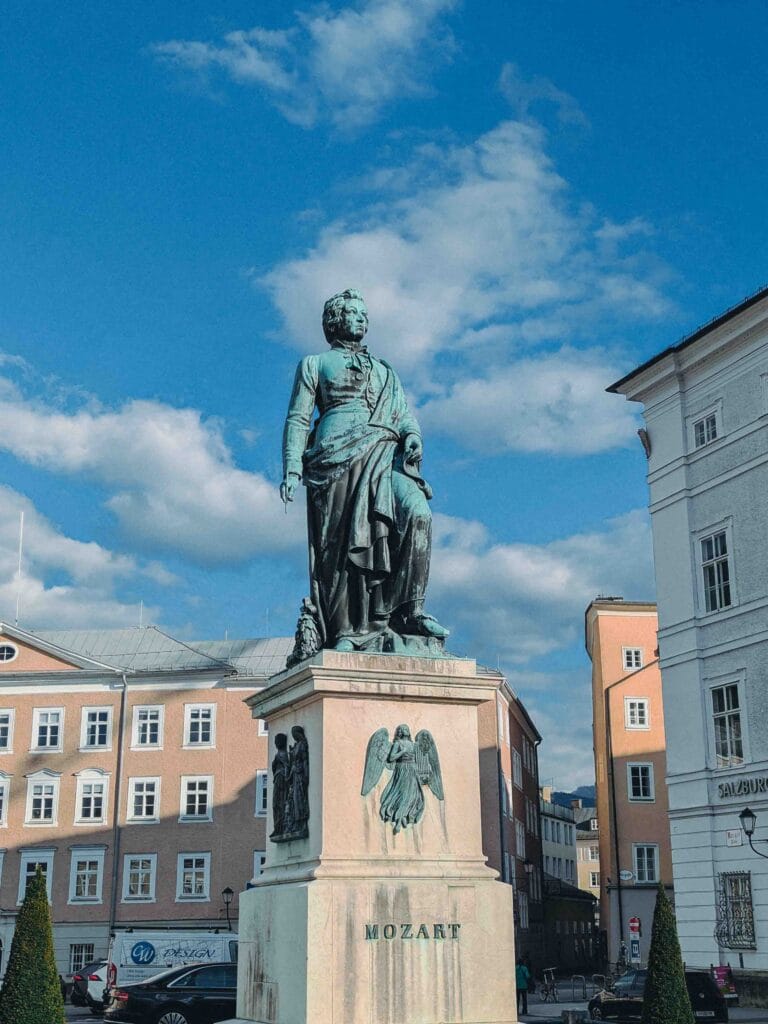
We concluded our Mozart-themed afternoon at Mozartplatz, featuring a prominent Mozart memorial statue erected in 1842. The bronze statue shows Mozart holding a pen and sheet music, a fitting tribute to the city’s most famous son.
Evening: Dinner at Bärenwirt
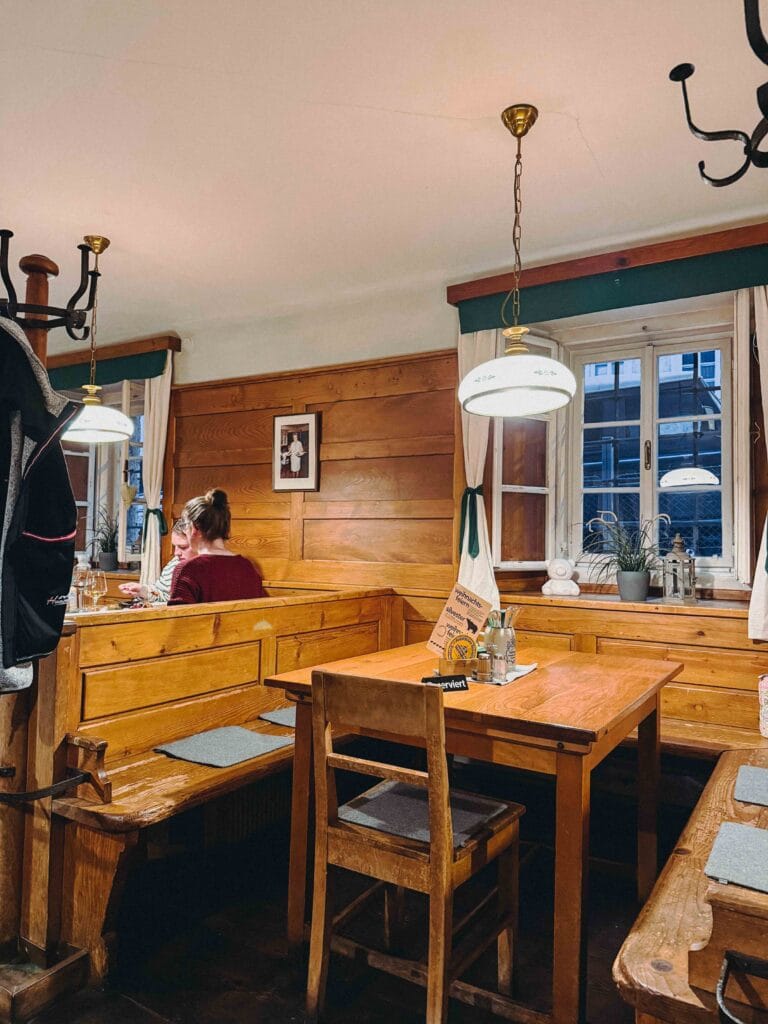
We ended our whirlwind Salzburg day with dinner at Bärenwirt, a traditional Austrian tavern. After a full day of walking and culture, the hearty Austrian portions and cozy atmosphere were exactly what we needed.
🍴 See our full Bärenwirt review and menu recommendations
What We Missed: Due to time constraints, we didn’t make it to Hohensalzburg Fortress, one of Salzburg’s most iconic sights sitting 120 meters above the city.
💡 Our Recommendation: If you have more than one day in Salzburg (which we recommend), definitely visit the fortress. Take the funicular up and allocate 2-3 hours.
Day 4: Munich – Bavarian Beer Culture & Oktoberfest Magic
Morning: Salzburg to Munich
The train journey from Salzburg to Munich is one of the most scenic short trips in Europe. We booked the Bayern-Ticket (Bavaria Day Ticket), which offers unlimited regional train travel and is incredibly budget-friendly for groups. This was a one-day trip from Salzburg, returning in the evening.
🚂 See our detailed How to Get from Salzburg to Munich Guide
Munich was my return to a city I had fallen in love with back in 2016. Stepping off the train brought back wonderful memories.
Afternoon: Beer, History & the Famous Glockenspiel
Hofbräuhaus München: The Ultimate Beer Hall
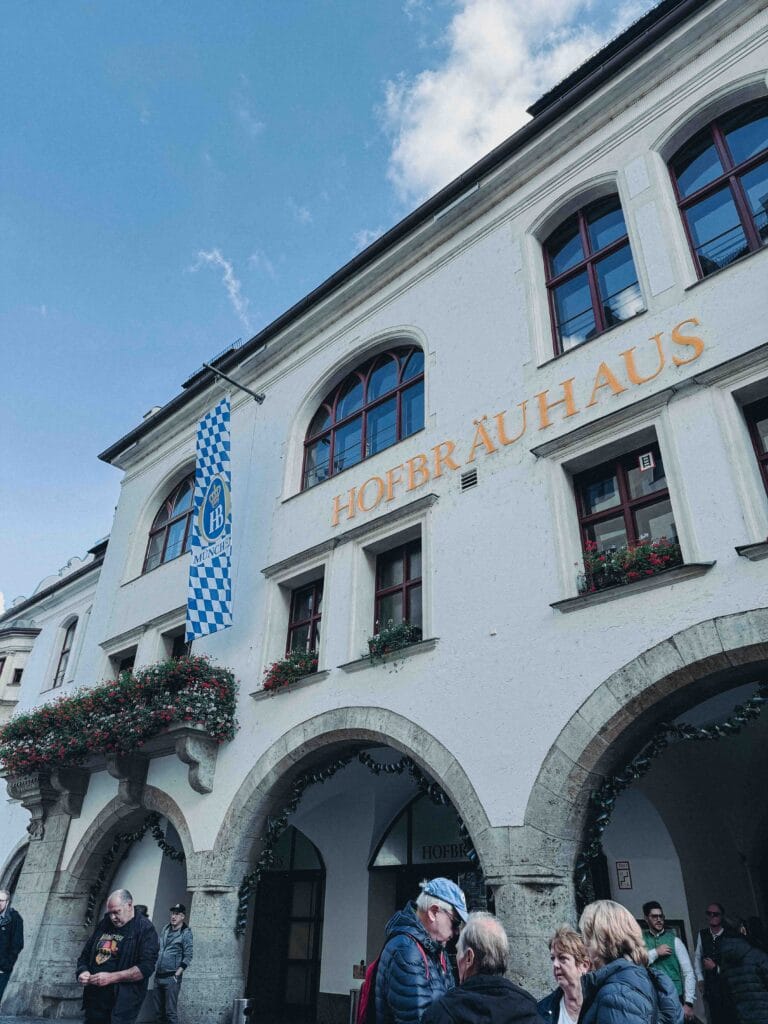
We went straight to the legendary Hofbräuhaus for an early lunch. Founded in 1589 by the Duke of Bavaria, Hofbräuhaus isn’t just a restaurant, it’s a living institution of Bavarian culture.
The Schweinshaxe (roasted pork knuckle) was exactly as I remembered from 2016, possibly the best I’ve ever had! The skin crackles perfectly, the meat falls off the bone, and the portion could feed two people.
🍴 See our full Hofbräuhaus review and menu recommendations
Bavarian State Opera, Feldherrnhalle & Hofgarten
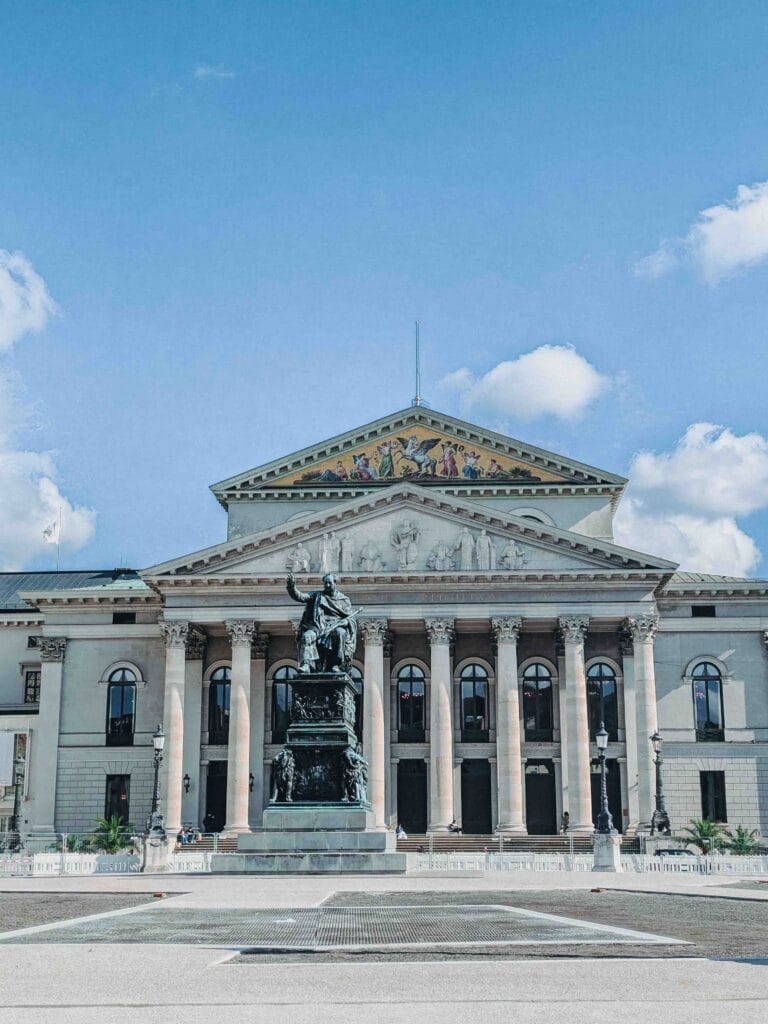
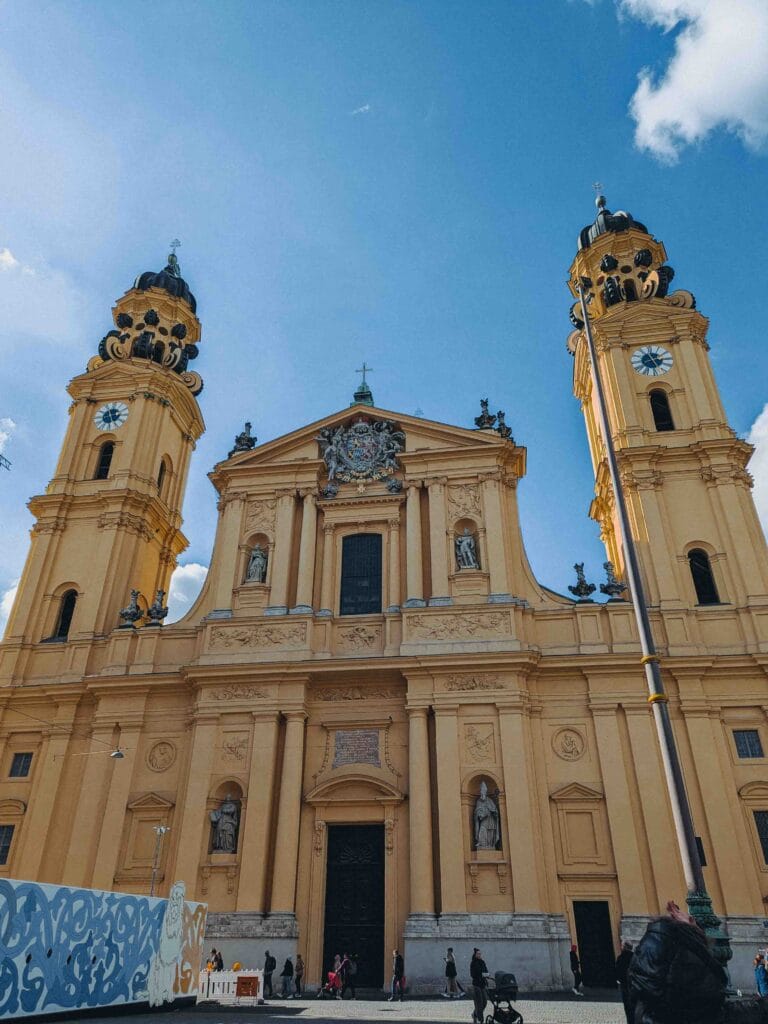
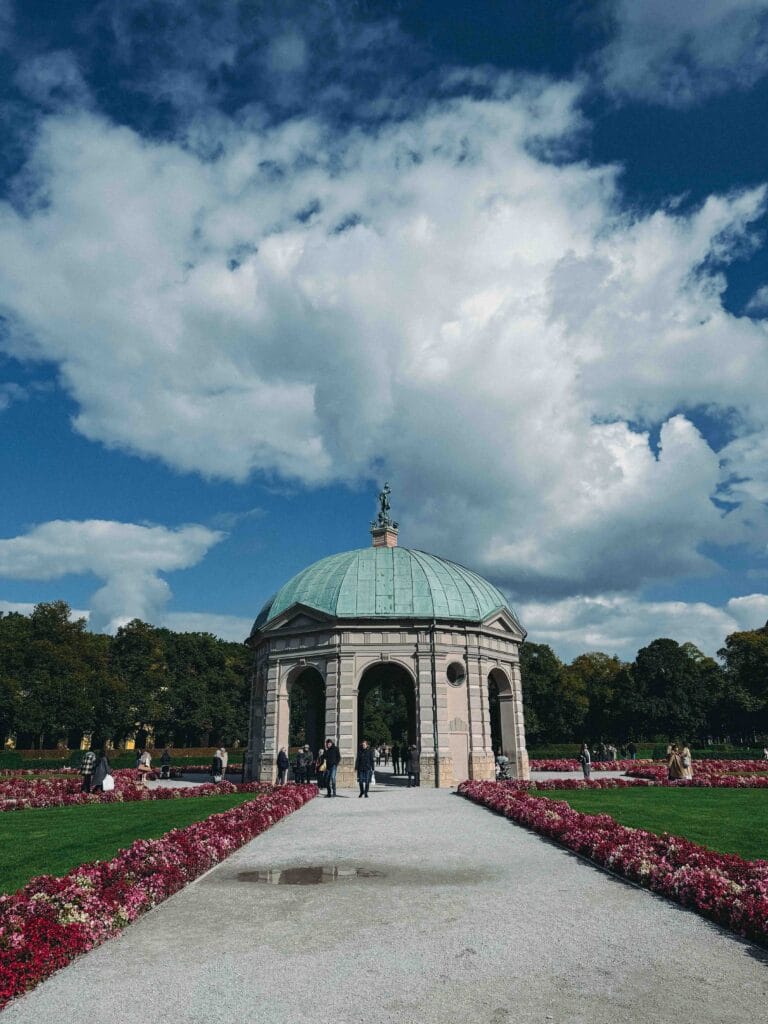
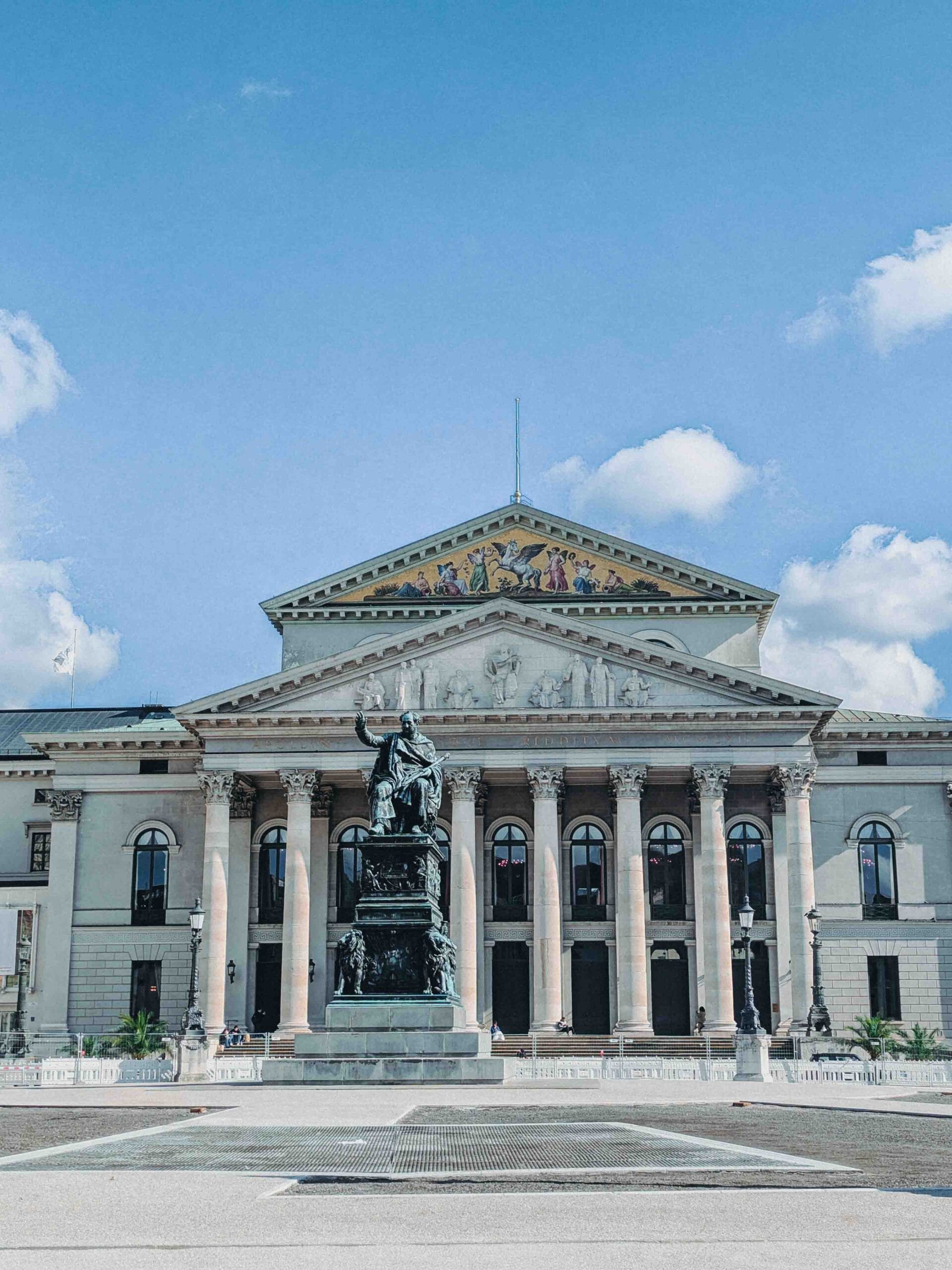
After that heavy lunch, we needed a walk! We strolled through Munich’s historic center, admiring the neo-classical Bavarian State Opera, the Feldherrnhalle (unfortunately under maintenance and covered in scaffolding), and the peaceful Hofgarten with its Italian Renaissance garden and octagonal temple pavilion.
Viktualienmarkt & Bavarian Donuts
Viktualienmarkt is Munich’s most famous food market, operating since 1807. Today it’s a vibrant gourmet market with high-quality products, colorful atmosphere, and a central beer garden area.
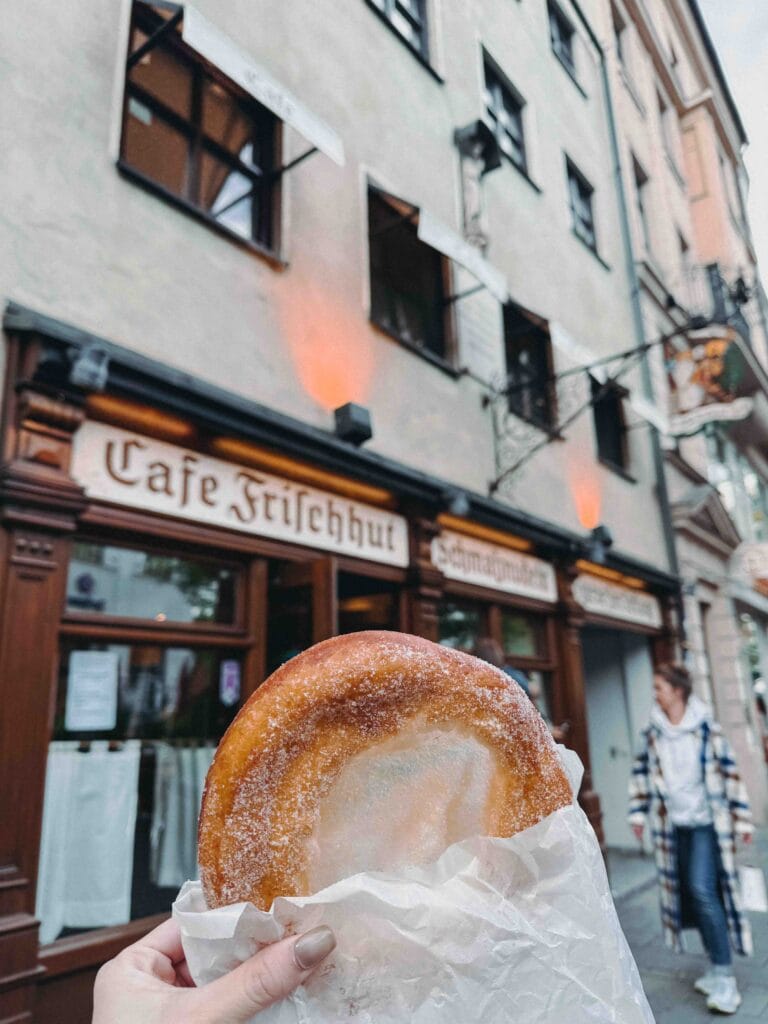
We couldn’t resist stopping at Café Frischhut for fresh Schmalzgebäck, Bavarian donuts. These aren’t your American-style donuts but lard-fried pastries dusted with powdered sugar, served warm. They were greasy, sugary, warm perfection!
Marienplatz & the Glockenspiel Show
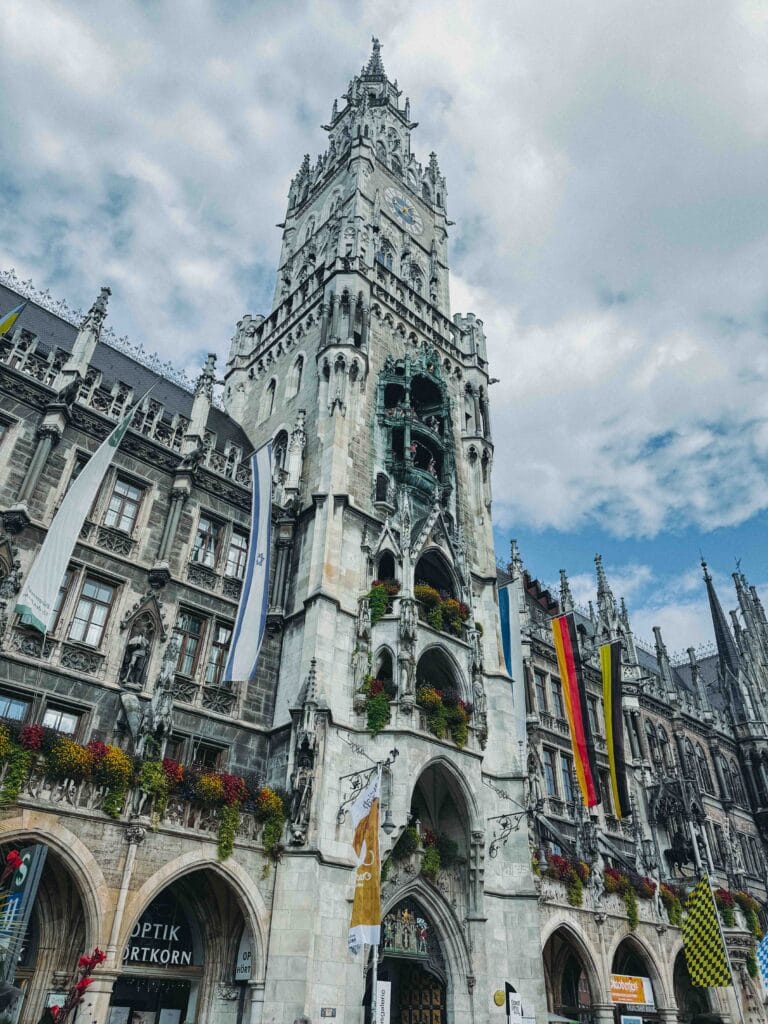
Marienplatz is Munich’s central square and the heart of the city since 1158. The square is dominated by the New Town Hall (Neues Rathaus) and its famous Glockenspiel clock tower.
Glockenspiel Schedule: Daily at 11 AM and 12 PM (plus 5 PM from March-October)
Is it touristy? Absolutely. Is it worth it? Also absolutely!
Evening: Oktoberfest – The Experience of a Lifetime
This was it, my first time at Oktoberfest, the world’s largest beer festival!
First Impressions:
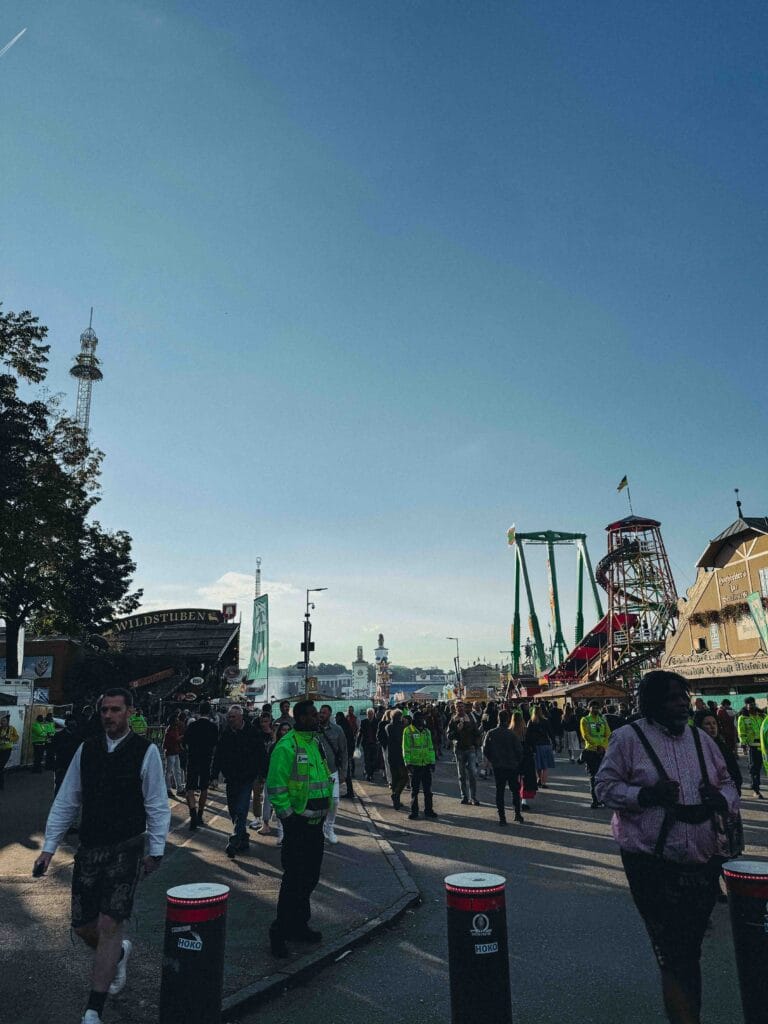
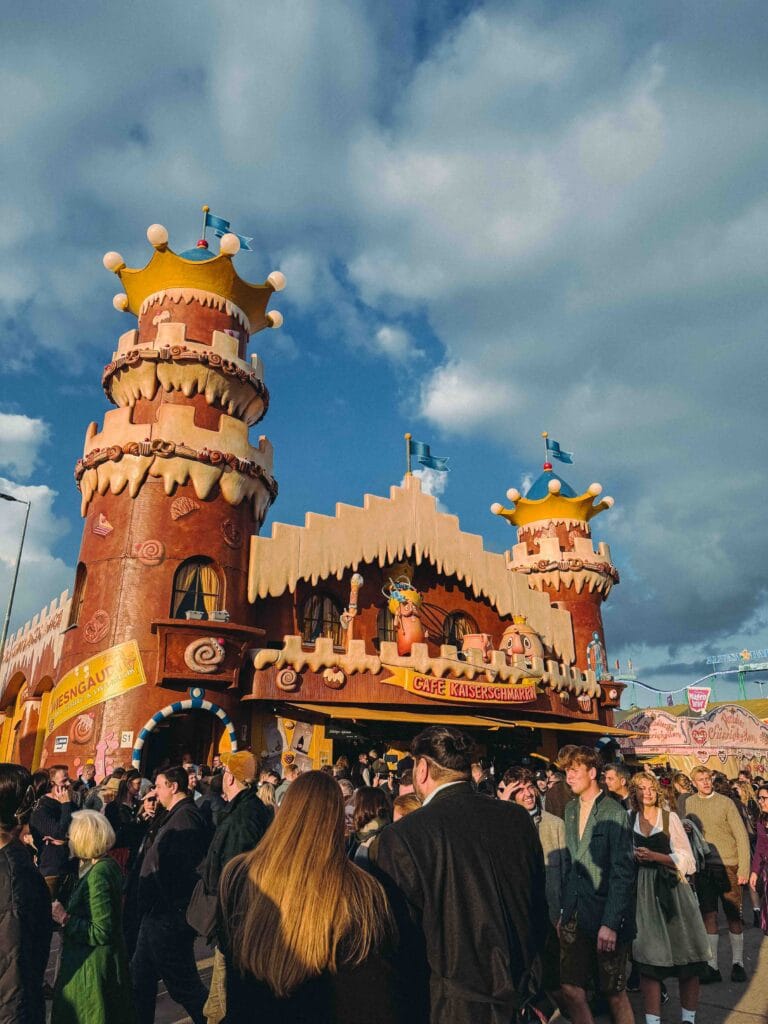
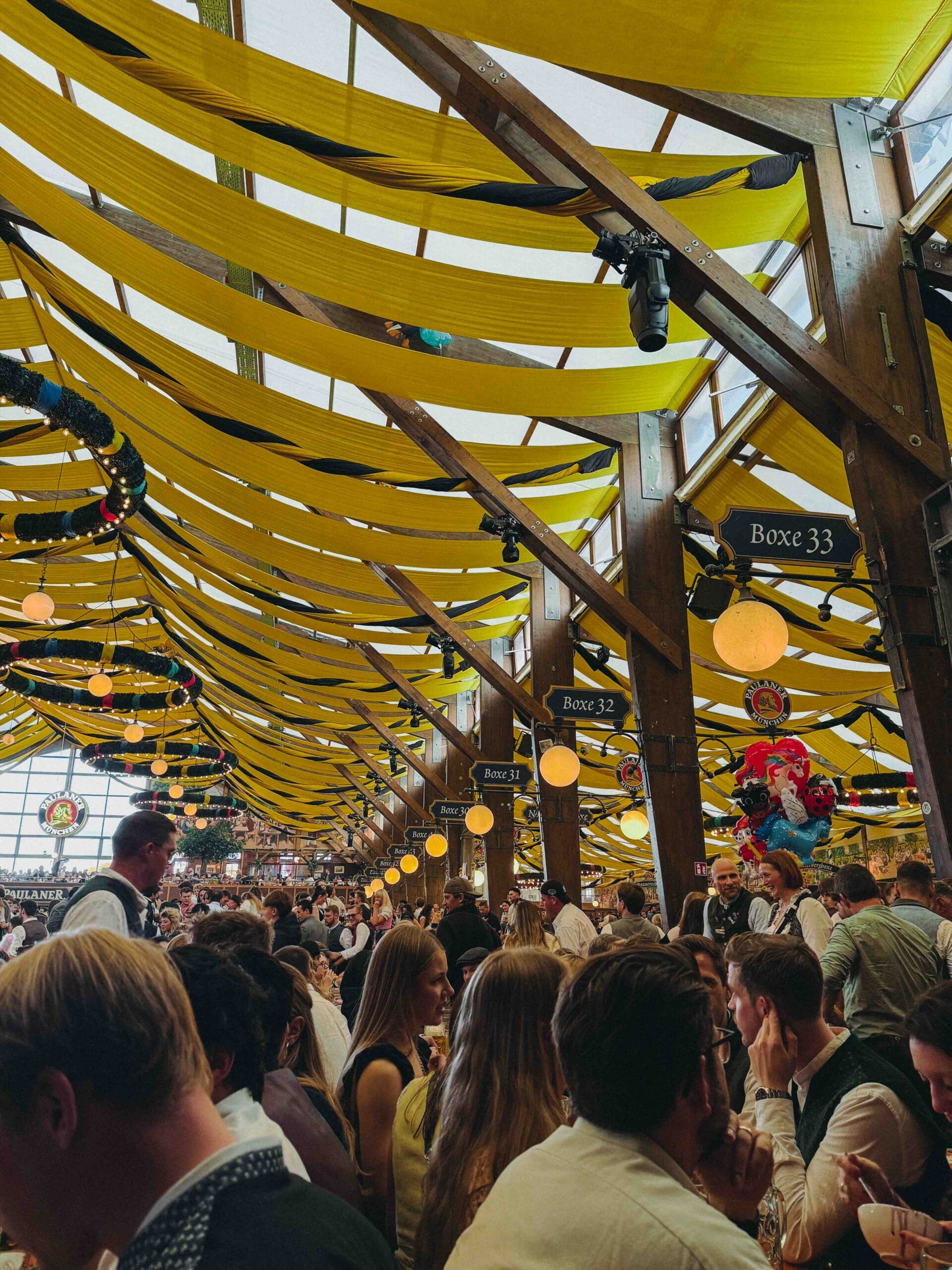
Oktoberfest isn’t just a beer festival, it’s a MASSIVE funfair! I was genuinely shocked by the scale: giant Ferris wheel, massive roller coasters, carousels, log flumes, games, and thousands of people in traditional Bavarian dress (dirndls and lederhosen).
Getting Into the Paulaner Tent
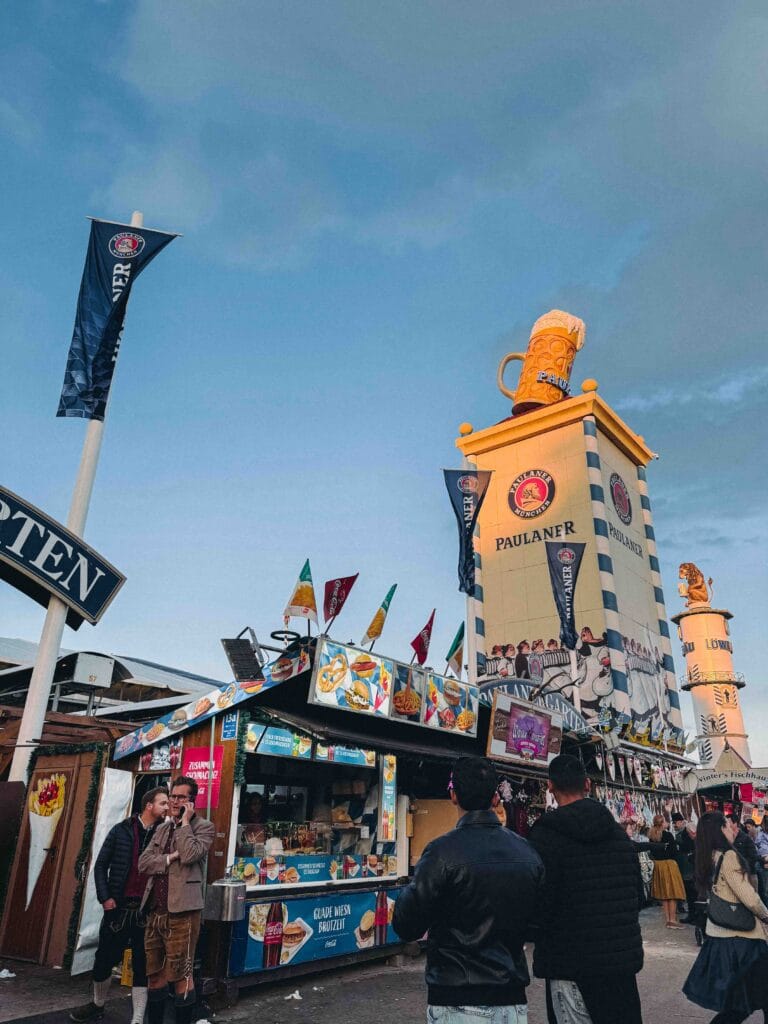
There are 14 main beer tents at Oktoberfest, each capable of holding 6,000-10,000 people. We didn’t manage to find a table, but we stood beside one, listening to the music and dancing by ourselves, which turned out to be just as fun!
Standing there with our beers, surrounded by the energy and joy of thousands of people, we were completely immersed in the experience.
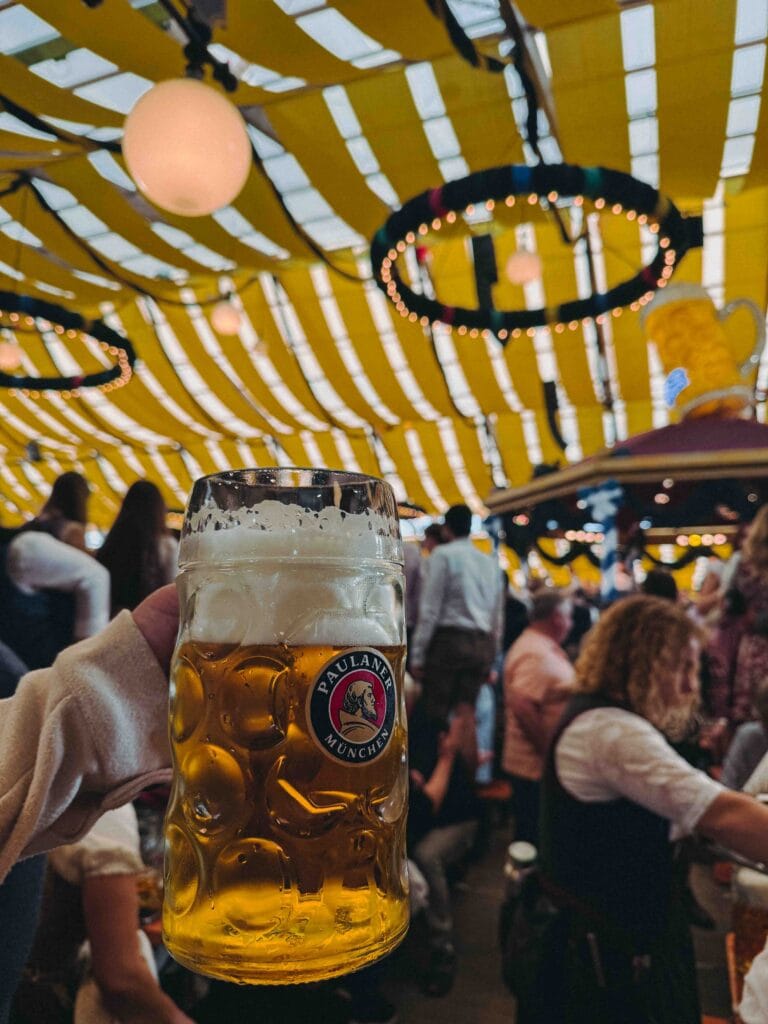
This was hands-down one of the best experiences of our entire trip. Even if you’re not a huge beer drinker, the cultural experience and communal joy make Oktoberfest absolutely worth visiting.
After Oktoberfest, we took the evening train back to Salzburg, happy and exhausted from our whirlwind Munich adventure.
Day 5: St. Wolfgang – Alpine Adventures & Travel Drama
Morning: Plan Changes & Smart Travel
Original Plan vs. Reality: We had initially planned to visit St. Wolfgang on Day 7, but weather forecasts showed heavy rain coming. Smart travelers adjust! We quickly rearranged our itinerary, swapping St. Wolfgang and Bad Ischl to ensure we’d catch the alpine views in good weather.
We took the bus from Salzburg to Bad Ischl, then dropped our luggage at Salzkammergut Touristik (a luggage storage service for travelers) and headed out to St. Wolfgang unburdened.
Afternoon: Alpine Thrills at Sommerrodelbahn
Summer Toboggan Run
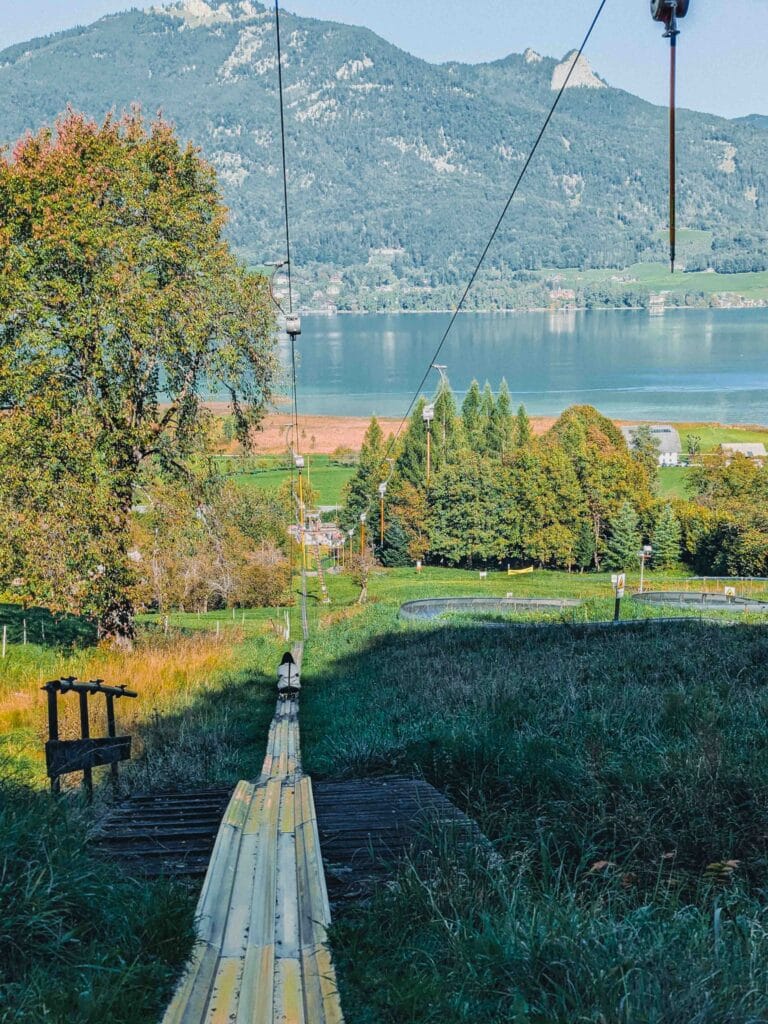
This was the experience I’d been waiting for! The Strobl summer toboggan run near Wolfgangsee is pure alpine fun, take the chairlift UP the mountain (relaxing and scenic), then speed DOWN on individual wheeled sleds you control yourself.
We bought a 6-ride ticket and split it (3 rides each). By the third run, we had the course memorized and went MUCH faster!
Important Timing Note: We were incredibly lucky, the toboggan run closed for winter just THREE DAYS after our visit. Always check seasonal closure dates for alpine attractions!
Exploring St. Wolfgang Village
After our toboggan adventures, we explored St. Wolfgang proper, a picturesque lakeside village that looks like it belongs on a chocolate box. We strolled along the beautiful lakefront, watching boats come and go, with mountains rising dramatically from the water’s edge.
What We Skipped: Schafberg Mountain, we opted not to take the cogwheel railway up due to clouds obscuring the summit and time constraints. With clear weather, it’s highly rated for panoramic views!
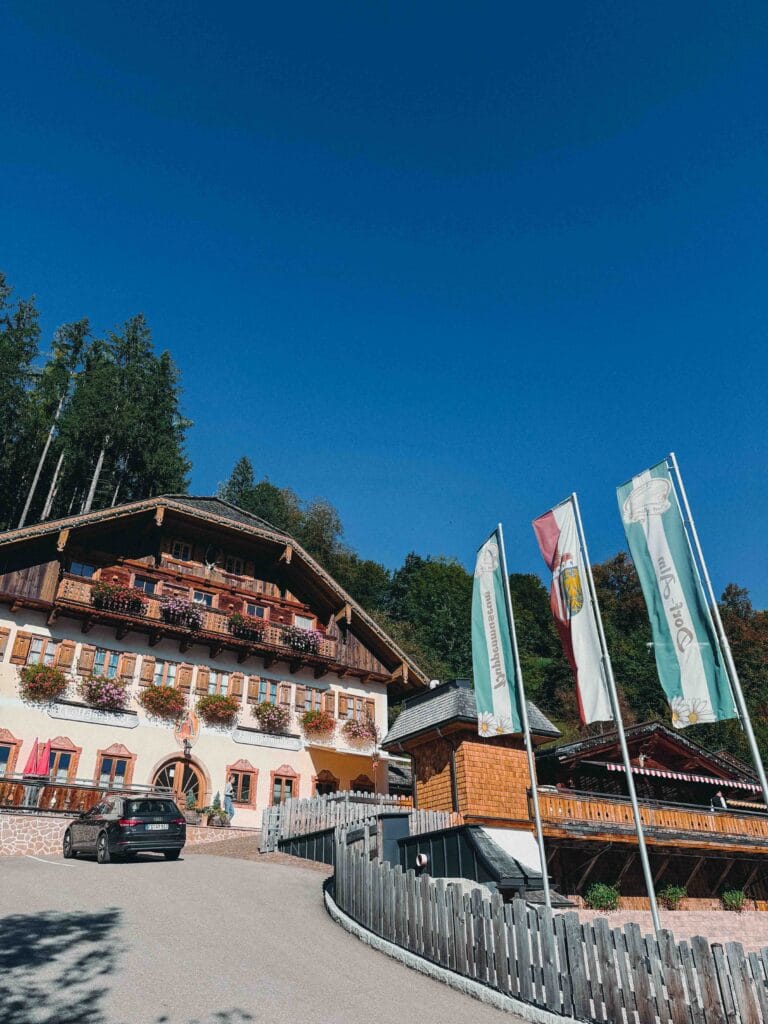
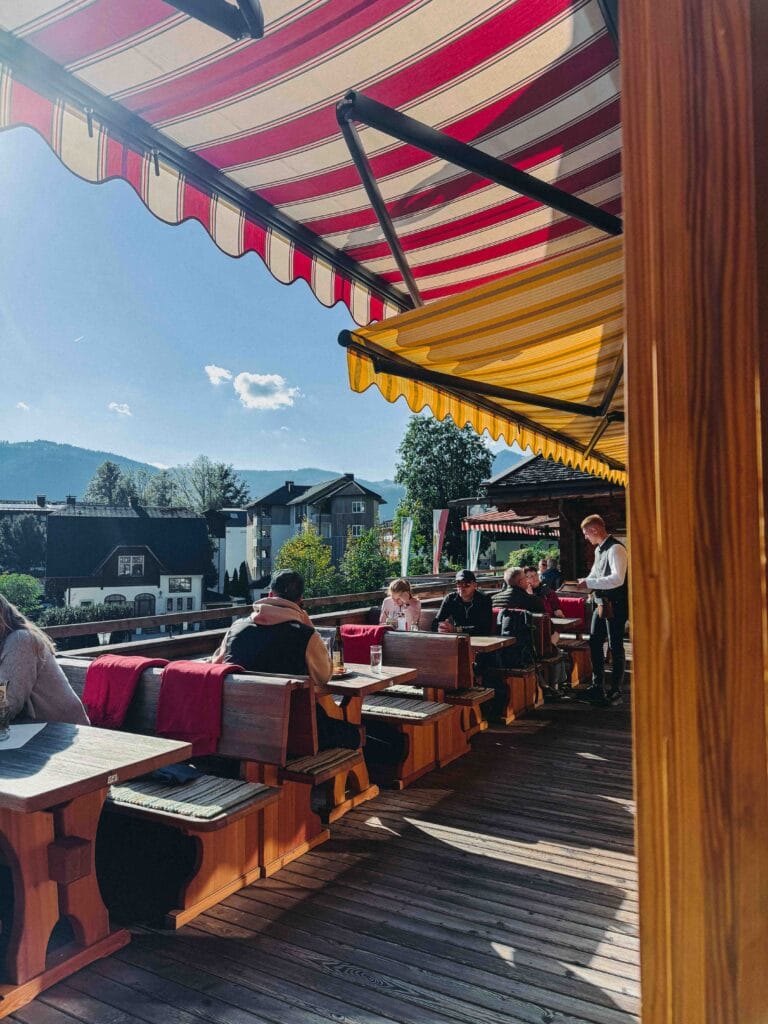
Lunch at Dorf-Alm zu St. Wolfgang
We grabbed lunch at this cozy alpine restaurant serving traditional Austrian cuisine. The portions were generous and the prices reasonable for a tourist area.
🍴 See our full Dorf-Alm review and menu recommendations
Evening: Transportation Crisis & Problem Solving
The Bus That Ruined Everything
Our plan was simple: Take the 5:45 PM bus (second-to-last) back to Bad Ischl to catch the bus to Hallstatt.
What actually happened: The bus was FULL. Completely packed. Driver wouldn’t let anyone else on. Cue: Panic.
The Solution: We ran to a nearby restaurant and desperately explained our situation. The kind owner made some phone calls and arranged for a family member to drive us to Bad Ischl, essentially a private taxi service.
We finally arrived in Hallstatt around 7 PM, completely exhausted but relieved. After checking into Bräugasthof Lobisser, we grabbed dinner, cake from Kaffeewerkstatt and called it a night.
🎟️ Get your Hallstatt Day Tour from Salzburg here!
Day 6: Hallstatt & Gosausee – Picture-Perfect Alpine Beauty
Morning: Sunrise at the World’s Most Photographed Village
Racing to the Classic Viewpoint
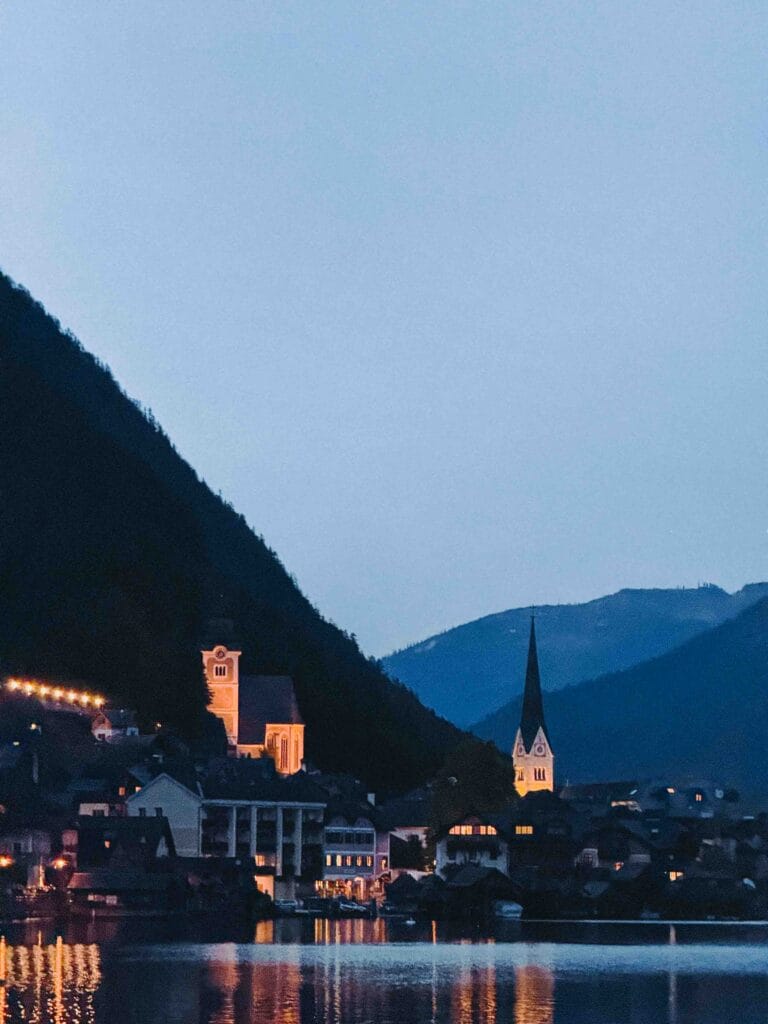
Hallstatt is called the most photographed village in the world for good reason. We practically ran uphill in the dark to the Classic Postcard Viewpoint (about 10-minute uphill walk from the village center).
The View – Worth Every Step
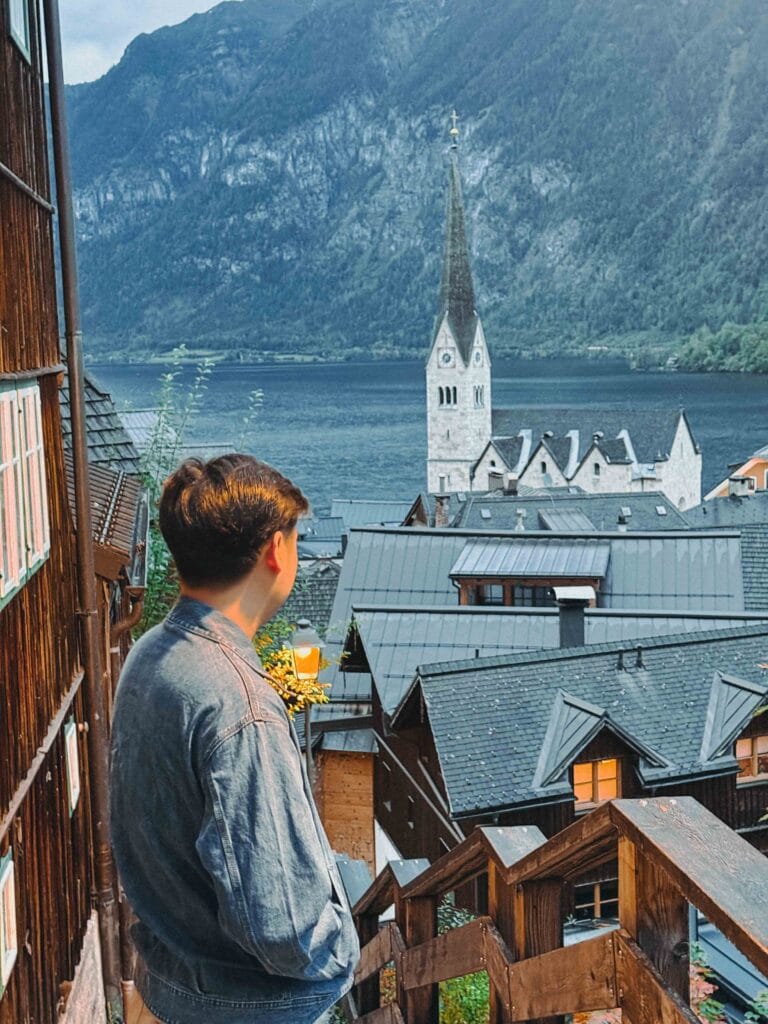
The view was EXACTLY like every Hallstatt photo you’ve ever seen, but somehow even more beautiful in person. The Catholic Parish Church tower rose perfectly from the cluster of traditional Alpine houses, all reflected in the still morning water of Hallstätter See.
I genuinely wished we could stay in this moment forever. Hallstatt at sunrise is pure magic.
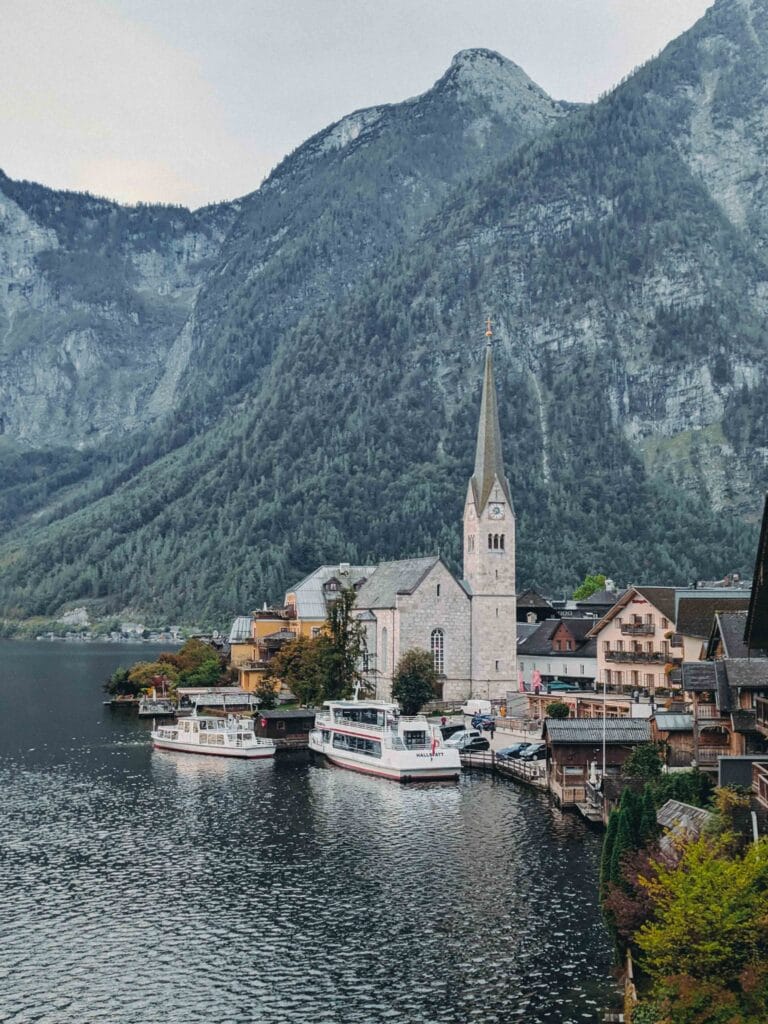
After our early morning photo mission, we returned for breakfast and took a short rest in our room.
Late Morning: Journey to Gosausee
Journey to Gosau
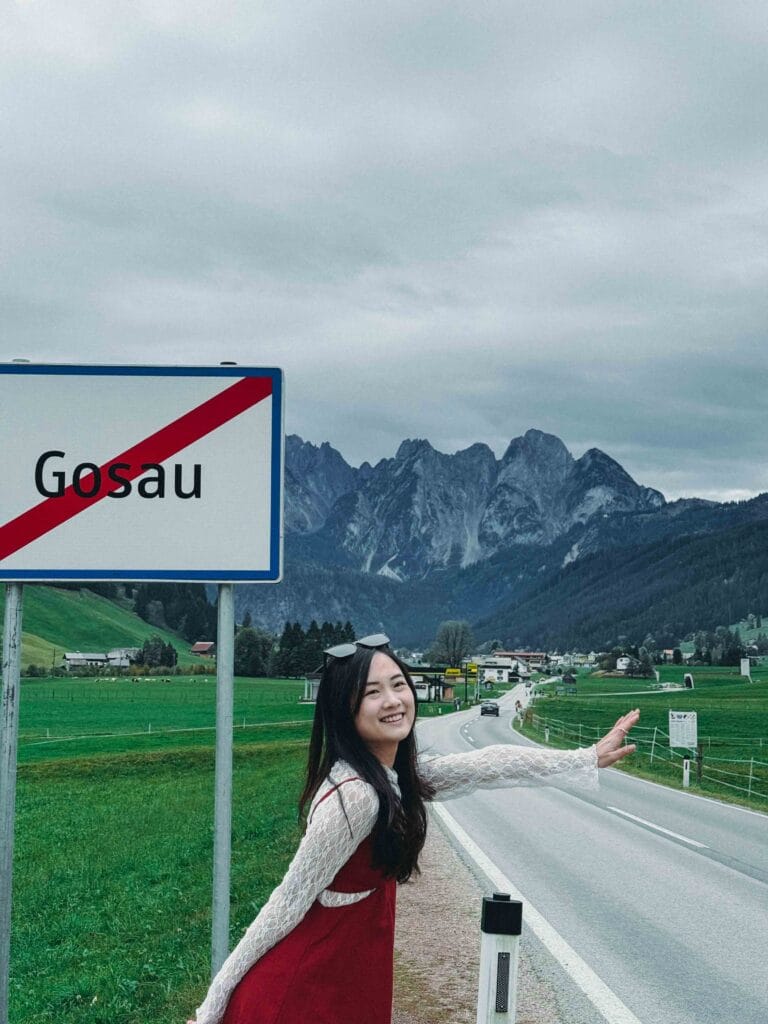
Our plan: Take the bus to Gosau town, buy picnic supplies, then take another bus to Vorderer Gosausee (Front Gosau Lake) for lunch with a view.
Gosau Town: A small, quiet alpine village with the beautiful Church of Gosau featuring its distinctive onion dome. We grabbed sandwiches, fruit, and drinks for our lakeside picnic.
The Bus Crisis (Again!)
The bus to Vorderer Gosausee only runs once per hour. When it arrived… it was FULL.
Our Brilliant Idea: Hitchhike! We stuck out our thumbs…
Result: Nobody stopped. 😅
After 15 minutes of failed hitchhiking, the NEXT hourly bus arrived, and we managed to squeeze on.
Vorderer Gosausee – Worth the Wait
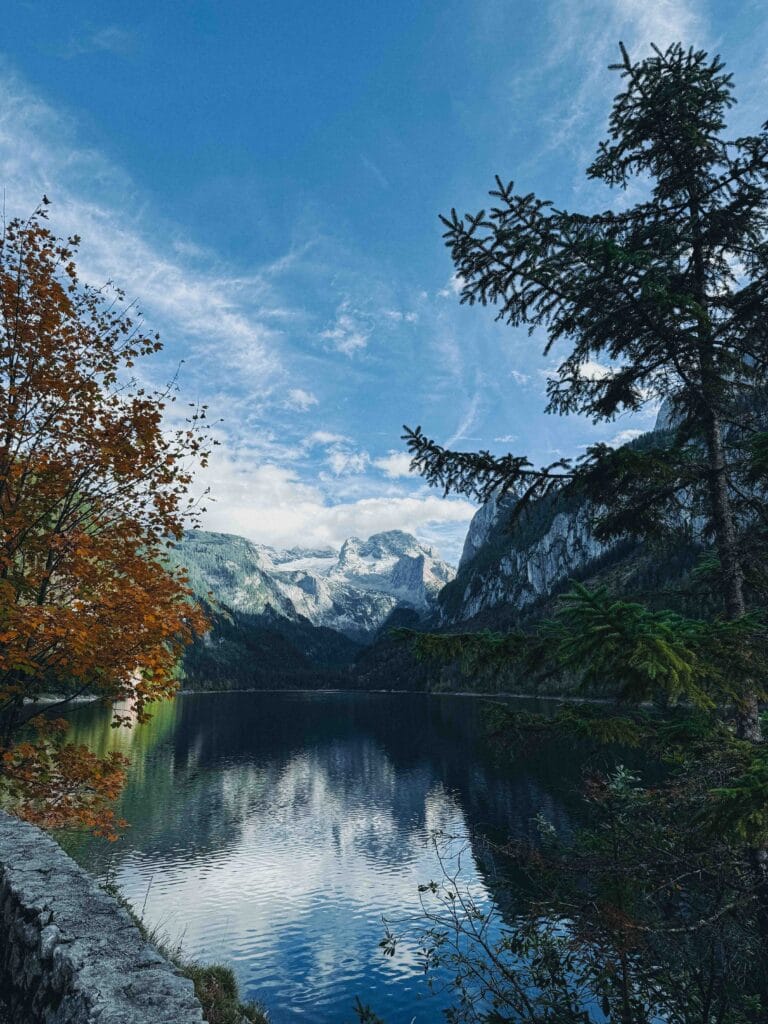
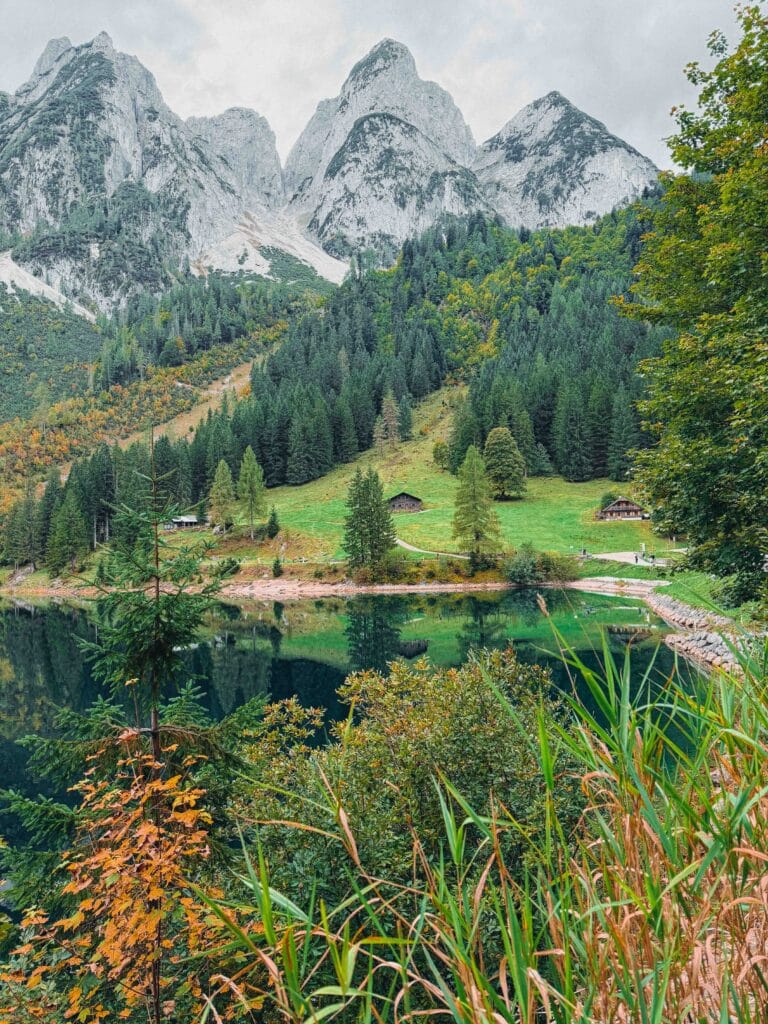
All transportation drama was instantly forgotten. Vorderer Gosausee is one of the most spectacular alpine lakes I’ve ever seen, the water’s surface was so still it created a perfect mirror image of the surrounding Dachstein mountains and forests.
We found a perfect bench right by the water, unpacked our picnic, and just sat for almost an hour. Sometimes the best travel moments aren’t about seeing more sights, they’re about being fully present in beautiful places.
💡 Pro Tip: If you’re more active, the full loop hike around the lake (2.5-3 hours) offers multiple viewpoints and photo opportunities.
Afternoon: Exploring Hallstatt Village
Wandering the Fairy-Tale Streets
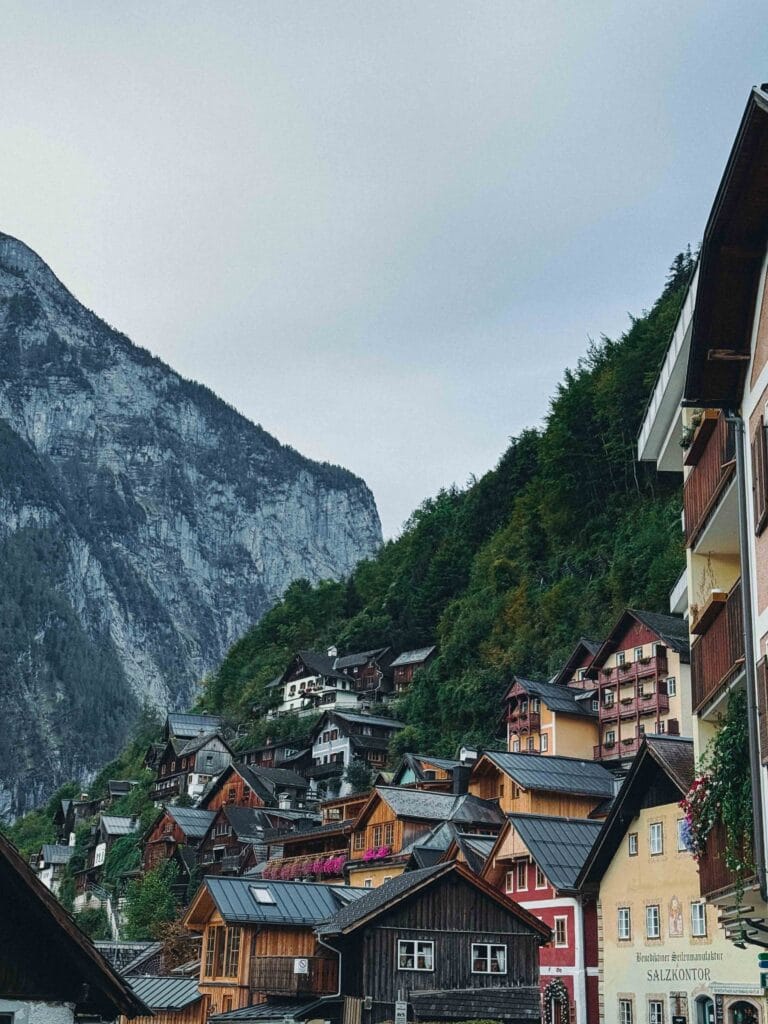
After returning from Gosausee, we finally had time to properly explore Hallstatt village. Hallstatt is TINY, you can walk the entire accessible village in about 45 minutes. But that’s part of its charm. Every corner looks like a postcard.
Evening: Cozy Hallstatt Evening
Hot Mulled Wine at Schnaps & Holz
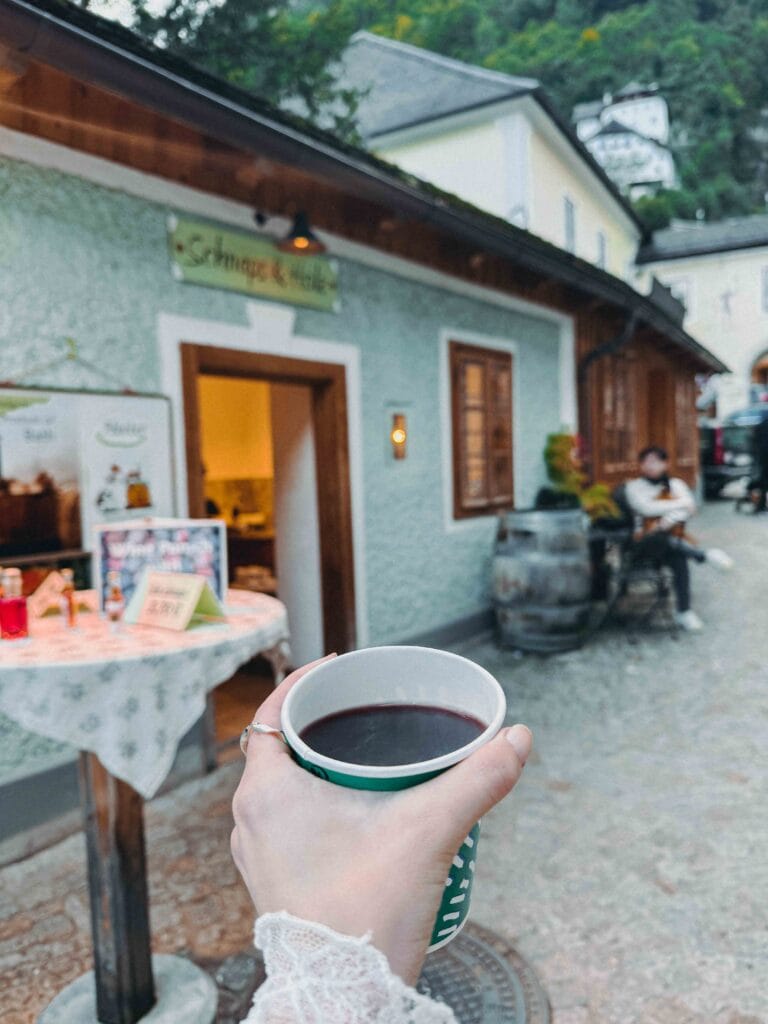
As temperatures dropped with sunset, we found the perfect remedy: Glühwein (hot mulled wine) at Schnaps & Holz. There’s something magical about wrapping your cold hands around a steaming mug of spiced wine while sitting in an alpine village as night falls.
Dinner at Seewirt Zauner
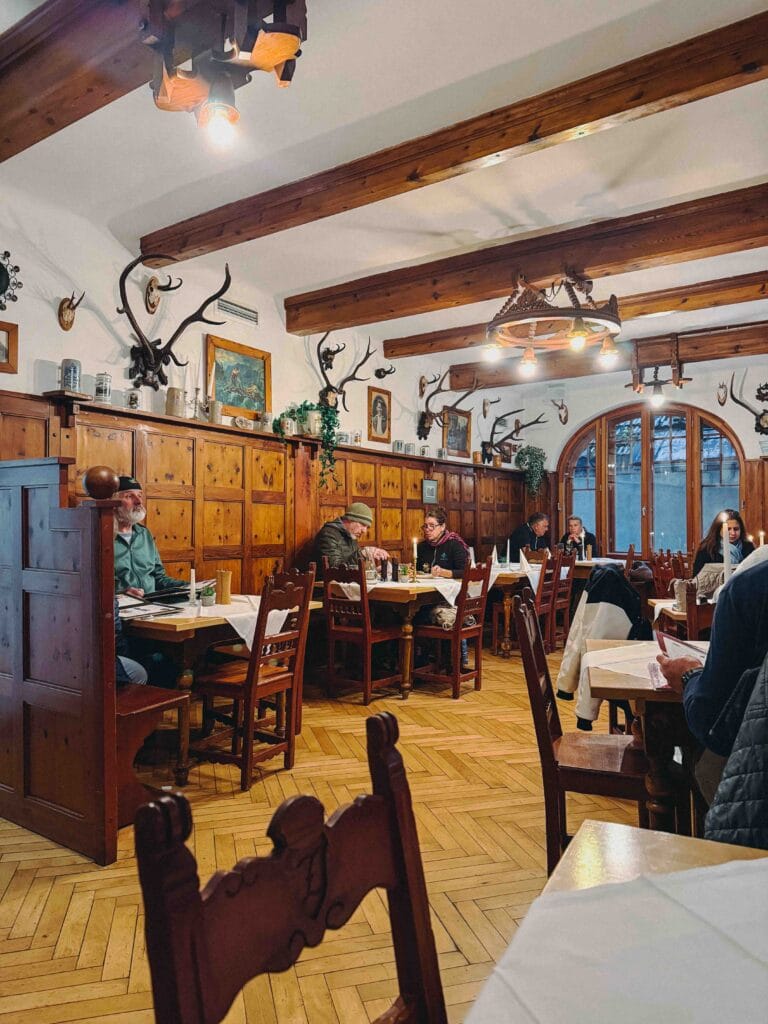
We concluded our Hallstatt day with dinner at Seewirt Zauner, a traditional restaurant right on the lakefront with beautiful views. The atmosphere was warm and traditional, with wood-paneled walls and windows overlooking the darkened lake.
Day 7: Bad Ischl – Rain, Rest & Unexpected Closures
Morning: Final Hallstatt Views
Another Sunrise Mission
Despite our early morning the day before, we couldn’t resist one more sunrise photo session. This time, we explored different viewpoints to capture new angles of the iconic church.
The morning light was different than yesterday, more golden, with mist rising from the lake. We got completely different photos despite shooting essentially the same subject.
Ruhrwerk Hallstatt: The Famous Bakery
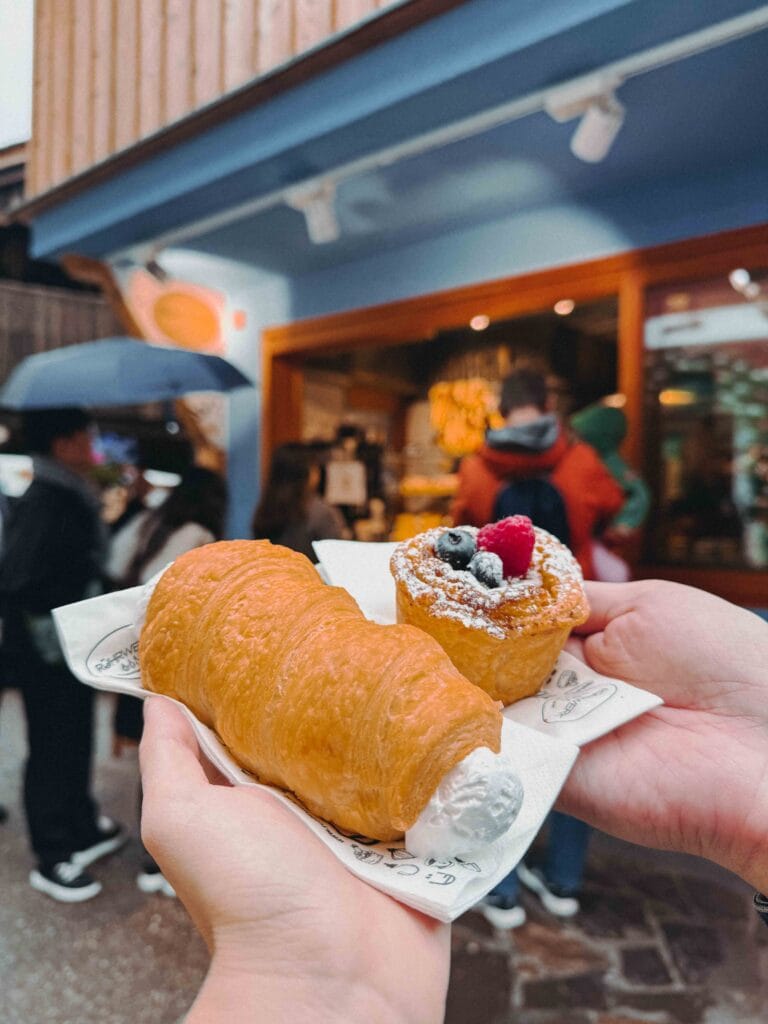
We queued at Ruhrwerk, possibly Hallstatt’s most famous bakery, before catching our bus. This tiny bakery produces incredible pastries, and locals and tourists alike line up daily for the Hallstätter Kipferl (specialty crescent pastry) and traditional Austrian baked goods.
Afternoon: Rainy Sunday in Bad Ischl
Arrival in Bad Ischl
The rain started just as we arrived, validating our decision to swap our itinerary days earlier! By the time we reached our hostel, we were completely soaked.
The Sunday Closure Problem:
Bad Ischl basically shuts down on Sundays. Supermarkets CLOSED, most restaurants CLOSED, shops CLOSED, tourist attractions with LIMITED HOURS. This is common in smaller Austrian towns, but we hadn’t fully prepared for how complete the shutdown would be.
Finding Food: Thai Restaurant Rescue
Wandering wet streets searching for ANY open restaurant, we finally found a Thai restaurant bustling with locals, apparently everyone else knew this was the only option! The food was actually quite good, and seeing the restaurant packed with Austrian families gave it a fun local vibe.
Afternoon/Evening: Embracing the Rest Day
Recognizing When to Rest
Between the soaking rain, limited open attractions, and me developing a cold from the previous day’s exposure, we made an executive decision: embrace this as a REST DAY.
What We Did:
- Returned to our hostel
- Caught up on photo editing
- Planned the Vienna portion of our trip
- Actually rested and recovered
Not every travel day needs to be packed with activities. Sometimes the best thing you can do is listen to your body, rest when needed, and recover energy for upcoming adventures. This enforced rest day actually made our Vienna and Budapest experiences better because we weren’t exhausted or sick.
What You Can Do in Bad Ischl (When It’s NOT Sunday and NOT Raining):
Bad Ischl was Emperor Franz Joseph’s beloved summer residence, so there’s actually quite a bit to see:
- Kaiservilla – The emperor’s summer palace (main attraction)
- Lehár Villa – Composer Franz Lehár’s former residence
- Katrin Cable Car – Mountain views (weather permitting)
- Kurpark – Beautiful spa gardens
- Historic spa architecture – Former imperial spa resort
Day 8: Vienna – Imperial Splendor & Art Masterpieces
Morning: Bad Ischl to Vienna
The train journey from Bad Ischl to Vienna was smooth and comfortable, a welcome change from our recent transport adventures! The rolling Austrian countryside transitions beautifully from alpine to lowland as you approach the capital.
Vienna! My second visit (after 2016) and still just as exciting. The imperial capital of Austria has a grandeur unlike anywhere else in Central Europe.
Afternoon: Schnitzel, Cathedrals & Museums
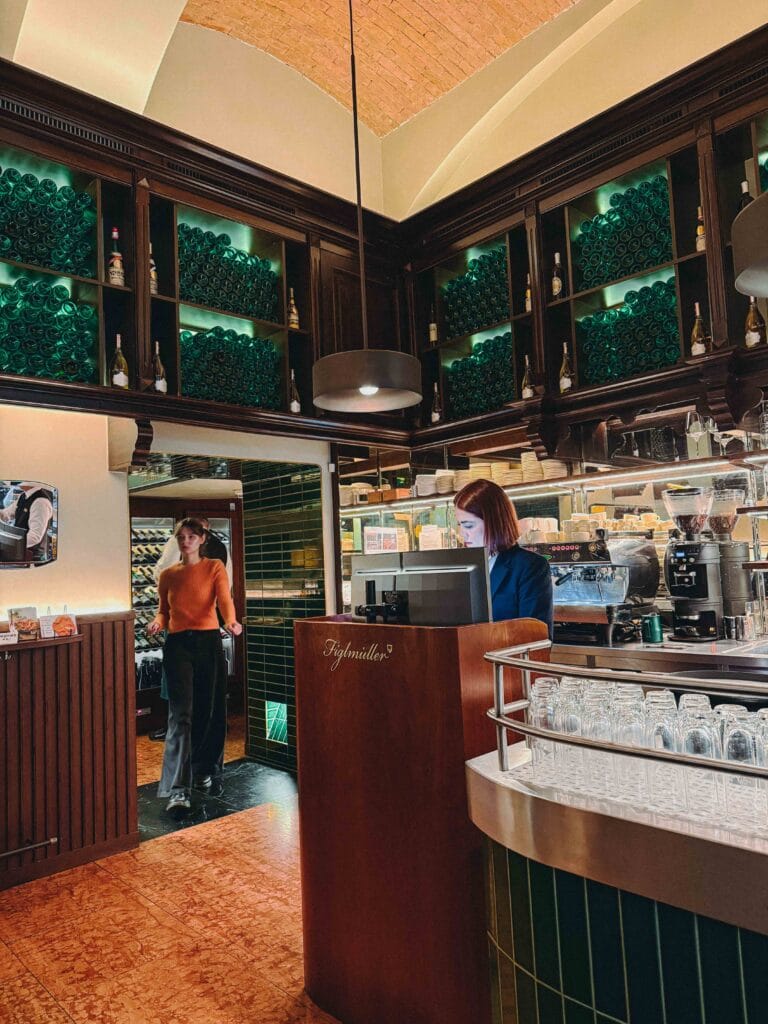
Figlmüller: The Home of Schnitzel
We were STARVING by the time we checked in. Our first priority: the legendary Figlmüller, famous for serving Vienna’s best and biggest schnitzel since 1905.
The restaurant spans multiple historic buildings with cozy, traditional Austrian dining rooms. But the real star is the schnitzel, literally MASSIVE, hanging off the edges of the plate. This is what Wiener Schnitzel is supposed to be. Forget the tourist traps, Figlmüller has been perfecting this dish for over a century.
🍴 See our full Figlmüller review and menu recommendations
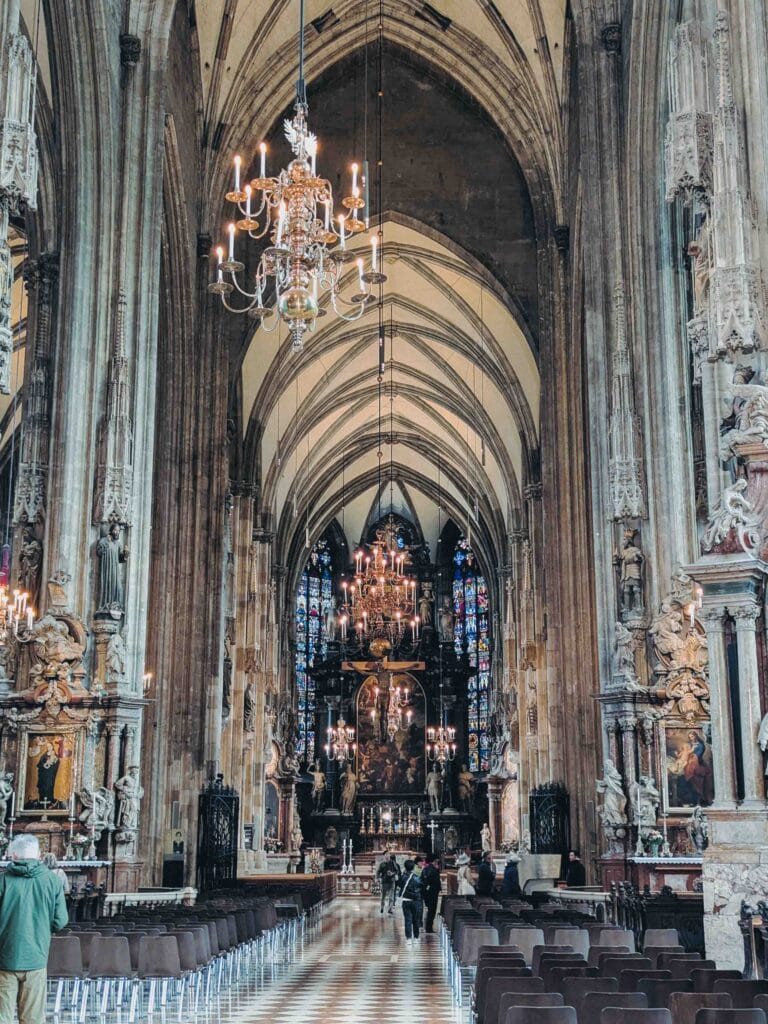
St. Stephen’s Cathedral (Stephansdom)
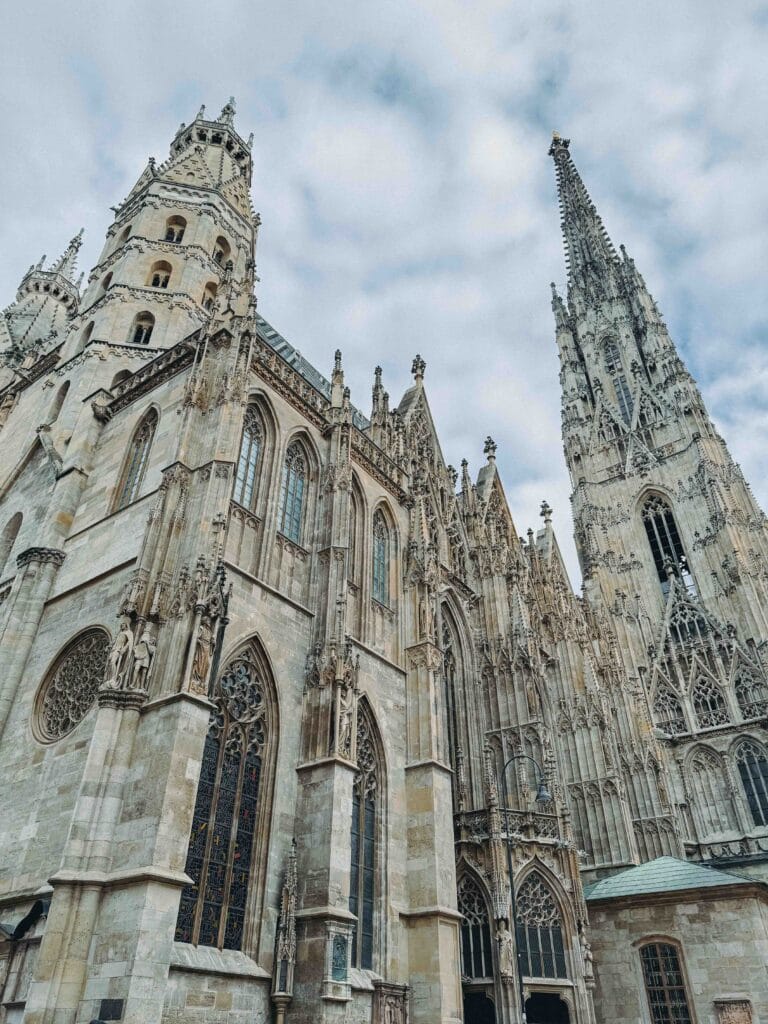
Properly fueled, we headed to Vienna’s most iconic landmark: St. Stephen’s Cathedral. This Gothic masterpiece has been Vienna’s spiritual heart since 1147 (current building mostly 14th-15th century).
We didn’t climb the tower (legs still tired from alpine hiking!), but walking around the cathedral’s exterior and sitting in the plaza provides endless photo opportunities.
St. Peter’s Church (Peterskirche)
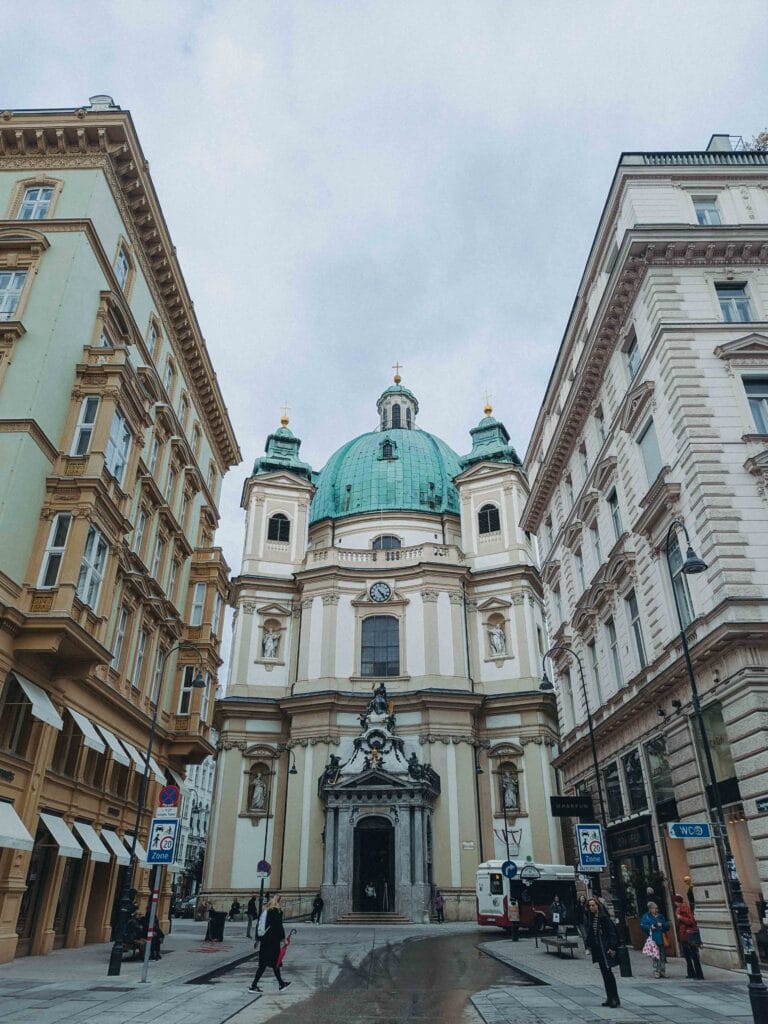
Just a 3-minute walk from St. Stephen’s, we visited St. Peter’s Church, and despite being overshadowed by its famous neighbor, it’s absolutely stunning.
The dome fresco depicting the Assumption of Mary is breathtaking, all swirling clouds, angels, and dramatic colors.
Ausgrabungen Michaelerplatz (Michaelerplatz Excavations)
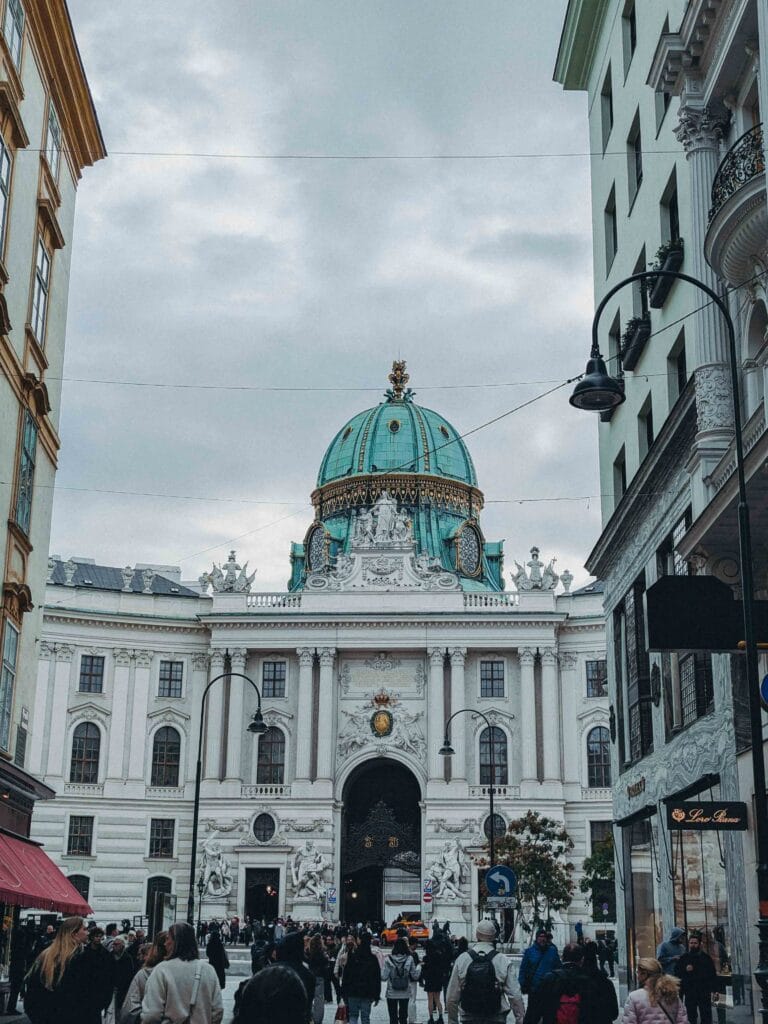
Walking through Michaelerplatz toward Hofburg Palace, we stopped at these fascinating archaeological excavations visible through protective glass, Roman structures from the 2nd century AD, medieval foundations, multiple historical layers literally built on top of each other.
Vienna’s history is LAYERED, quite literally. Seeing Roman ruins beneath a medieval plaza beneath modern Vienna creates a powerful sense of historical continuity.
Kunsthistorisches Museum Wien
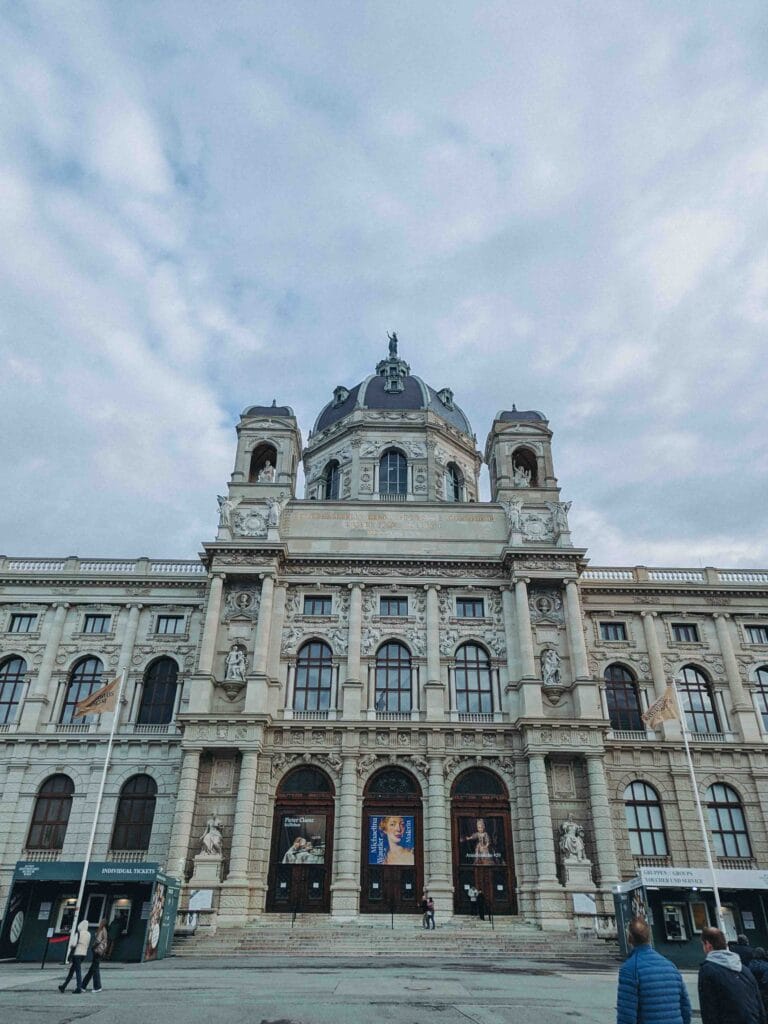
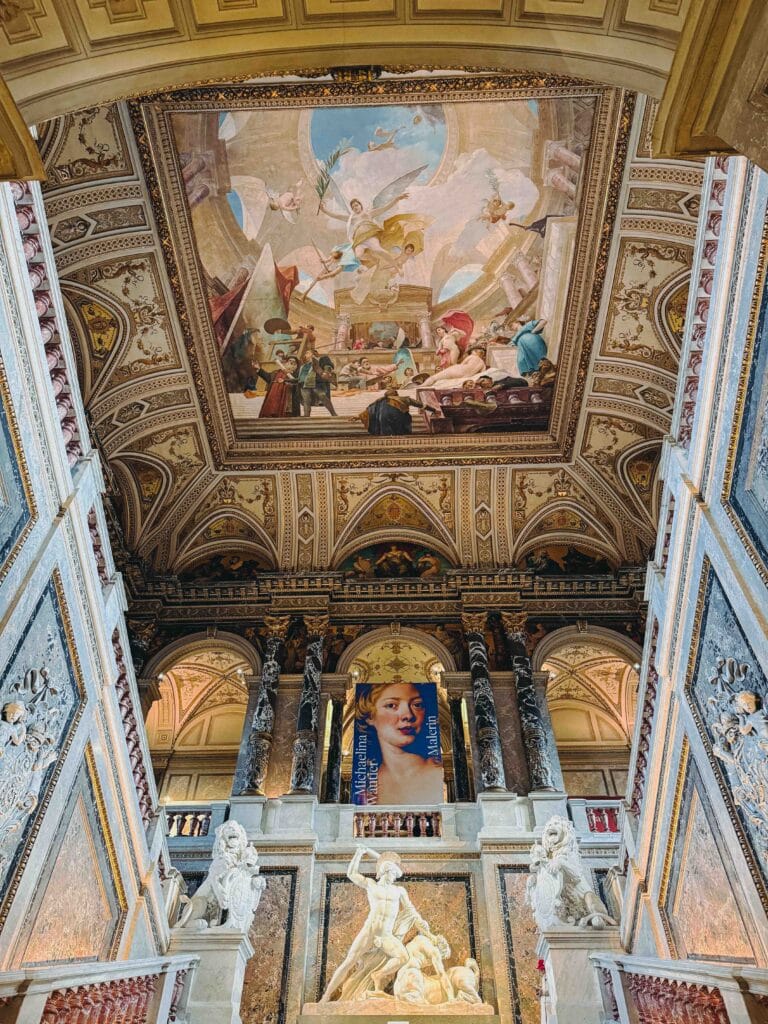
Our main afternoon destination: the Kunsthistorisches Museum (Art History Museum), one of the world’s finest art collections.
The Problem: We only had 1.5 hours before closing.
The Reality: You need MINIMUM 3-4 hours, ideally a full day.
The main staircase and hall are jaw-dropping, marble columns, gold details, ceiling frescoes by Gustav Klimt and his brother Ernst. We spent 20 minutes just photographing the architecture before even entering the galleries!
Our Verdict: This museum deserves a full morning or afternoon minimum. It was frustrating rushing through such an incredible collection.
🎟️ Get your Kunsthistorisches Museum Tickets here!
Evening: Imperial Desserts
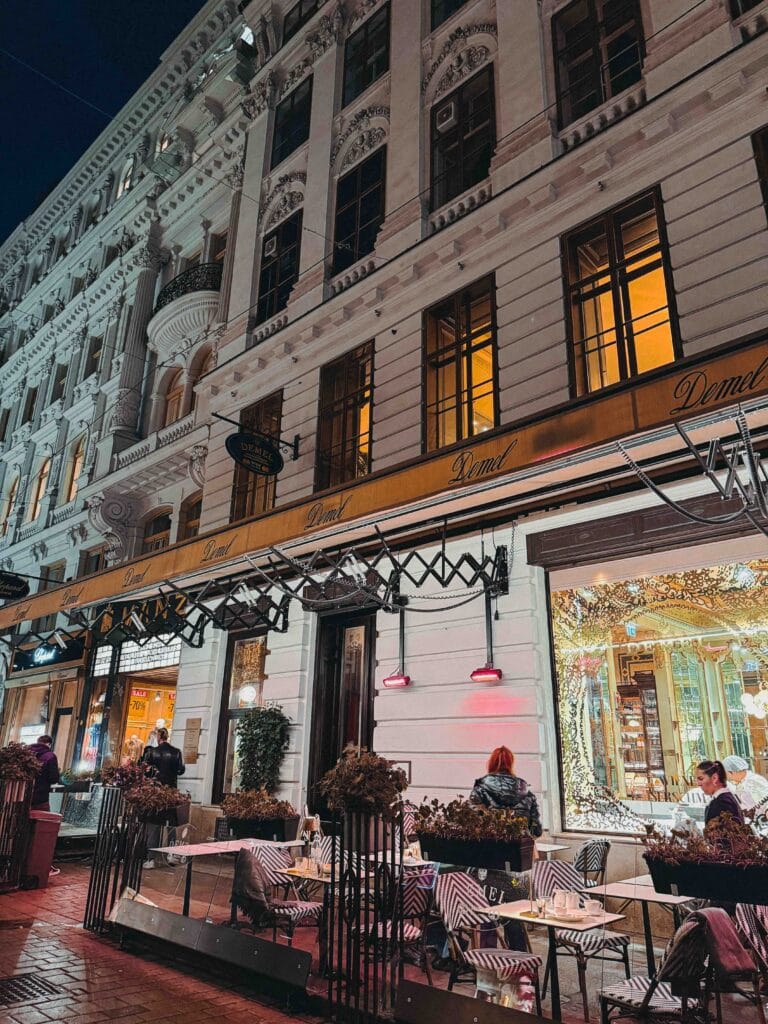
Café Demel: Imperial Confectioner
We couldn’t leave Vienna without trying the city’s most famous dessert café. Café Demel has been Vienna’s k.u.k. Hofzuckerbäcker (Imperial and Royal Court Confectioner) since 1786.
We came specifically for the KAISERSCHMARRN, the “Emperor’s Mess,” a shredded pancake dessert that was supposedly Emperor Franz Joseph’s favorite. Demel’s version was incredible, light, fluffy, perfectly caramelized, served with plum compote.
🍴 See our full Café Demel review and menu recommendations (Coming Soon)
Day 9: Budapest – Crossing into Hungary
Morning: Vienna to Budapest
We took the comfortable and fast train from Vienna to Budapest, one of the easiest legs of the trip! The journey takes you through Hungarian countryside with increasingly Eastern European character as you approach the capital.
Afternoon: Duck Mousse and Buda Castle Hill
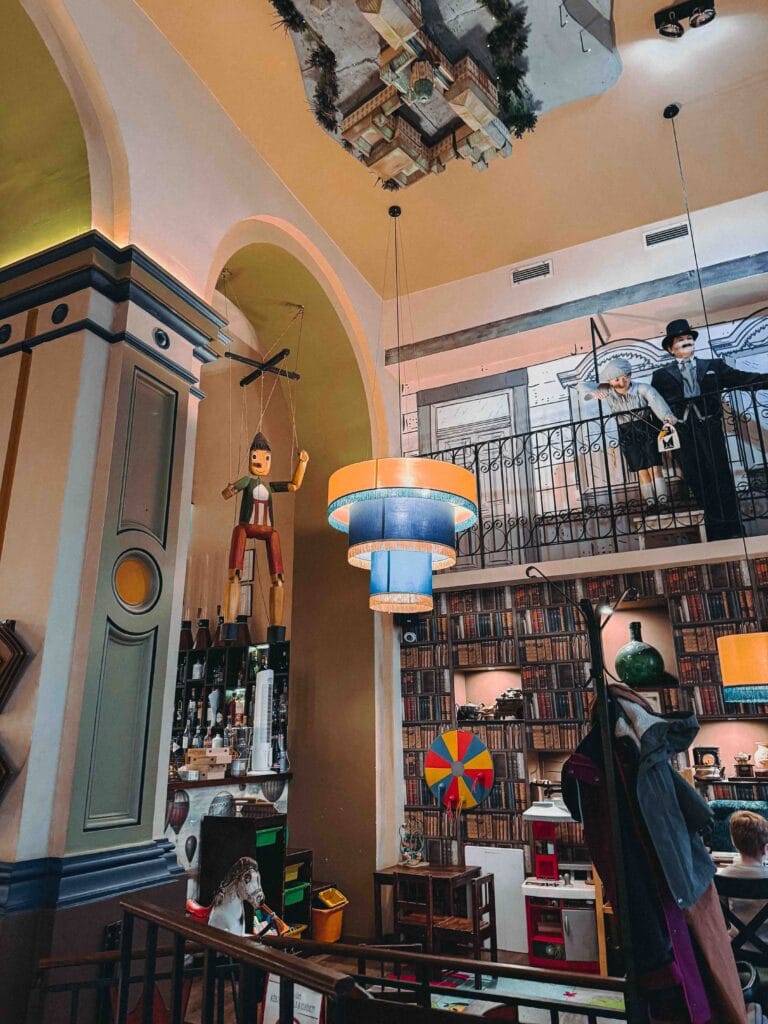
Lunch at VakVarjú Restaurant
After checking in, we went straight to VakVarjú Restaurant for lunch. We tried their famous duck liver mousse, which was incredibly rich and flavorful, definitely a Hungarian specialty worth experiencing.
🍴 See our full VakVarjú Restaurant review and menu recommendations
Exploring the Buda District
Then it was time for the Buda District, the historic, hilly side of Budapest across the Danube from Pest.
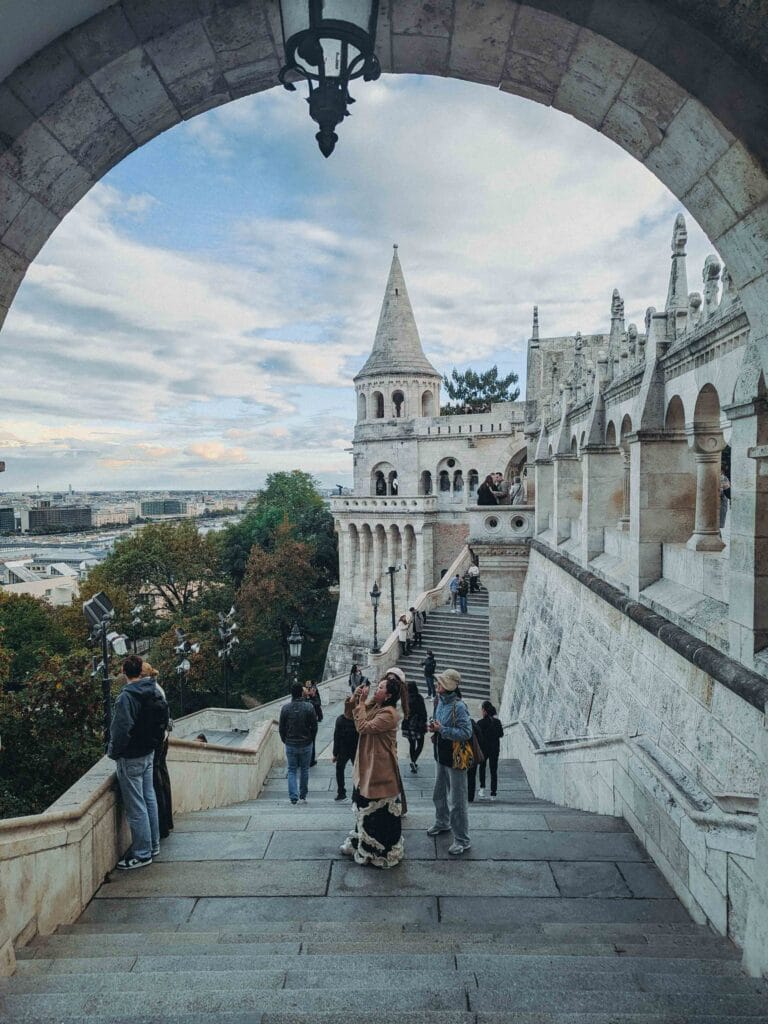
Fisherman’s Bastion
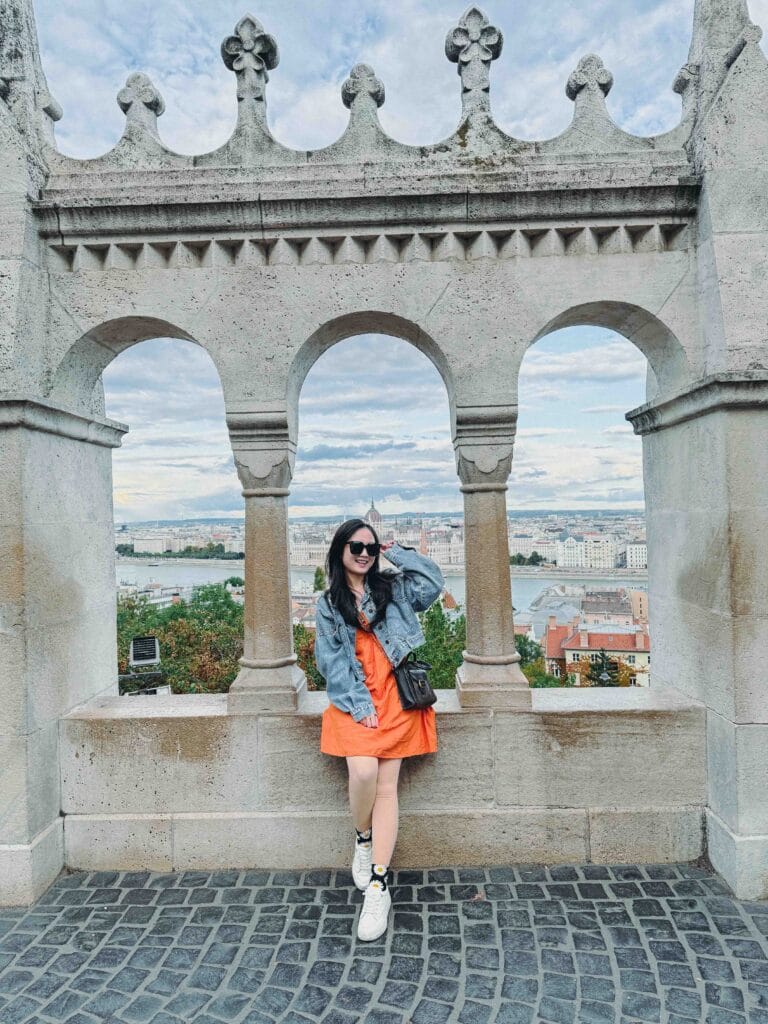
This neo-Gothic and neo-Romanesque terrace was built between 1895-1902 and offers one of the best panoramic views in Budapest. From here, we got an absolutely fantastic view of the Hungarian Parliament Building across the river, its Gothic Revival architecture and riverside position create one of Europe’s most iconic skylines.
The Church of Our Lady of Buda Castle (Matthias Church)
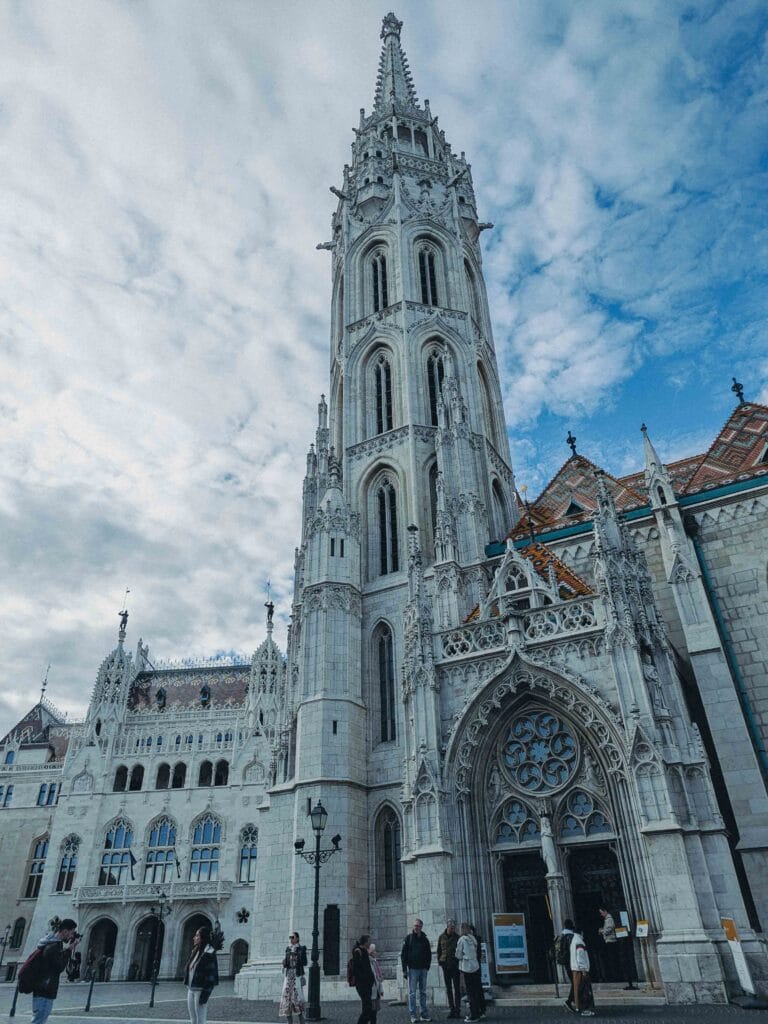
Right next to Fisherman’s Bastion stands this stunning church with its distinctive colorful tile roof. The exterior features intricate Gothic architecture with unique Hungarian folk art influences.
Buda Castle
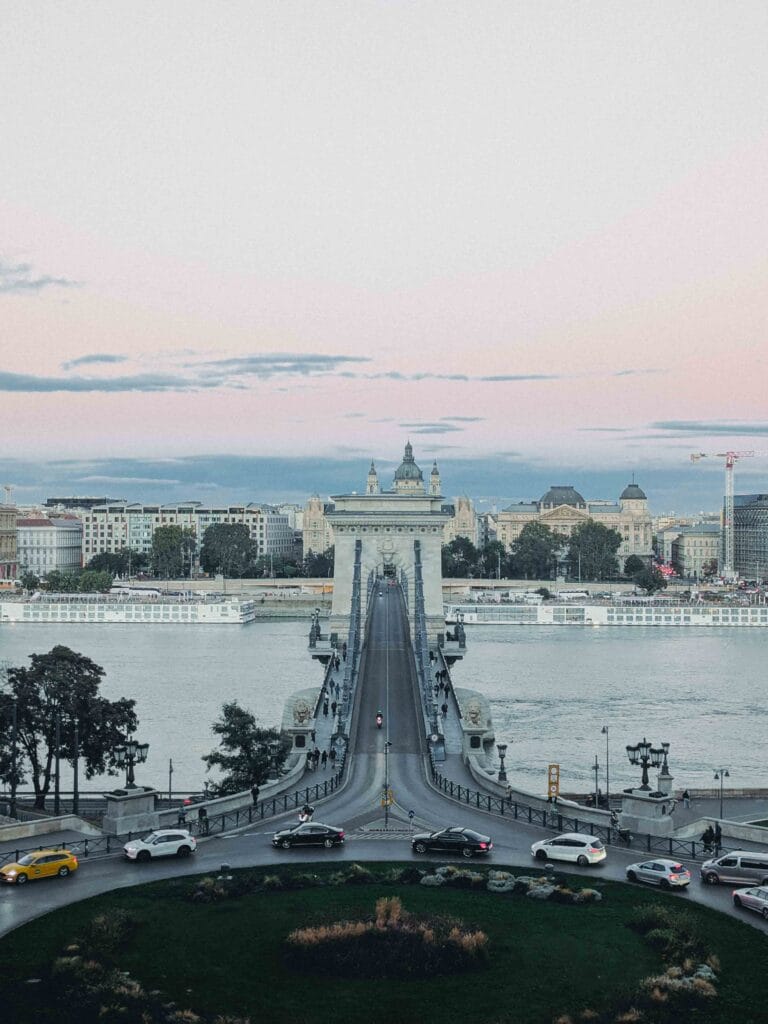
We walked toward Buda Castle and explored the grounds. This massive baroque palace complex has been the residence of Hungarian kings, and today houses museums and galleries. The castle grounds offer gorgeous views of the Széchenyi Chain Bridge and the Pest side of the city.
Evening: Danube Glow and Langos Attempt
Sunset by the Danube
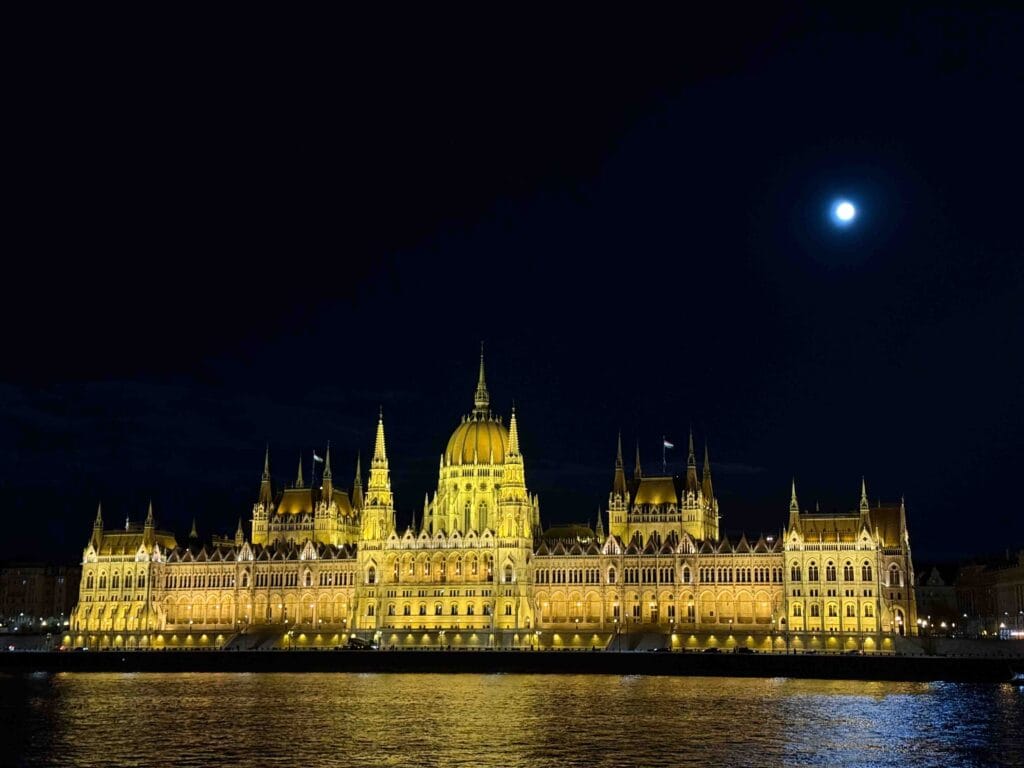
We started walking down the hill and followed the riverside as sunset approached, watching the Hungarian Parliament Building start to light up as darkness fell. The building’s reflection in the Danube, combined with the golden hour light, creates absolute magic.
🎟️ Get your Danube River Candlelit Dinner Cruise here!
First Langos Attempt
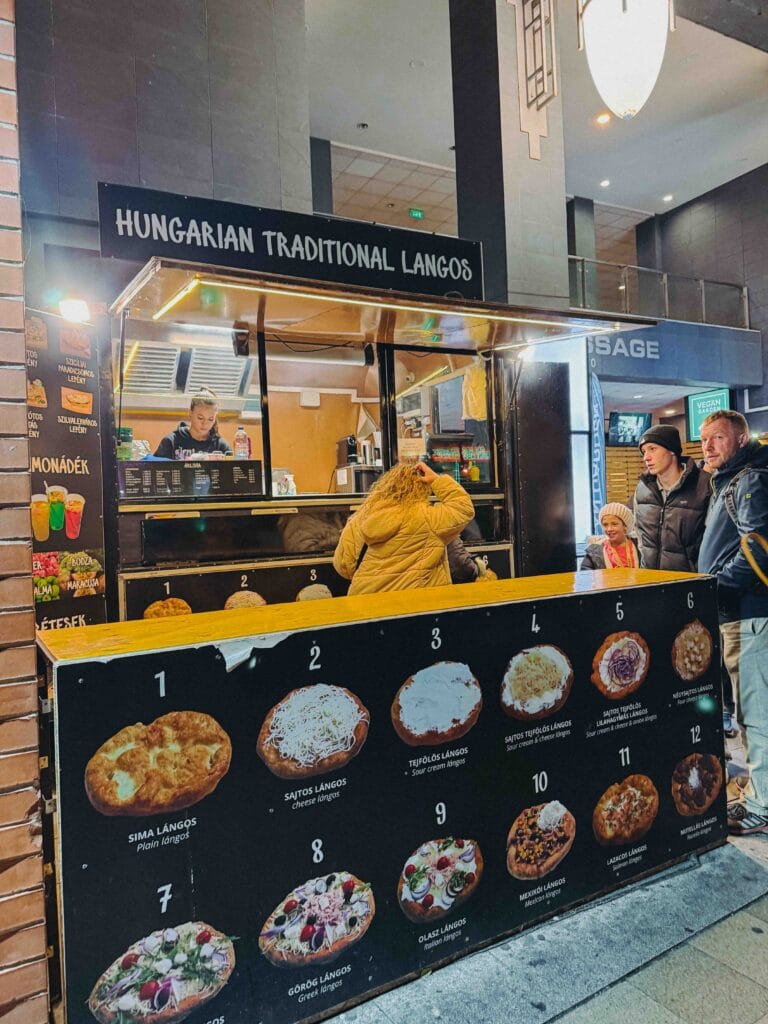
Before heading back to our hostel, we grabbed a simple langos (Hungarian fried dough) by the roadside. It was okay, but nothing special, we knew we needed to find a better one before leaving Budapest.
Day 10: Budapest – Best Brunch and Historical Squares
Morning: Exceptional Brunch
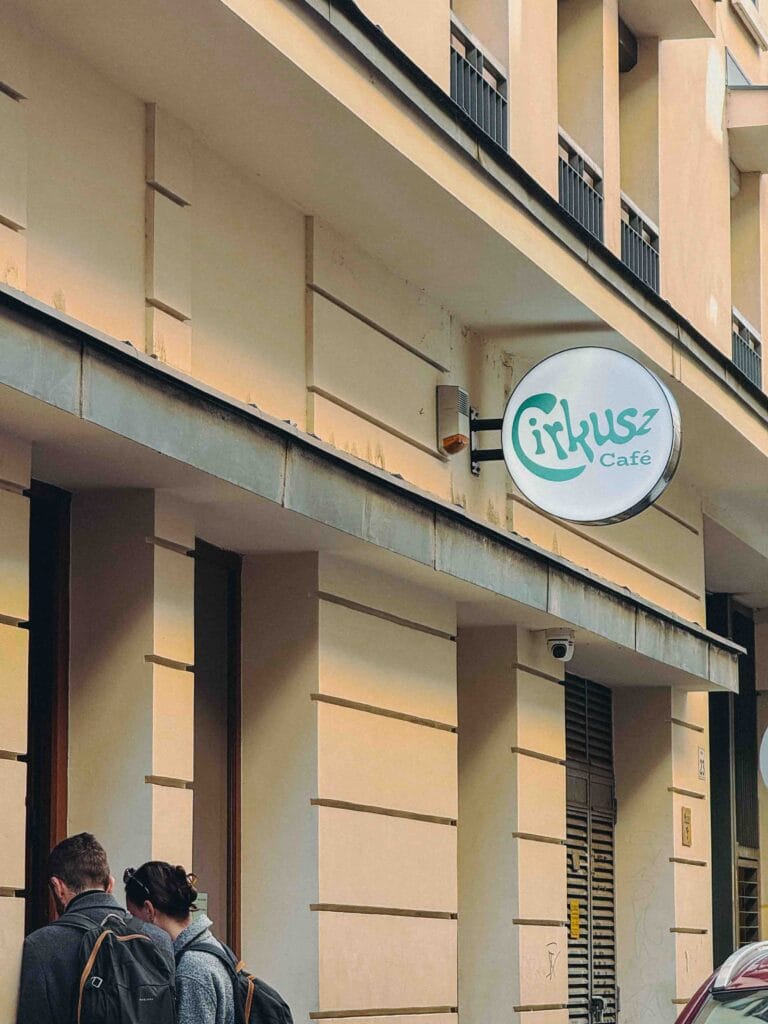
Counting down the last two full days of our trip (very sad!). For brunch, we went to Cirkusz Café, and it was exceptional! Easily our top café of the entire trip, the food quality, presentation, atmosphere, and service all exceeded expectations.
🍴 See our full Cirkusz Café review and menu recommendations
Afternoon: Operas, Heroes, and Market Finds
Hungarian State Opera
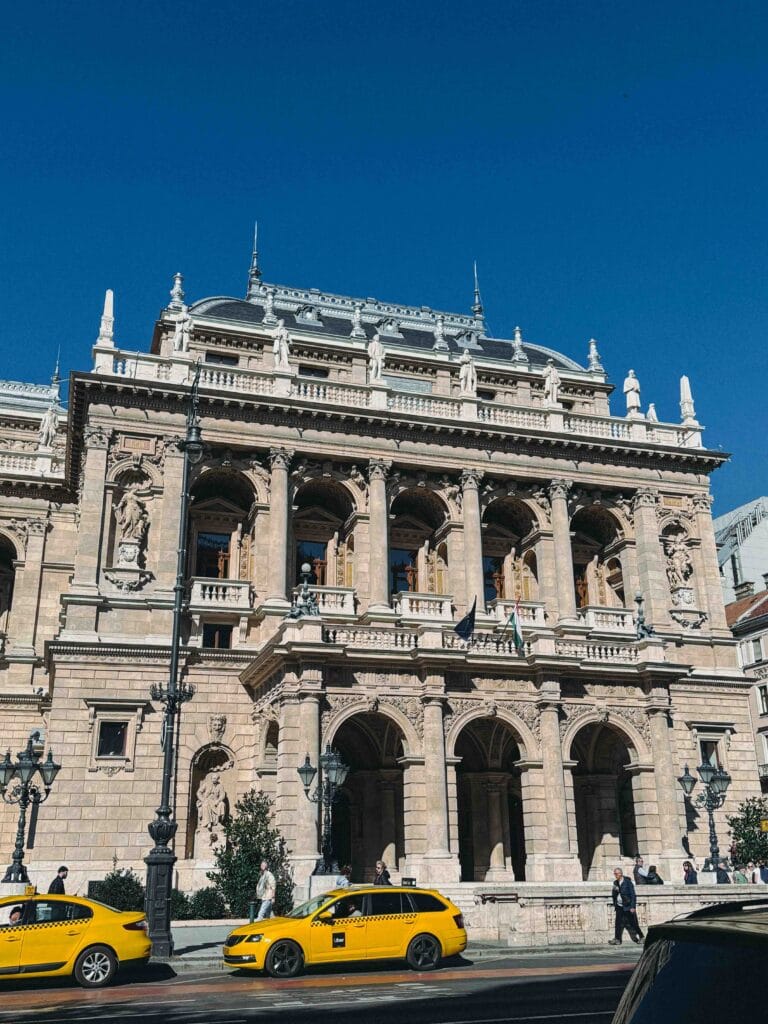
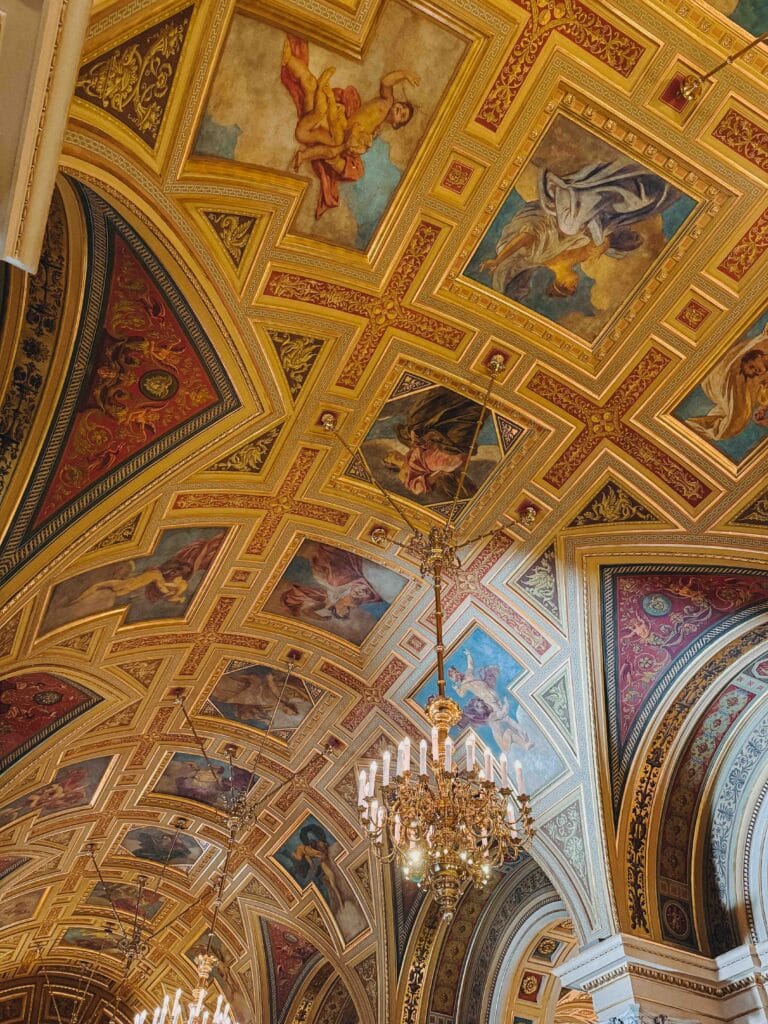
After brunch, we visited the Hungarian State Opera building. Unfortunately, we didn’t manage to get inside as tours have specific time slots. The neo-Renaissance exterior is still impressive from outside!
M1 Metro to Heroes’ Square
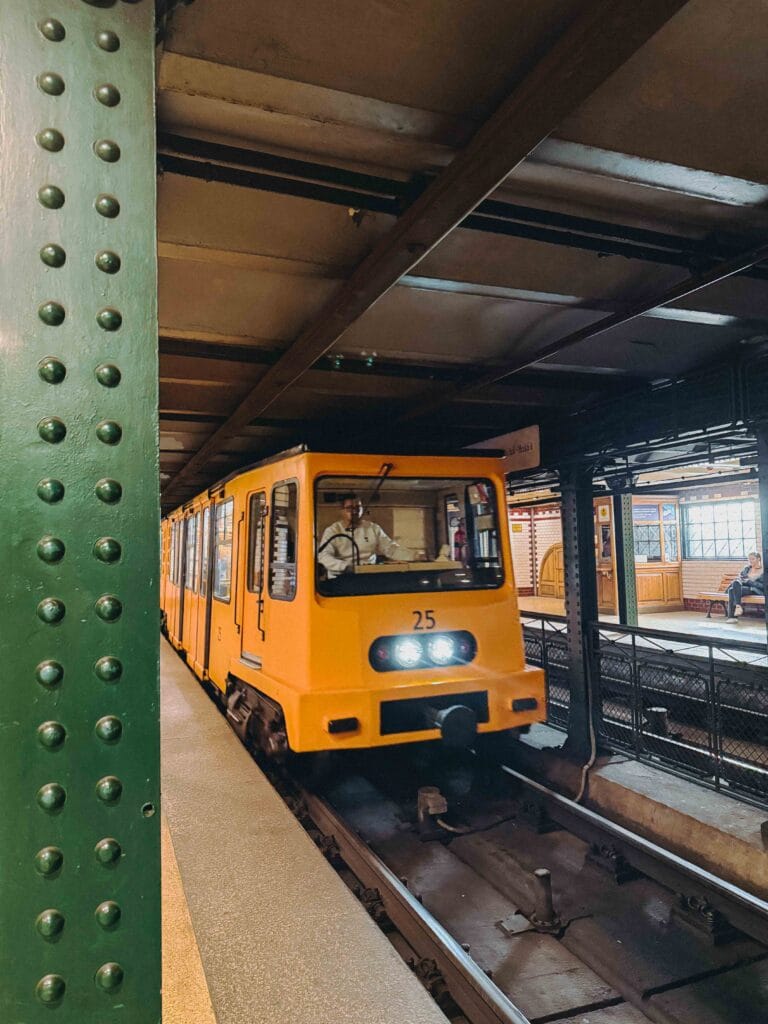
We took the M1 metro to Heroes’ Square, the oldest metro line in Budapest and one of the oldest in Europe. The station itself was so cool with its vintage tiles and historic character.
Heroes’ Square
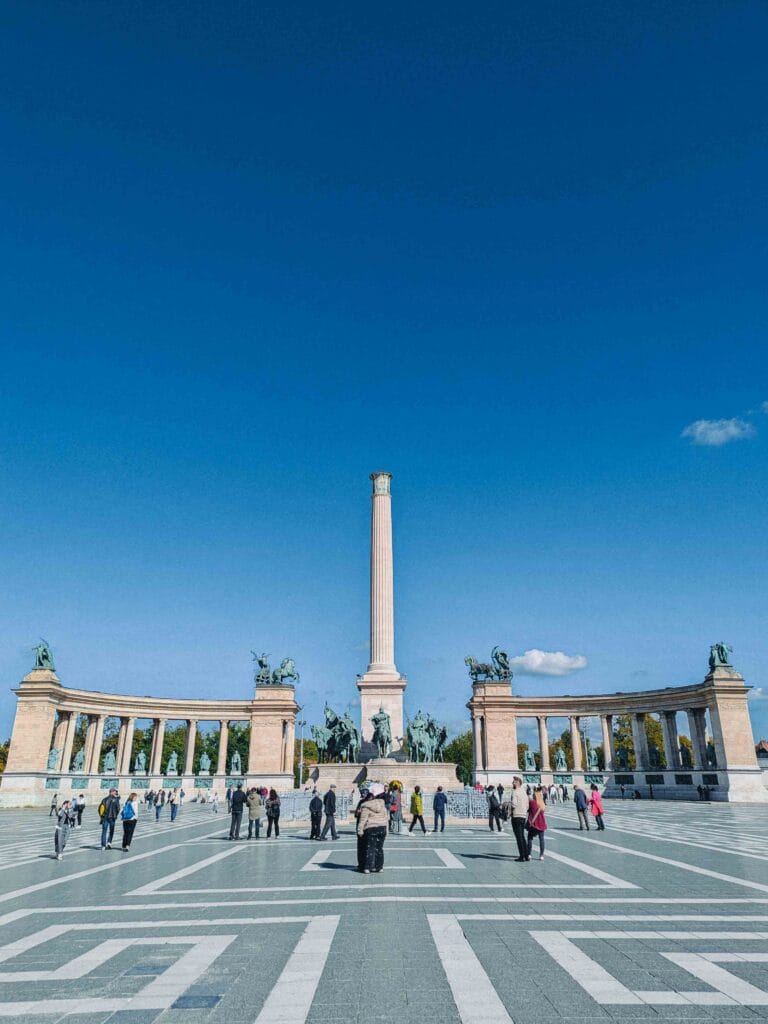
Heroes’ Square features monuments to the leaders of the 7 guilds who founded Hungary. The square looked a bit odd during our visit because the Archangel Gabriel statue in the center was lifted off for restoration, but the colonnade and statues were still impressive.
City Park Walk
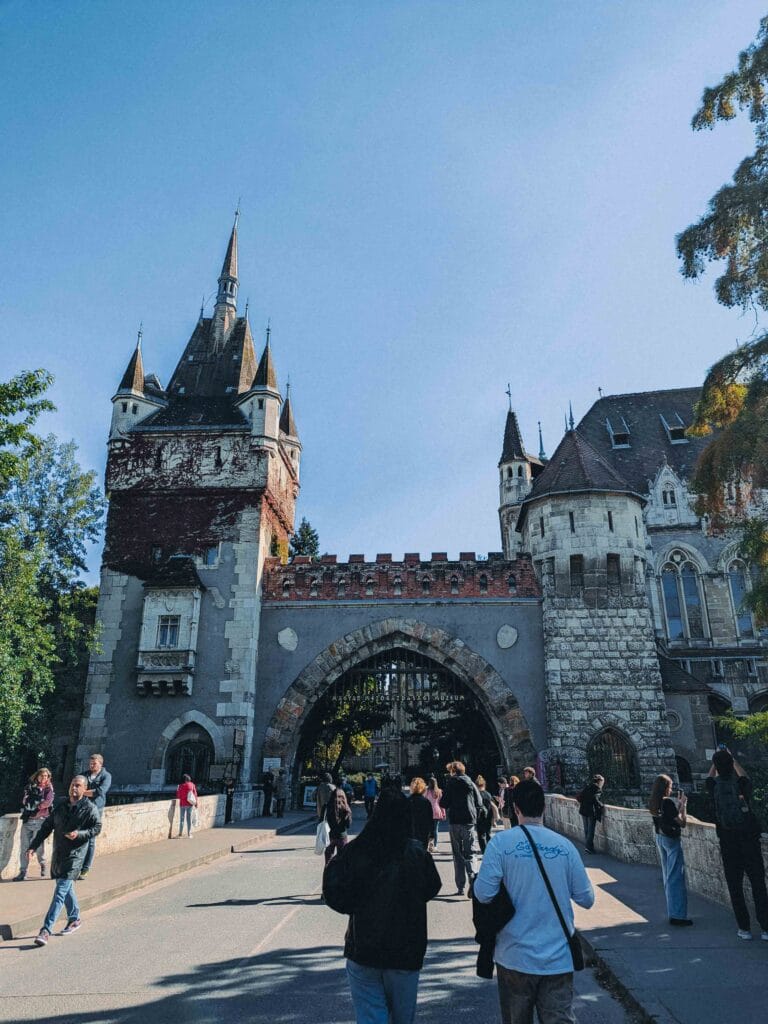
We walked through the city park and visited Vajdahunyad Castle, a unique architectural complex built in 1896 that showcases various Hungarian architectural styles from different historical periods. We passed the famous Széchenyi Thermal Bath but didn’t go in (would need several hours to properly enjoy it).
🎟️ Get your Széchenyi Full Day Spa here!
Central Market Hall
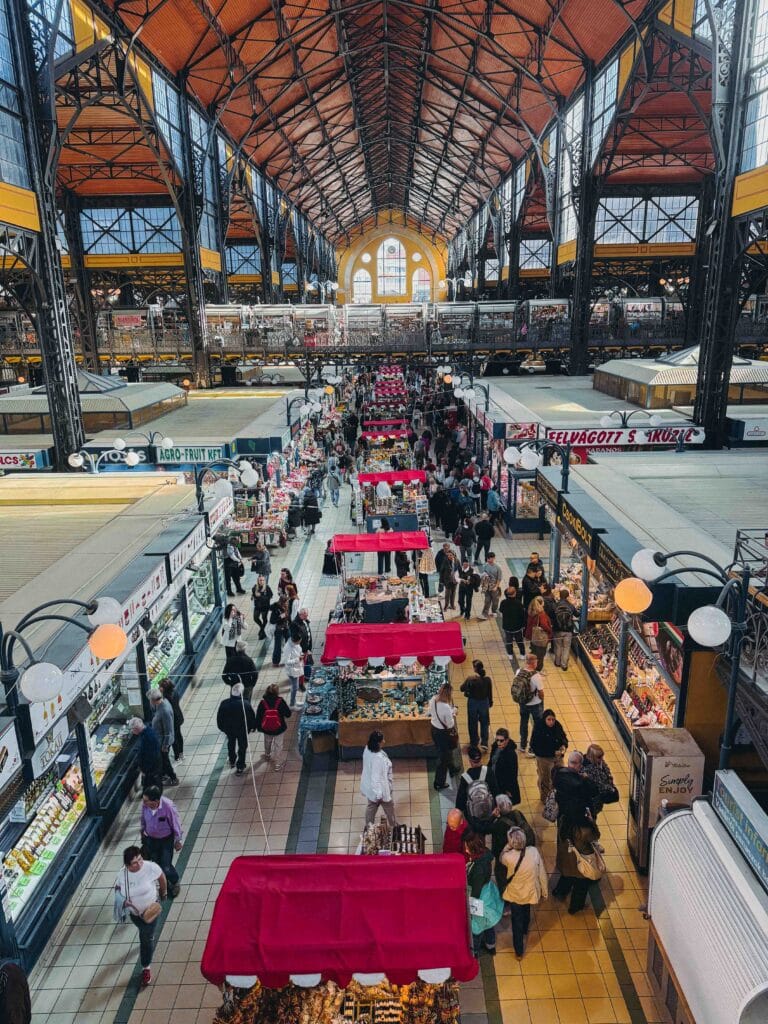
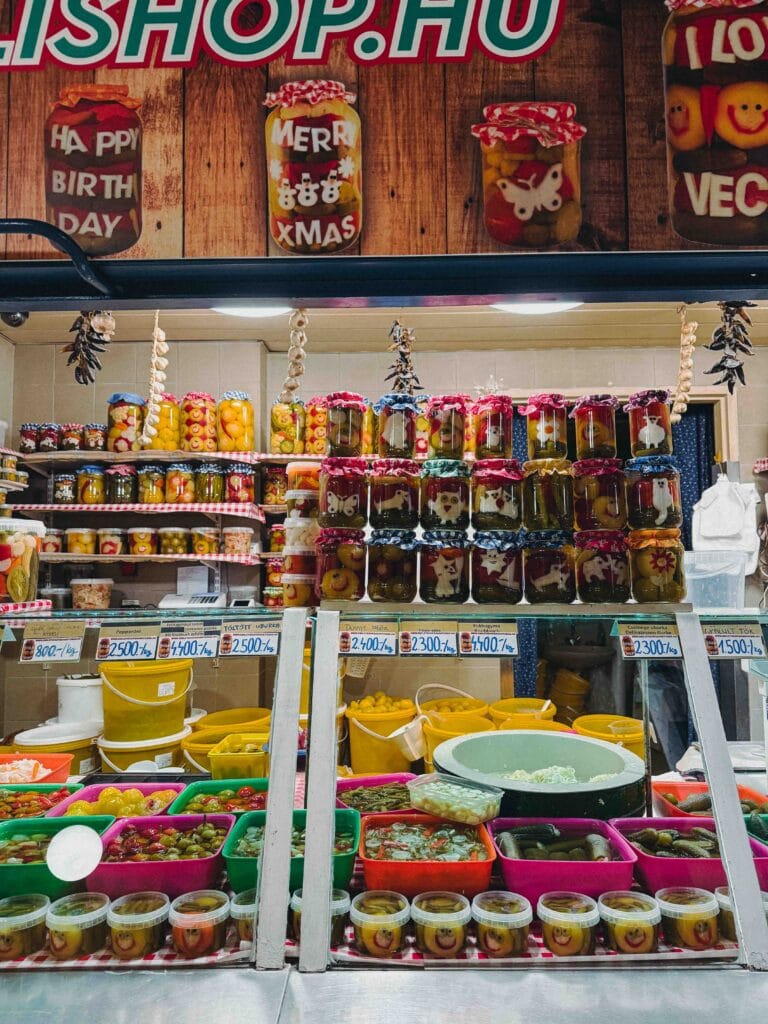
We made our way to the Central Market Hall, Budapest’s largest indoor market. The building itself is beautiful with its colorful roof tiles. Inside, the ground floor sells groceries, produce, meats, and spices, while the upper floor has souvenirs and food stalls.
After walking a full round, we didn’t buy anything as souvenirs because everything seemed overpriced, though we did grab some food on the first floor to try local snacks.
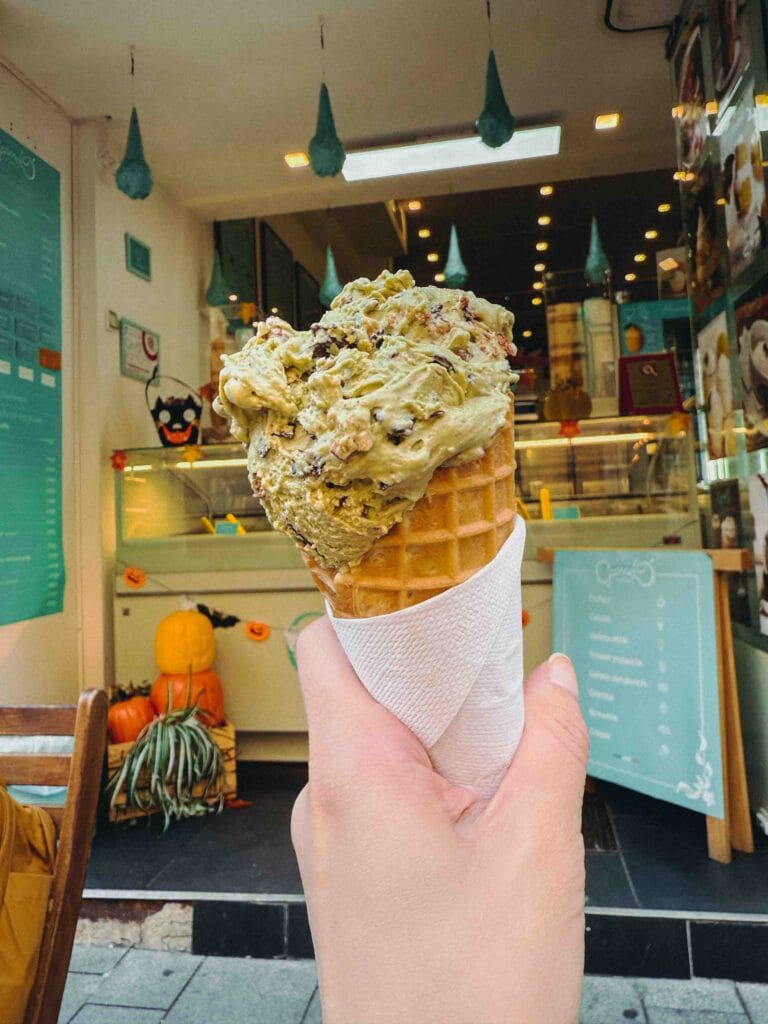
Váci utca & Gelato
Before heading to the Liberty Bridge, we walked down Váci utca (a pedestrian shopping street) and had some gelato at Giandó. It was quite pricey, but since it was our last two days, we decided it was worth the splurge.
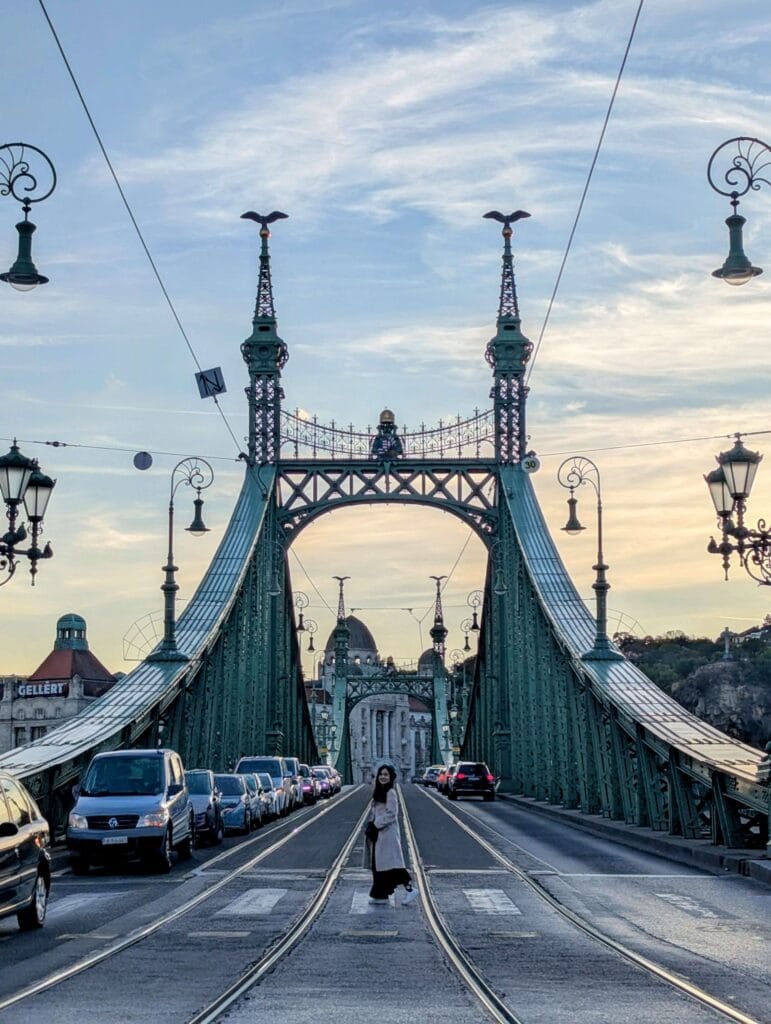
Liberty Bridge Sunset
Finally, we walked across the entire Liberty Bridge and back, capturing some amazing sunset photos! The green iron bridge with the Danube below and city views on both sides is particularly photogenic during golden hour.
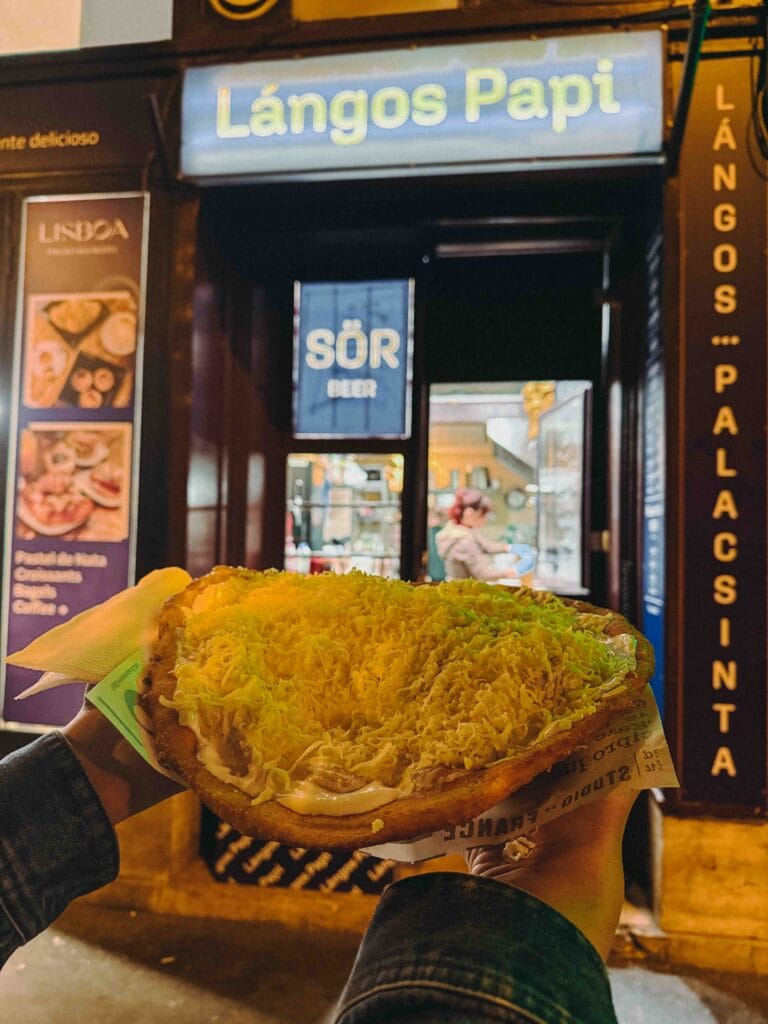
Evening: Langos Redemption
Langos Papi’
Before heading back, we decided we needed langos again, determined to find a better one than our first attempt. We found a famous spot nearby called Langos Papi’.
This one was significantly nicer, bigger, with better-tasting cheese and toppings! This is the one we rave about in our Budapest food guide. The difference between tourist langos and proper Hungarian langos is substantial.
Day 11: Prague – The Loop Closes
Morning: The Long Haul Back to Prague
Our last full day required a very long journey back to Prague to complete our Central Europe loop. The bus journey gave us time to reflect on the incredible experiences of the past 10 days.
Afternoon: Culinary Comfort and Souvenir Hunting
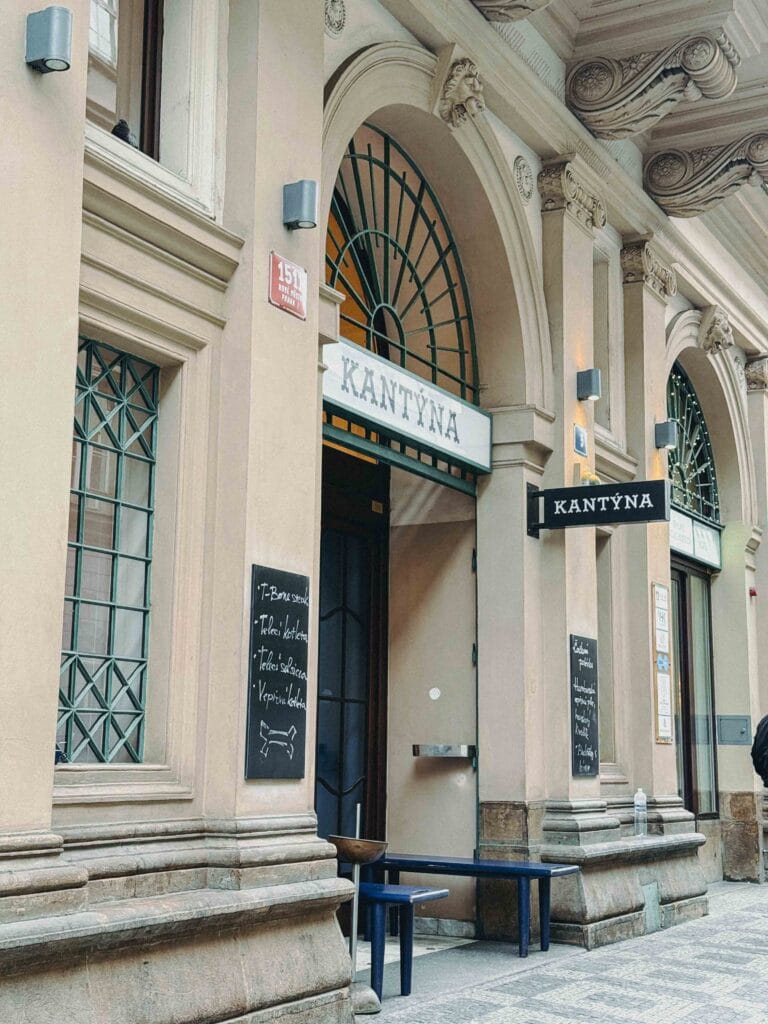
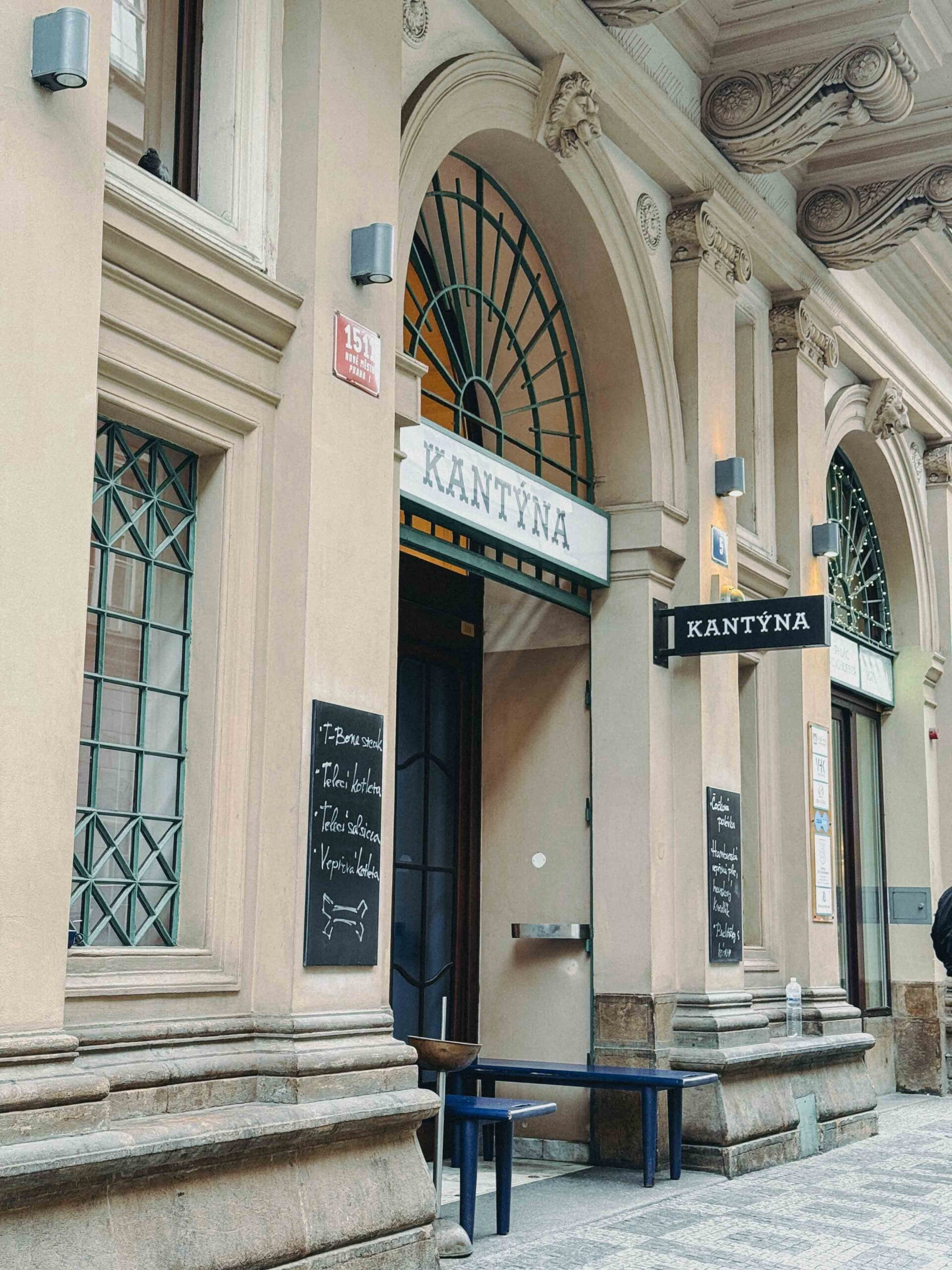
Lunch at Kantýna
After checking in, we had lunch at Kantýna, and it was so good! It was the perfect place for a final, hearty Czech meal with generous portions and authentic flavors.
🍴 See our full Kantýna review and menu recommendations
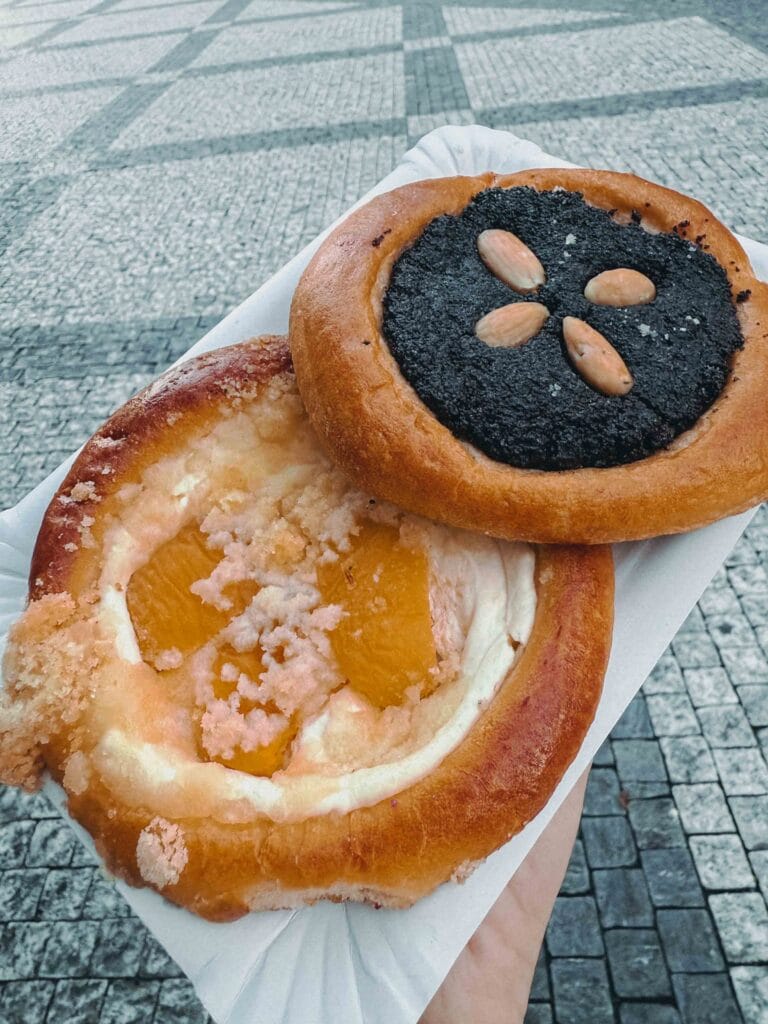
Kolacherie Celetná
We also enjoyed some kolach (traditional Czech pastries) at Kolacherie Celetná, which we highly recommend. These sweet pastries filled with fruit, poppy seeds, or cheese are quintessentially Czech and make perfect snacks.
Souvenir Shopping
We spent the afternoon walking around the city, focusing on getting souvenirs for family and friends. Prague has excellent shopping for traditional Czech products, Bohemian crystal, wooden toys, marionettes, and local food products.
Evening: A Disappointing Final Beer
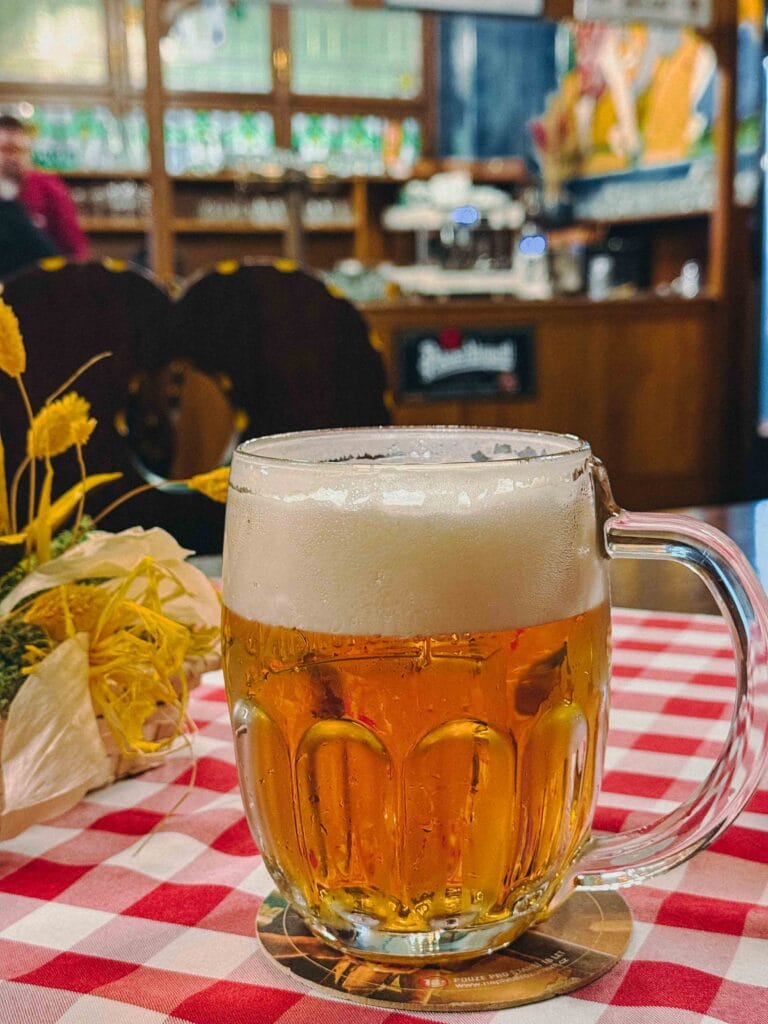
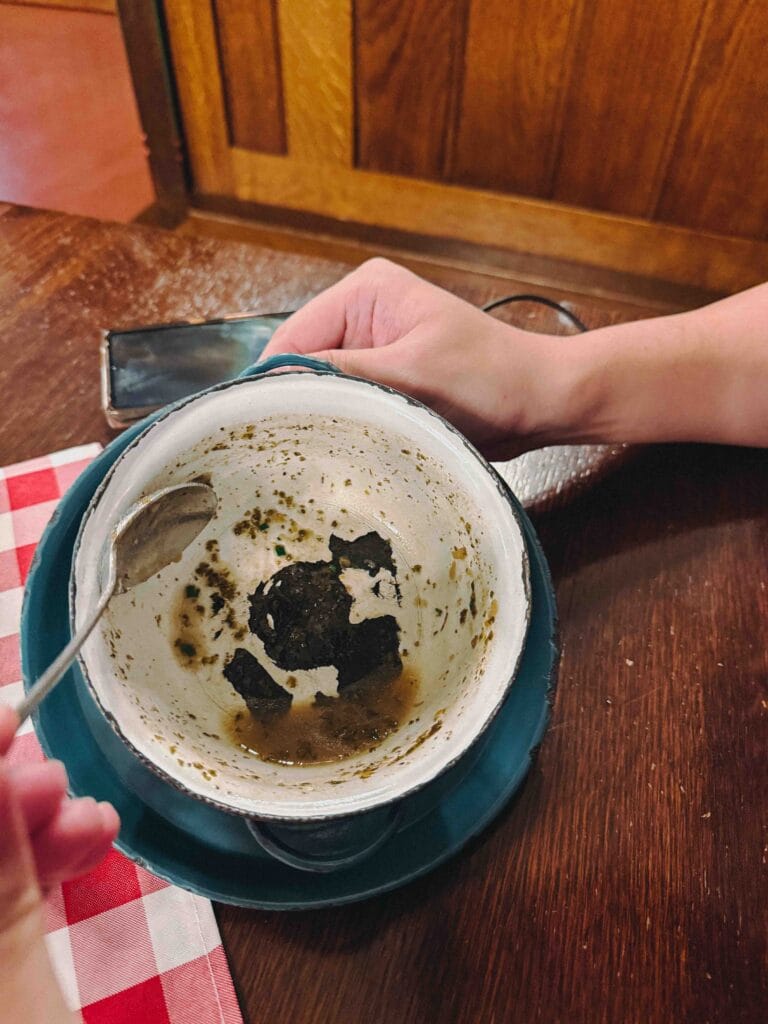
Pilsen Restaurant Prag
For a final celebratory beer, we walked by the Municipal House and into Pilsen Restaurant Prag. Unfortunately, this was the worst meal we had in the entire trip, poor service, mediocre food, and overpriced tourist trap vibes.
Day 12: Prague – Departure
Morning: Airport Bound
We got our final breakfast at the airport food court and caught our morning flight back to Singapore, officially closing our Central Europe Loop!
The 12-day journey through Prague, Salzburg, Munich, St. Wolfgang, Hallstatt, Bad Ischl, Vienna, and Budapest exceeded all our expectations. From Gothic spires to alpine lakes, imperial palaces to beer halls, this itinerary showcases the very best of Central Europe.
Practical Information & Budget
Transportation
| Route | Transport | Duration | Cost (approx.) |
|---|---|---|---|
| Prague → Salzburg | Bus (FlixBus) | 6 hours | 28.10 |
| Salzburg → Munich (Day Trip) | Train (Bayern-Ticket) | 1.5-2 hours | 22.00 (Group) |
| Bad Ischl → Vienna | Train (OBB) | 3-4 hours | 53.30 |
| Vienna → Budapest | Train (RegioJet) | 2-3 hours | 15.70 |
| Budapest → Prague | Train (RegioJet) | 6-7 hours | 28.70 |
Accommodation
We mixed budget hostels with mid-range hotels:
- Prague: The Gold Bank (mid-range hotel)
- Salzburg: Keep Eco Rooms (budget eco-hotel)
- Hallstatt: Bräugasthof Lobisser (traditional guesthouse)
- Bad Ischl: Budget hostel
- Vienna: myNext – Hotel Rudy (mid-range hotel)
- Budapest: wombat’s CITY HOSTEL (budget hostel)
Budget Breakdown (Per Person, 12 Days)
| Category | Budget |
|---|---|
| Flight | SGD 800 |
| Transportation | SGD 375 |
| Accommodation | SGD 900 |
| Food & Drink | SGD 600 |
| Activities & Entrance Fees | SGD 100 |
| Others (Travel Insurance, souvenirs, etc) | SGD 350 |
| Total Actual Budget | SGD 3,125 |
Final Verdict
This 12-day Central Europe itinerary delivers an incredible diversity of experiences, from photographing Prague at sunrise to singing in Munich beer halls, from hiking alpine lakes to soaking in imperial Viennese culture, from getting lost in Hallstatt’s fairy-tale lanes to watching Budapest’s Parliament glow at sunset.
The circular route starting and ending in Prague minimizes backtracking while maximizing variety. You’ll experience four countries, multiple languages, diverse cuisines, and architectural styles spanning from Gothic to Baroque to Art Nouveau, all in less than two weeks.
Who This Itinerary Is For:
- First-time visitors to Central Europe
- Couples seeking romantic destinations
- Photography enthusiasts
- Culture and history lovers
- Travelers who enjoy mixing cities with nature
Ready to plan your Central Europe adventure? Use this itinerary as your foundation, adjust for your interests and pace, and prepare for an incredible journey through the heart of Europe!
Frequently Asked Questions
How many days do you need for a Central Europe trip?
Twelve days is the sweet spot for Prague, Munich, Salzburg, Hallstatt, Vienna and Budapest without feeling rushed, exactly what this itinerary covers. With 10 days, drop the Salzkammergut leg (Hallstatt/Bad Ischl). With 7, choose either Prague + Vienna + Budapest or Munich + Salzburg + Hallstatt, not both.
How much does 12 days in Central Europe cost from Singapore?
We spent about SGD 3,125 per person for 12 days, including SGD 800 flights, SGD 900 accommodation, SGD 375 for all inter-city trains and buses, SGD 600 on food and SGD 450 on activities and extras. Central Europe remains far cheaper than Western Europe for equivalent quality.
What is the best order to visit Prague, Vienna, Budapest, Munich and Salzburg?
Travel in a loop to avoid backtracking: Prague → Salzburg (with a Munich day trip) → St. Wolfgang/Hallstatt → Vienna → Budapest → back to Prague to fly out. Every leg is a direct bus or train of 2–7 hours, and the loop lets you book a cheaper return flight into a single city.
Is a rail pass worth it for Central Europe?
For this route, usually not. Our point-to-point tickets totalled roughly €148 across five legs: FlixBus Prague–Salzburg, the Bayern-Ticket for the Munich day trip, ÖBB to Vienna and RegioJet trains at €16–29, which undercuts a comparable rail pass. Book RegioJet and FlixBus 2–4 weeks ahead for the best fares.
When is the best time to do this Central Europe itinerary?
April to October. We travelled in October and caught Oktoberfest’s final days plus autumn colours in Hallstatt, though alpine attractions close early, the St. Wolfgang toboggan run shut for winter three days after our ride. June–August brings the best weather and biggest crowds; December is magical for Christmas markets but cold.
Pin This Post! Save this Central Europe itinerary for your trip planning.
Have questions about this itinerary? Drop them in the comments below, I’m happy to help with your Central Europe travel planning!
Did you find this guide helpful? Share it with fellow travelers planning their European adventure!


Leave a Reply